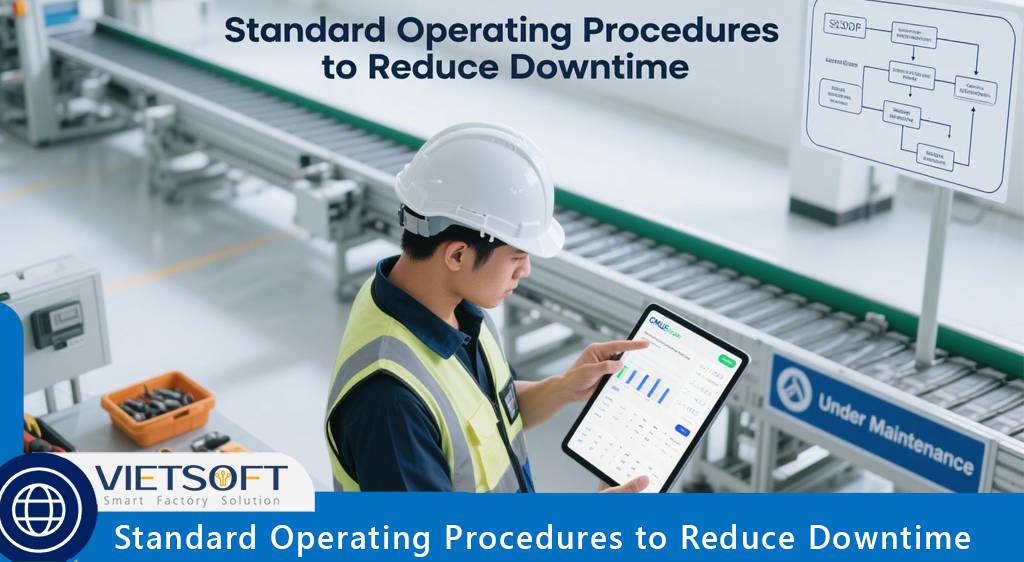
In today’s competitive industrial landscape, downtime is a silent profit-killer that can disrupt operations, erode customer trust, and inflate costs. Standard Operating Procedures (SOPs) are powerful tools that help organizations minimize downtime by standardizing tasks, enhancing efficiency, and preventing errors. This article provides an in-depth exploration of how Standard Operating Procedures to Reduce Downtime can transform maintenance operations.
I. What Are Standard Operating Procedures (SOPs)?
Standard Operating Procedures (SOPs) are documented, step-by-step instructions that outline how to perform specific tasks or processes within an organization. In the context of maintenance, SOPs provide clear guidelines for executing routine and emergency tasks, ensuring consistency, safety, and efficiency. These procedures serve as a roadmap for technicians, reducing variability and enabling predictable outcomes.
SOPs cover a wide range of maintenance activities, including:
- Preventive Maintenance: Scheduled inspections, lubrication, and calibrations to prevent equipment failures.
- Corrective Maintenance: Troubleshooting and repair steps for addressing breakdowns.
- Safety Protocols: Guidelines for using personal protective equipment (PPE), lockout/tagout (LOTO), and handling hazardous materials.
- Inventory Management: Processes for ordering, storing, and issuing spare parts.
By implementing Standard Operating Procedures, organizations can streamline operations, reduce errors, and minimize downtime, which is critical in industries like manufacturing, logistics, and energy where every minute of inactivity counts.
II. Why Downtime Matters in Maintenance
Downtime, whether planned or unplanned, represents a significant challenge for businesses. Unplanned downtime, often caused by equipment failures or human errors, can cost manufacturers millions annually. According to industry studies, unplanned downtime in manufacturing can result in losses of $50,000 per hour for large facilities. Beyond financial impacts, downtime can:
- Reduce Productivity: Halting production lines delays order fulfillment and disrupts schedules.
- Damage Reputation: Late deliveries or defective products erode customer trust.
- Increase Costs: Emergency repairs and overtime labor inflate operational expenses.
- Compromise Safety: Rushed repairs can lead to accidents or non-compliance with safety standards.
Standard Operating Procedures to Reduce Downtime address these challenges by providing structured processes that prevent disruptions and ensure rapid recovery when issues arise.
III. The Role of Standard Operating Procedures in Reducing Downtime
SOPs are essential for minimizing downtime by creating a framework for consistent, efficient, and proactive maintenance. Below are the key ways SOPs contribute to downtime reduction:
1. Ensuring Consistency and Clarity
SOPs standardize tasks, ensuring that every technician follows the same steps, whether inspecting a motor or repairing a conveyor belt. This consistency reduces errors that could lead to equipment failures or prolonged repairs.
2. Streamlining Training and Onboarding
New technicians can quickly learn processes by referring to SOPs, reducing the learning curve and ensuring they contribute effectively from day one. This minimizes disruptions caused by inexperienced staff.
3. Facilitating Rapid Problem Resolution
When equipment fails, SOPs provide troubleshooting guidelines, enabling technicians to diagnose and resolve issues quickly. For example, an SOP for a pump failure might include steps to check seals, pressure, and fluid levels, reducing repair time.
4. Supporting Preventive Maintenance
SOPs for preventive maintenance, such as regular inspections or lubrication schedules, help identify potential issues before they escalate into downtime-causing failures. Studies show that preventive maintenance can reduce downtime by 12-18% compared to reactive approaches.
5. Driving Continuous Improvement
SOPs are dynamic documents that can be updated to reflect new technologies, best practices, or lessons learned. Regular reviews ensure that processes remain optimized to prevent downtime.
IV. Applying Lean Principles: The DOWNTIME Framework
Inspired by Taiichi Ohno’s Lean Manufacturing principles, the DOWNTIME acronym identifies eight types of waste that contribute to operational inefficiencies and downtime. Standard Operating Procedures can be designed to eliminate these wastes, enhancing productivity and reliability. Below, we explore each waste type and how SOPs address them:
1. Defects
Defects, such as faulty components or improper repairs, are a leading cause of downtime. SOPs for quality assurance, such as detailed inspection checklists, ensure that tasks meet standards. For example, an SOP for assembling a gearbox might include torque specifications (e.g., tighten bolts to 50 Nm) to prevent defects.
2. Overproduction
Producing more than needed ties up resources and can strain equipment, leading to failures. SOPs for production planning, such as demand-based scheduling, prevent overproduction. For instance, an SOP might limit batch sizes to match customer orders, reducing machine wear.
3. Waiting
Delays, such as waiting for parts or approvals, extend downtime. SOPs for inventory management and task prioritization minimize waiting. An SOP for spare parts ordering might specify reorder thresholds (e.g., restock when inventory falls below 10 units) to ensure availability.
4. Not Utilizing Talent
Underutilizing skilled technicians can lead to inefficiencies and errors. SOPs for task assignment match tasks to skill levels, ensuring optimal performance. For example, an SOP might designate certified electricians for high-voltage repairs, reducing errors and downtime.
5. Transportation
Unnecessary movement of parts or tools wastes time. SOPs for facility layout and tool organization streamline workflows. An SOP might require tools to be stored in a shadow board near workstations, cutting retrieval time.
6. Inventory Excess
Overstocked inventory ties up capital and can lead to obsolescence, while stockouts cause delays. SOPs for inventory control, such as cycle counting, maintain optimal stock levels. An SOP might specify monthly audits to verify stock accuracy within 98%.
7. Motion Waste
Excessive movement by technicians, such as walking to distant tool storage, slows tasks. SOPs for workstation design minimize motion. For example, an SOP might mandate placing commonly used tools within arm’s reach, reducing task time by 10-15%.
8. Excess Processing
Redundant steps, like duplicate data entry, waste time. SOPs for process optimization eliminate unnecessary actions. An SOP for work order completion might integrate data entry into a CMMS, reducing manual inputs.
By addressing these wastes, Standard Operating Procedures to Reduce Downtime create lean, efficient maintenance processes that keep operations running smoothly.
V. Key Components of Effective SOPs to Reduce Downtime
An effective SOP is clear, actionable, and tailored to minimize downtime. Below are the essential components:
- Objective: State the purpose, e.g., “To outline steps for repairing a hydraulic pump to minimize downtime.”
- Scope: Define the equipment or tasks covered, e.g., “Applies to all hydraulic pumps in the production line.”
- Responsibilities: Assign roles, e.g., “Technicians handle repairs; supervisors approve work orders.”
- Resources: List tools, parts, and PPE, e.g., “Wrench set, replacement seals, safety gloves.”
- Step-by-Step Instructions: Provide numbered steps, e.g., “1. Isolate pump power. 2. Drain fluid. 3. Replace seals.”
- Safety Guidelines: Include precautions, e.g., “Ensure LOTO is applied before starting.”
- Troubleshooting Tips: Offer solutions for common issues, e.g., “If pressure is low, check for leaks.”
- Documentation: Specify record-keeping, e.g., “Log repair details in CMMS EcoMaint.”
Visual aids, such as flowcharts or photos, enhance clarity. For example, a diagram of a pump’s components can guide technicians during repairs, reducing errors and downtime.
VI. Types of SOPs to Reduce Downtime
SOPs can be structured in various formats to suit different maintenance tasks. Below are four types designed to minimize downtime:
1. Step-by-Step SOP
Ideal for linear tasks, step-by-step SOPs provide a numbered sequence of actions. For example, an SOP for restarting a stalled conveyor might include:
1. Disconnect power and apply LOTO.
2. Inspect belt for obstructions.
3. Clear debris and test alignment.
4. Restore power and run a trial cycle.
This format ensures quick, error-free execution, reducing downtime.
2. Hierarchical SOP
For complex tasks, hierarchical SOPs organize steps into main categories with sub-steps. An SOP for a plant-wide shutdown might include:
1. Prepare Systems:
o Shut off main power.
o Drain fluid systems.
2. Inspect Equipment:
o Check for wear on critical components.
o Record findings in CMMS.
This structure ensures thoroughness, minimizing missed steps that could delay restarts.
3. Hybrid SOP
Hybrid SOPs combine linear steps with conditional actions and visuals, ideal for troubleshooting. An SOP for diagnosing a motor failure might include:
1. Check error codes on the control panel.
2. If code E03 appears, inspect wiring; otherwise, check bearings.
3. Use a checklist to verify repairs.
This flexibility speeds up problem resolution, cutting downtime.
4. Checklist-Based SOP
Checklist-based SOPs ensure all critical steps are completed, perfect for preventive maintenance. An SOP for daily machine checks might include:
- Verify oil levels (within 80-100% of capacity).
- Inspect belts for cracks.
- Record findings in CMMS.
This format prevents oversights that could lead to failures.
VII. How to Write SOPs to Reduce Downtime
Creating Standard Operating Procedures to Reduce Downtime requires strategic planning and collaboration. Below is a step-by-step guide:
1. Identify Downtime Causes
Analyze historical data to pinpoint common downtime causes, such as equipment failures or delays in parts availability. Use tools like Failure Modes and Effects Analysis (FMEA) to prioritize high-impact issues.
2. Consult Stakeholders
Involve technicians, supervisors, and operators to gather insights on processes and challenges. Their input ensures SOPs are practical and address real-world scenarios.
3. Draft Clear Procedures
Use simple language and numbered steps. For example, instead of “Ensure system readiness,” write “Verify all gauges read within 10-15 psi.” Focus on actions that minimize downtime, such as pre-staging tools.
4. Incorporate Lean Principles
Design SOPs to eliminate DOWNTIME wastes. For instance, include steps to pre-order critical parts to avoid waiting or optimize workstation layouts to reduce motion waste.
5. Add Visuals
Include diagrams, photos, or videos to clarify steps. A photo of a correctly aligned belt can prevent errors, speeding up tasks.
6. Test and Refine
Pilot SOPs with a small team, measure task times, and gather feedback. Revise to address any delays or ambiguities.
7. Ensure Accessibility
Store SOPs in a digital platform like CMMS EcoMaint, enabling technicians to access them via mobile devices, reducing delays in task execution.
VIII. Implementing SOPs with CMMS EcoMaint
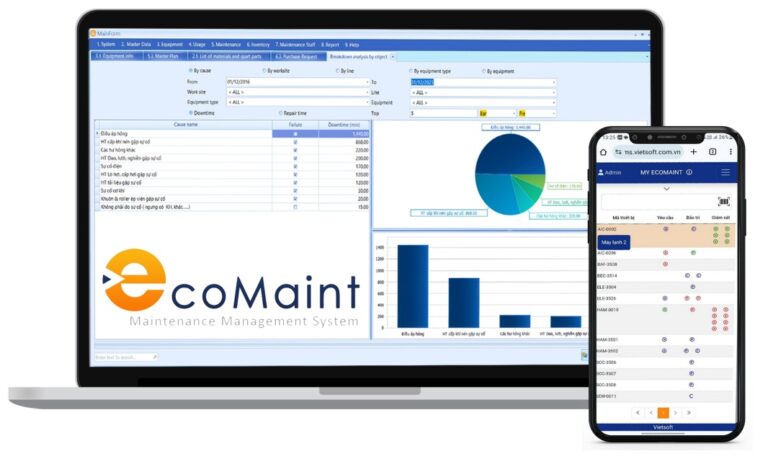
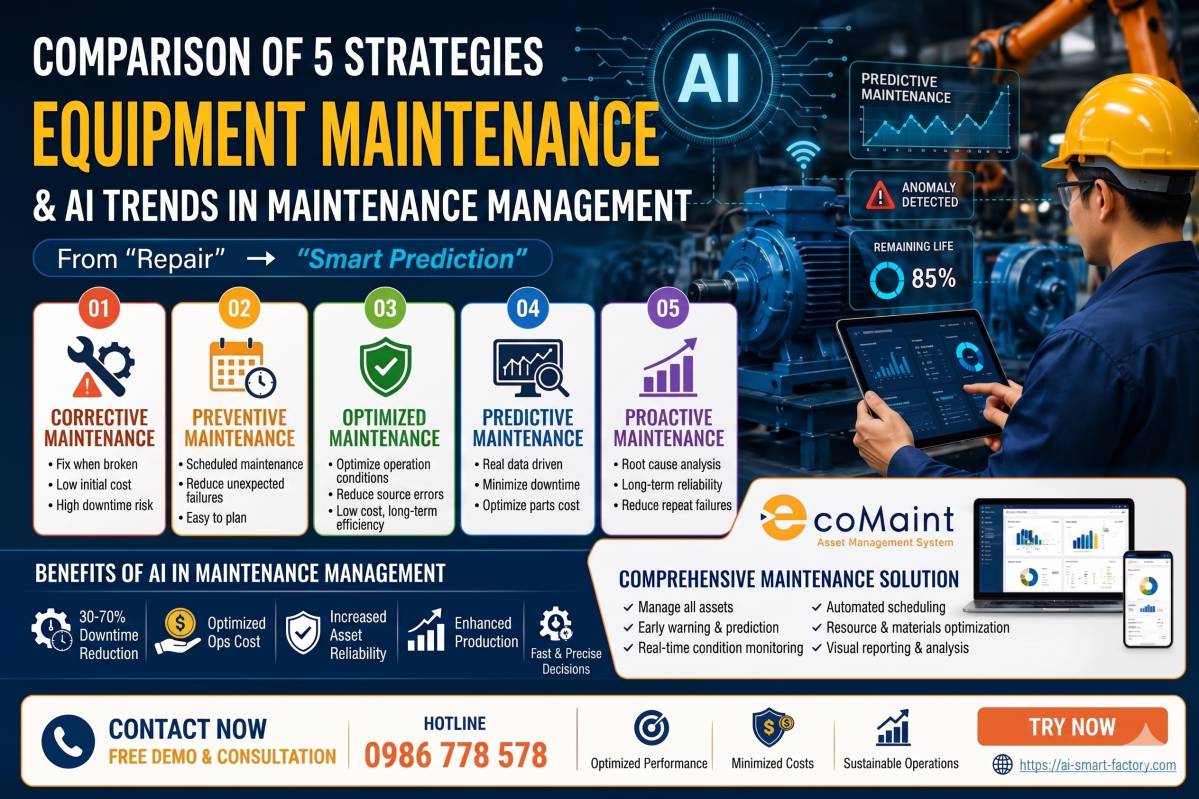
Integrating Standard Operating Procedures with a Computerized Maintenance Management System (CMMS) like EcoMaint from Vietsoft enhances their effectiveness in reducing downtime. EcoMaint offers:
- Centralized Repository: Store SOPs digitally, ensuring instant access for technicians.
- Task Integration: Link SOPs to work orders, guiding technicians through tasks to minimize errors.
- Real-Time Tracking: Monitor SOP adherence and task completion, identifying delays instantly.
- Automated Notifications: Alert technicians to upcoming preventive maintenance, preventing failures.
- Version Control: Update SOPs seamlessly, ensuring teams use the latest procedures.
By leveraging EcoMaint, businesses can reduce downtime, improve compliance, and boost technician efficiency. Want to see how EcoMaint can transform your maintenance strategy? Visit Vietsoft’s EcoMaint page to explore its features and request a demo.
IX. Benefits of SOPs in Reducing Downtime
Implementing Standard Operating Procedures to Reduce Downtime delivers measurable benefits:
- Minimized Downtime: SOPs for preventive maintenance and rapid repairs reduce unplanned stops by up to 18%.
- Increased Productivity: Clear instructions enable faster task completion, boosting output.
- Cost Savings: Preventive SOPs extend equipment life, cutting repair costs by 10-15%.
- Improved Safety: Safety protocols reduce accidents, ensuring uninterrupted operations.
- Enhanced Compliance: SOPs align with regulations, avoiding fines that disrupt budgets.
X. Common Mistakes to Avoid
To maximize SOP effectiveness, avoid these pitfalls:
- Vague Instructions: Specify exact parameters, e.g., “Lubricate bearings with 5 ml of oil” instead of “Apply lubricant.”
- Neglecting Updates: Review SOPs quarterly to reflect new equipment or processes.
- Insufficient Training: Provide hands-on training to ensure technicians understand SOPs.
XI. Continuous Improvement Strategies
To keep SOPs effective, adopt these strategies:
- Feedback Mechanisms: Hold monthly feedback sessions with technicians to identify SOP improvements.
- KPI Monitoring: Track metrics like Mean Time Between Failures (MTBF) and Mean Time to Repair (MTTR) to assess SOP impact.
- Lean Audits: Conduct annual lean audits to eliminate redundant steps.
- Training Programs: Offer regular workshops to update technicians on SOP changes.
XII. Example SOP: Addressing a Conveyor Belt Failure
Below is a sample SOP designed to minimize downtime during a conveyor belt failure:
Objective: To repair a conveyor belt failure quickly and safely.
Scope: Applies to all conveyor belts in the production facility.
Responsibility: Maintenance technicians and supervisors.
Accountability: Maintenance Manager.
Resources: Wrench set, replacement belt, safety gloves, LOTO kit.
Procedure:
1. Report the failure to the maintenance department with details.
2. Supervisor assigns a technician via CMMS EcoMaint.
3. Power off the conveyor and apply LOTO.
4. Inspect the belt for tears or misalignment.
5. Remove damaged sections and replace with a new belt.
6. Adjust tension to 2-3 mm deflection per manufacturer specs.
7. Test the conveyor for 5 minutes at 50% load.
8. Remove LOTO and update repair log in CMMS.
Benefits: Reduces repair time by 30% and ensures safe, consistent execution.
XIII. Conclusion
Standard Operating Procedures to Reduce Downtime are indispensable for modern maintenance operations, offering a structured approach to minimizing disruptions, enhancing efficiency, and ensuring safety. By addressing the eight DOWNTIME wastes and integrating SOPs with tools like CMMS EcoMaint, businesses in Vietnam can achieve lean, reliable operations. EcoMaint’s digital platform empowers teams with centralized SOP access, automated workflows, and real-time insights, making it a game-changer for downtime reduction. Ready to optimize your maintenance? Discover the CMMS EcoMaint solution here.
Contact us for consultation via hotline: 0986778578 or email: sales@vietsoft.com.vn.