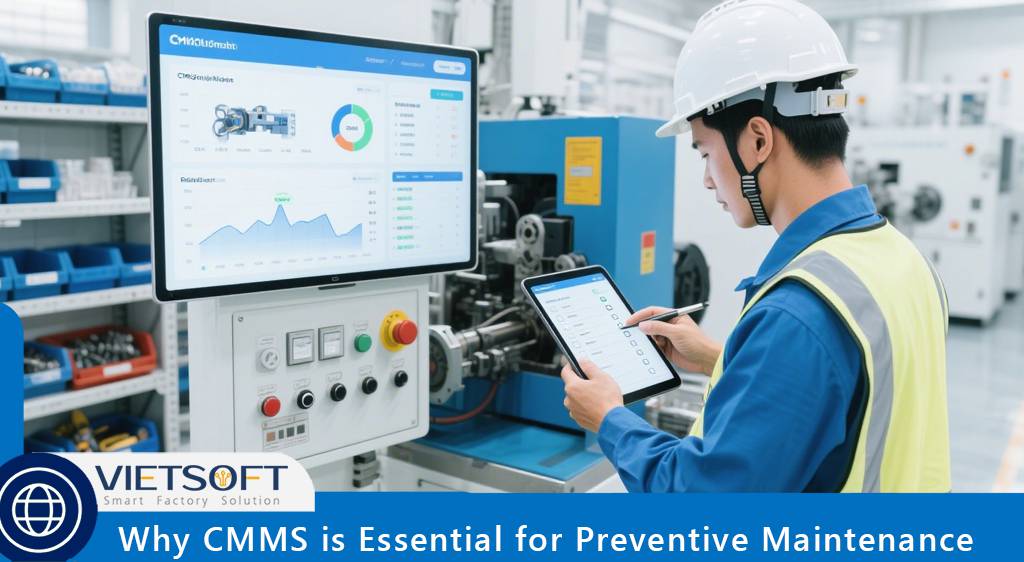
In today’s fast-paced industrial landscape, ensuring the reliability and longevity of equipment is critical to maintaining operational efficiency and minimizing costly downtime. Preventive maintenance, supported by advanced tools like Computerized Maintenance Management Systems (CMMS), has become a cornerstone for businesses aiming to optimize their maintenance strategies. By leveraging CMMS for preventive maintenance, organizations can proactively manage assets, reduce repair costs, and enhance productivity. This comprehensive guide explores the role of CMMS in preventive maintenance, its benefits, and how solutions like CMMS EcoMaint by Vietsoft empower businesses to achieve operational excellence.
I. What is Preventive Maintenance?
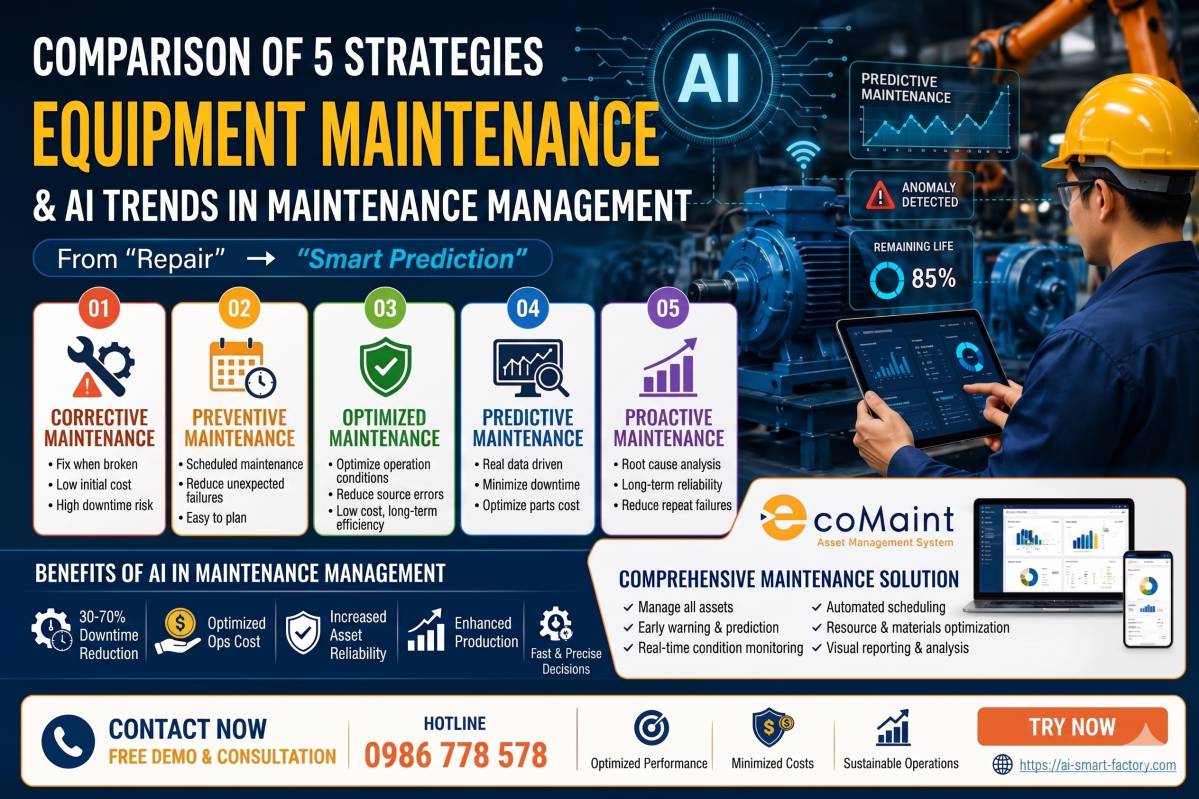
Preventive maintenance (PM) is a proactive strategy that involves regular, scheduled maintenance tasks to prevent equipment failures before they occur. Unlike reactive maintenance, which addresses issues only after a breakdown, PM focuses on maintaining assets in optimal condition through routine inspections, servicing, and repairs. Examples include lubricating machinery, calibrating instruments, or replacing components based on usage or time intervals.
The primary objectives of preventive maintenance are:
- Extending the lifespan of equipment and assets.
- Minimizing unplanned downtime and operational disruptions.
- Reducing repair costs by addressing issues before they escalate.
- Ensuring compliance with industry regulations and safety standards.
- Enhancing overall operational efficiency and productivity.
By adopting preventive maintenance, businesses can shift from a reactive “fix-it-when-it-breaks” mindset to a proactive approach that prioritizes reliability and cost savings.
II. Understanding CMMS: The Backbone of Modern Maintenance
A Computerized Maintenance Management System (CMMS) is a software solution designed to streamline and automate maintenance operations. It serves as a centralized platform for managing assets, scheduling maintenance tasks, tracking work orders, monitoring inventory, and generating performance reports. CMMS for preventive maintenance provides tools to plan, execute, and monitor maintenance activities with precision, ensuring that equipment remains in peak condition.
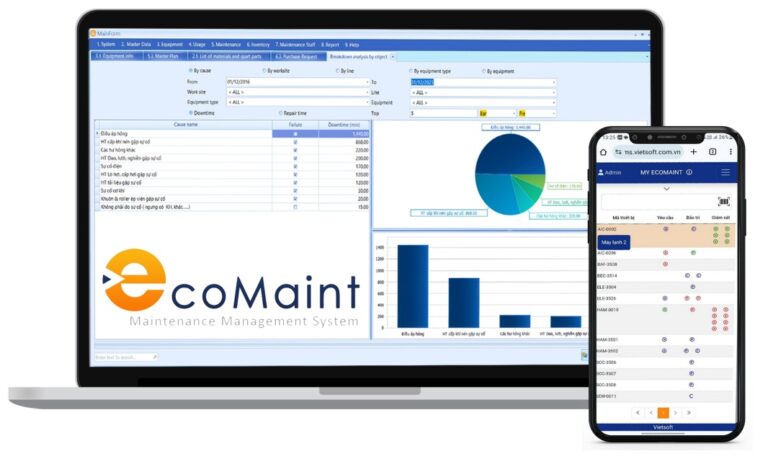
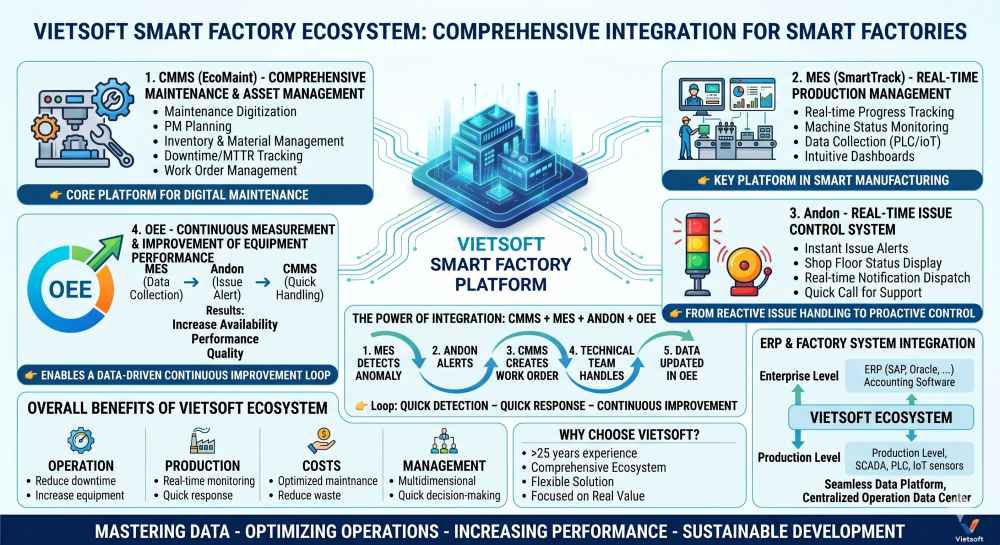
Modern CMMS platforms, such as CMMS EcoMaint by Vietsoft, integrate advanced features like mobile accessibility, real-time data analytics, and IoT connectivity to support both preventive and predictive maintenance strategies. These capabilities enable maintenance teams to make informed decisions, optimize resource allocation, and reduce operational risks.
III. Key Functions of CMMS in Maintenance Management
- Asset Management: Tracks detailed information about equipment, including specifications, maintenance history, and real-time performance metrics.
- Work Order Automation: Generates and assigns work orders based on predefined schedules or triggers, ensuring timely task execution.
- Inventory Control: Monitors spare parts and materials, preventing stockouts or overstocking.
- Reporting and Analytics: Provides insights into maintenance performance, downtime trends, and cost metrics.
- Mobile Accessibility: Allows technicians to access work orders, checklists, and documentation on the go via mobile apps.
By centralizing these functions, CMMS empowers organizations to manage maintenance operations efficiently, making it an indispensable tool for preventive maintenance.
IV. The Role of CMMS in Preventive Maintenance
CMMS for preventive maintenance transforms how organizations approach equipment upkeep by automating and optimizing key processes. Below, we explore how CMMS enhances preventive maintenance strategies and delivers measurable benefits.
1. Streamlined Scheduling and Task Automation
One of the most significant advantages of CMMS for preventive maintenance is its ability to automate scheduling. Maintenance tasks can be scheduled based on:
- Time-Based Triggers: For example, scheduling quarterly HVAC cleanings or annual equipment inspections.
- Usage-Based Triggers: Initiating maintenance after a machine reaches a certain number of operating hours or production cycles.
2. Enhanced Work Order Management
CMMS simplifies work order creation, assignment, and tracking. Instead of relying on paper-based systems or spreadsheets, maintenance teams can:
- Create detailed work orders with step-by-step instructions and checklists.
- Assign tasks to technicians based on skills, availability, or location.
- Monitor progress in real-time and receive updates from the shop floor.
This streamlined approach minimizes delays and ensures that preventive maintenance tasks are completed on time, reducing the likelihood of equipment failures.
3. Optimized Inventory Management
Effective preventive maintenance requires readily available spare parts and materials. CMMS tracks inventory levels, generates purchase orders, and alerts managers when stock is low. For example, CMMS EcoMaint allows technicians to scan barcodes via a mobile app to update inventory records instantly, ensuring that critical components are always on hand.
By preventing stockouts or overstocking, CMMS reduces costs and ensures that maintenance activities proceed without interruptions.
4. Real-Time Data and Predictive Analytics
Advanced CMMS platforms integrate with IoT sensors and predictive maintenance technologies to monitor equipment performance in real time. By analyzing data such as vibration, temperature, or pressure, CMMS can predict potential failures and schedule maintenance just before issues arise. This approach, known as condition-based maintenance, maximizes equipment uptime and minimizes unnecessary interventions.
For example, a food processing plant using CMMS can monitor refrigeration units’ temperature fluctuations and schedule maintenance when anomalies are detected, preventing spoilage and costly downtime.
5. Comprehensive Audit Trails and Compliance
Regulatory compliance is critical in industries like manufacturing, healthcare, and food processing. CMMS maintains detailed records of all maintenance activities, including task completion dates, technician notes, and parts used. These audit trails ensure compliance with industry standards and simplify inspections.
With CMMS, businesses can generate compliance reports with a few clicks, providing evidence of adherence to safety and regulatory requirements.
6. Improved Communication and Collaboration
CMMS platforms often include instant messaging or chat features, enabling seamless communication between technicians and managers. This ensures that issues are reported promptly, and solutions are implemented quickly.
V. Types of Preventive Maintenance Supported by CMMS
Preventive maintenance encompasses various strategies, each suited to different assets and operational needs. CMMS supports these strategies by providing the tools to plan, track, and analyze maintenance activities. Below are the main types of preventive maintenance and how CMMS enhances their implementation:
1. Time-Based Preventive Maintenance (TBPM)
TBPM involves scheduling maintenance at regular intervals, such as monthly or annually, regardless of equipment condition. For example, a factory might schedule quarterly inspections of its HVAC system. CMMS automates these schedules, sending reminders and generating work orders to ensure tasks are completed on time.
2. Usage-Based Preventive Maintenance
This approach triggers maintenance based on equipment usage, such as operating hours or production cycles. For instance, a logistics company might schedule oil changes for its fleet after every 10,000 kilometers. CMMS tracks usage metrics and automatically generates work orders when thresholds are reached.
3. Condition-Based Maintenance (CBM)
CBM relies on real-time data from sensors to monitor equipment health. Maintenance is performed when specific parameters, such as vibration or temperature, indicate potential issues. CMMS integrates with IoT devices to collect and analyze data, enabling precise maintenance scheduling.
4. Predictive Maintenance
Predictive maintenance uses advanced analytics and machine learning to forecast equipment failures based on historical and real-time data. CMMS platforms like CMMS EcoMaint support predictive maintenance by integrating with IoT sensors and providing actionable insights to prevent downtime.
VI. Benefits of Using CMMS for Preventive Maintenance
Implementing CMMS for preventive maintenance offers numerous advantages that enhance operational efficiency and reduce costs. Below are the key benefits:
1. Reduced Downtime
By addressing potential issues before they cause failures, CMMS minimizes unplanned downtime. For example, a manufacturing plant using CMMS to schedule regular maintenance on its production line can avoid costly work stoppages, ensuring continuous operations.
2. Extended Equipment Lifespan
Regular maintenance, facilitated by CMMS, prevents wear and tear, extending the life of assets. For instance, lubricating machinery or replacing aging components on schedule can add years to equipment lifespan, reducing the need for costly replacements.
3. Cost Savings
Preventive maintenance reduces the need for expensive emergency repairs. According to industry studies, every dollar spent on preventive maintenance can save up to $5 in future repair costs. CMMS optimizes maintenance schedules to ensure resources are used efficiently, further reducing costs.
4. Improved Safety and Compliance
Regular inspections and maintenance tasks help identify safety hazards before they cause accidents. CMMS ensures that all activities are documented, supporting compliance with regulations and reducing the risk of penalties.
5. Enhanced Operational Efficiency
By automating tasks and providing real-time insights, CMMS allows maintenance teams to focus on high-priority tasks. This improves workforce productivity and ensures that equipment operates at peak performance.
6. Data-Driven Decision Making
CMMS generates detailed reports on maintenance performance, downtime trends, and cost metrics. These insights enable managers to optimize maintenance strategies, allocate resources effectively, and make informed decisions.
VII. Challenges of Implementing Preventive Maintenance and How CMMS Helps
While preventive maintenance offers significant benefits, transitioning from a reactive to a proactive approach can present challenges. CMMS addresses these challenges effectively:
1. Over-Maintenance
Scheduling maintenance too frequently can lead to unnecessary downtime and costs. CMMS uses data analytics to optimize schedules, ensuring tasks are performed only when necessary.
2. High Upfront Costs
Implementing a CMMS and training staff requires an initial investment. However, solutions like CMMS EcoMaint offer cost-effective plans and user-friendly interfaces, minimizing the learning curve and maximizing ROI.
3. Resistance to Change
Teams accustomed to reactive maintenance may resist adopting new processes. CMMS simplifies the transition by automating tasks and providing intuitive tools, making preventive maintenance more accessible.
4. Lack of Historical Data
Without historical data, determining optimal maintenance intervals can be challenging. CMMS builds a comprehensive database over time, enabling data-driven scheduling and predictive maintenance.
VIII. How to Implement a Preventive Maintenance Program with CMMS
Building an effective preventive maintenance program with CMMS involves the following steps:
1. Define Goals and KPIs: Set measurable objectives, such as reducing downtime by 20% or extending asset lifespan by 15%. Common KPIs include Mean Time Between Failures (MTBF) and Mean Time to Repair (MTTR).
2. Create an Asset Inventory: Document all assets, including specifications, maintenance history, and criticality. CMMS centralizes this information for easy access.
3. Develop Maintenance Schedules: Use manufacturer recommendations and usage data to create time- or usage-based schedules. CMMS automates scheduling and sends reminders.
4. Train Staff: Ensure technicians are trained on CMMS features, safety protocols, and maintenance procedures. CMMS EcoMaint offers intuitive mobile apps to simplify adoption.
5. Monitor and Optimize: Use CMMS reports to track performance, identify gaps, and refine maintenance strategies over time.
IX. CMMS EcoMaint: Your Partner in Preventive Maintenance
For businesses in Vietnam seeking a robust solution for preventive maintenance, CMMS EcoMaint by Vietsoft stands out as a powerful and user-friendly platform. Designed to meet the needs of industries like manufacturing, healthcare, and logistics, CMMS EcoMaint offers:
- Automated Scheduling: Create and manage maintenance schedules with ease, ensuring tasks are completed on time.
- Mobile Accessibility: Empower technicians with mobile apps to access work orders, update inventory, and communicate in real-time.
- Predictive Maintenance Integration: Leverage IoT and analytics to predict equipment failures and optimize maintenance.
- Comprehensive Reporting: Generate detailed reports to monitor performance, ensure compliance, and drive continuous improvement.
By implementing CMMS EcoMaint, businesses can reduce downtime, extend asset lifespans, and achieve significant cost savings. To learn more about how CMMS EcoMaint can transform your maintenance operations, visit Vietsoft’s CMMS EcoMaint page for a detailed overview and demo.
X. The Future of Preventive Maintenance with CMMS
Emerging technologies are shaping the future of preventive maintenance, and CMMS is at the forefront of this transformation. Key trends include:
- IoT Integration: Sensors provide real-time data on equipment health, enabling precise maintenance scheduling.
- Artificial Intelligence (AI): AI-powered CMMS platforms analyze data to predict failures and recommend optimal maintenance strategies.
- Cloud-Based Solutions: Cloud computing enables centralized data access, improving collaboration and scalability.
- Mobile Apps: Mobile CMMS apps enhance technician efficiency by providing instant access to work orders and documentation.
CMMS EcoMaint is designed to leverage these technologies, ensuring that businesses stay ahead of the curve in maintenance management.
XI. Conclusion
CMMS for preventive maintenance is a game-changer for organizations seeking to optimize their maintenance operations. By automating scheduling, streamlining work orders, and providing data-driven insights, CMMS empowers businesses to reduce downtime, extend asset lifespans, and achieve significant cost savings. Solutions like CMMS EcoMaint by Vietsoft offer a user-friendly, feature-rich platform that simplifies the transition to preventive maintenance and drives operational excellence.
Whether you’re managing a manufacturing plant, healthcare facility, or logistics operation, adopting CMMS for preventive maintenance is a strategic investment in efficiency, reliability, and profitability.
Learn more about CMMS EcoMaint here.
Contact us via hotline: 0986778578 or email: sales@vietsoft.com.vn.