
Predictive Maintenance (PdM) is no longer just a buzzword in industrial circles—it’s a game-changer that’s helping companies save millions by preventing equipment failures before they happen. Whether you’re a reliability engineer, maintenance manager, or plant supervisor in Vietnam’s manufacturing sector, understanding and implementing a Roadmap of a Predictive Maintenance can transform your operations. In this guide, we’ll walk you through what PdM is, why it matters, and a detailed, practical 12-step roadmap to get you started.
I. What is Predictive Maintenance?
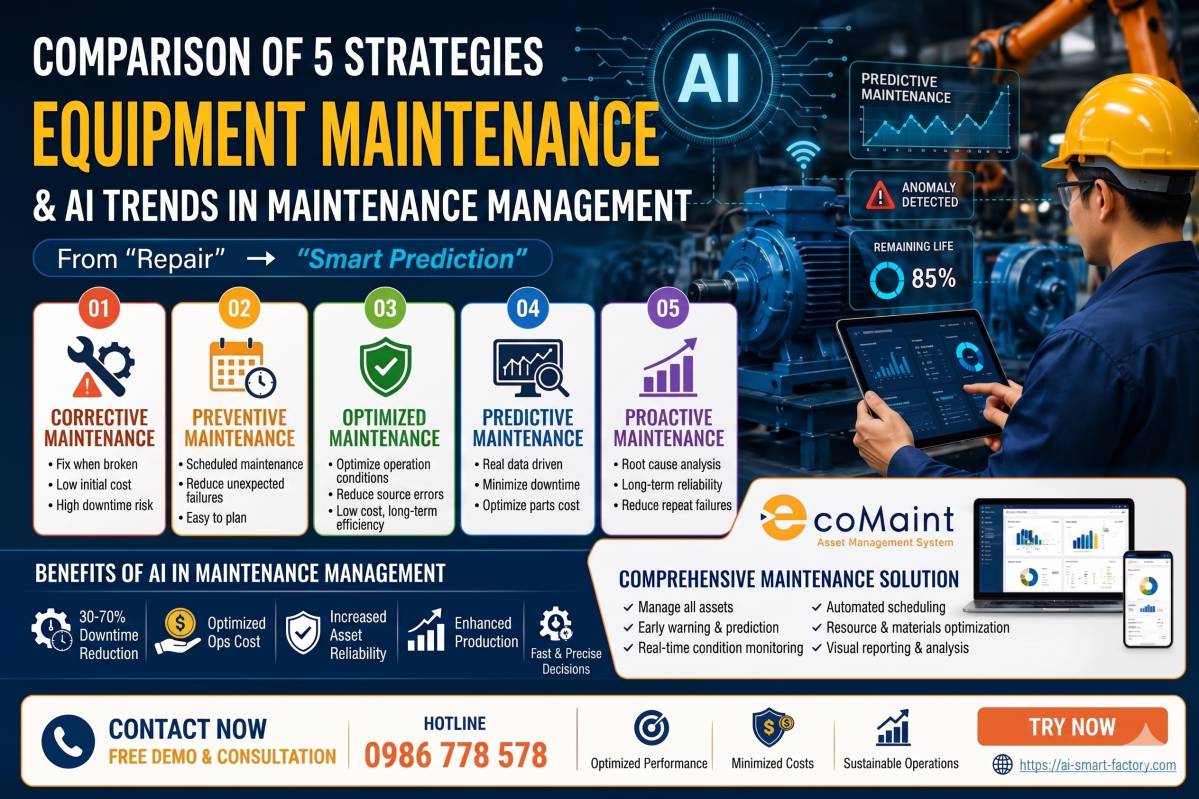
Imagine knowing your equipment is about to fail before it actually does. That’s the magic of Predictive Maintenance (PdM). Unlike traditional maintenance approaches—where you either fix things after they break (reactive) or schedule routine checkups regardless of need (preventive)—PdM uses real-time data from sensors, combined with advanced analytics like machine learning, to predict when a machine might fail. This allows you to act just in time, avoiding costly downtime and unnecessary repairs.
Think of PdM as a weather forecast for your equipment. Instead of guessing when a storm might hit, you get precise alerts about potential issues, giving you time to prepare. For industries like manufacturing, food and beverage, or aeronautics, this is a lifesaver.
II. Why Predictive Maintenance is a Big Deal
Unplanned equipment failures can bring production to a screeching halt, costing companies dearly. According to recent studies, global manufacturers lose over $1.5 trillion annually due to unexpected downtime, with some plants seeing up to 11% of their revenue vanish because of disruptions. In Vietnam, where industries like electronics, textiles, and food processing are booming, these losses hit hard.
Here’s why PdM is worth your attention:
- Slash Downtime: PdM can reduce equipment breakdowns by up to 70%, keeping your production lines humming.
- Save Money: Cut maintenance costs by 25% by focusing only on what needs fixing.
- Boost Productivity: Improve output by 25% with smarter maintenance schedules.
- Enhance Safety: Spotting issues early keeps workers and equipment safer.
By following a clear Roadmap of a Predictive Maintenance, you can shift from putting out fires to preventing them altogether, saving time, money, and stress.
III. The 12-Step Roadmap of a Predictive Maintenance Strategy
Ready to get started? Below is a practical, 12-step Roadmap of a Predictive Maintenance designed to help you launch a successful PdM program, whether you’re starting small with a pilot or aiming to scale across multiple sites. Each step is explained in a way that’s easy to understand, with real-world examples tailored to Vietnam’s industrial landscape.
1. Step 1: Set Clear Goals for Your PdM Program
Every great journey starts with a destination in mind. For PdM, that means defining what you want to achieve. Are you trying to cut downtime on a critical production line? Reduce maintenance costs for aging equipment? Clear a backlog of work orders? Whatever your goal, make it clear and measurable.
Create a one-page plan that answers these questions:
- What’s the main problem? Example: “Unplanned downtime on our conveyor belts costs us $50,000 a year.”
- Are there secondary issues? Like delays in spare parts ordering or overworked technicians.
- What’s your hypothesis? “Using PdM on key pumps will cut downtime by 30% in 6 months.”
- How will you measure success? Set metrics like “reduce emergency repairs by 20%” or “save $20,000 in downtime costs.”
- Who’s on the team? Name a project lead (like a reliability engineer) and key supporters.
- What’s the timeline? Aim for a 60–90-day pilot to test your ideas.
2. Step 2: Take Stock of Your Existing Data
You don’t need a mountain of data to start PdM, but you should know what you already have. Check your current systems for:
- Asset Criticality Matrix: Which machines are most critical to production?
- Downtime Logs: Which assets fail often and cost the most when they do?
- Failure Patterns: Are there common issues, like bearing failures or motor overheating?
- MTBF and MTTR: How often do machines fail, and how long does it take to fix them?
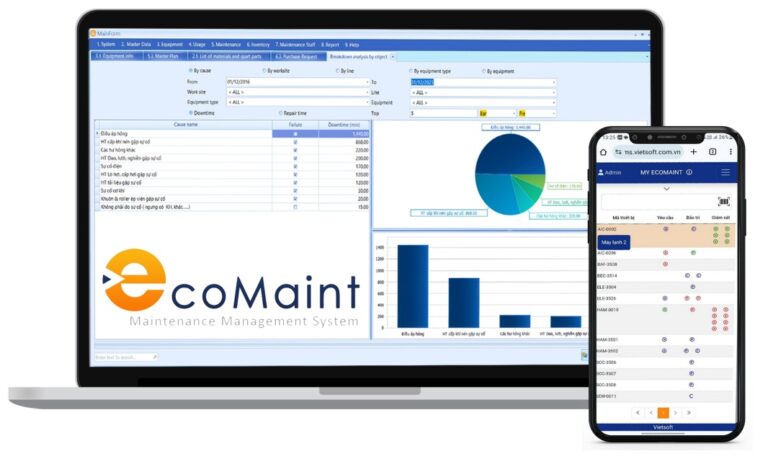
If your data is sparse—say, because you’re still transitioning to a digital system like a CMMS—don’t worry. Modern PdM tools, like CMMS EcoMaint by Vietsoft, can start generating insights within 2–4 weeks by learning from real-time sensor data.
3. Step 3: Assemble a Small, Dynamic Team
A PdM pilot thrives with a lean, motivated team. Too many people can slow things down, so aim for 3–5 key players:
- Reliability Engineer (Project Lead): Oversees the pilot and makes strategic decisions.
- Maintenance Technicians: Install sensors, monitor alerts, and perform repairs.
- IT Support: Ensures sensors connect to your network or CMMS.
- Optional Data Analyst: If you’re building PdM in-house, someone to analyze sensor data.
If you partner with a provider like Vietsoft, their expertise can reduce the need for an in-house data scientist, as their CMMS EcoMaint system handles much of the heavy lifting.
4. Step 4: Pick the Right Pilot Site
Choosing the right site for your PdM pilot sets the stage for success. Consider your site’s maintenance culture:
- Run-to-Fail Culture: You rely on technicians’ experience rather remediation data. PdM can introduce data-driven decisions, starting with critical assets.
- Mixed Culture: You use some preventive maintenance but still face unexpected failures. PdM can refine your approach.
- Reliability-Based Culture: You already track conditions and have a solid CMMS. PdM can scale your efforts and improve diagnostics.
For your first pilot, focus on one site to keep things manageable. This lets you concentrate resources and build a strong foundation for scaling later.
5. Step 5: Select the Right Assets
Not all equipment is suited for PdM, so choose wisely. Focus on assets that:
- Cause Big Losses: Machines that halt production when they fail.
- Show Warning Signs: Equipment with measurable degradation, like vibrations or temperature spikes.
- Run Consistently: Assets with stable operating patterns for reliable data.
- Are Sensor-Friendly: Easy to access for sensor installation.
Common candidates include pumps, motors, compressors, and conveyors. In Vietnam’s manufacturing sector, these are often critical to production lines.
6. Step 6: Secure a Small Budget
You don’t need a massive budget to start a PdM pilot. A typical setup might look like this:
- Sensors: 20–30 vibration or temperature sensors at $200–$300 each = $4,000–$9,000.
- Gateways: 1–2 network gateways at $250–$500 each = $500–$1,000.
- Software: A 3-month subscription to a PdM platform like CMMS EcoMaint = $3,000–$6,000.
- Installation/Training: Often included by providers.
Total: Around $8,000–$15,000 for a 90-day pilot.
This small investment can tackle downtime issues costing tens of thousands annually. Present this as a low-risk experiment with high ROI potential to win management approval.
7. Step 7: Deploy Smart Sensors with IIoT
Sensors are the eyes and ears of PdM, collecting real-time data on equipment health. Common sensor types include:
- Vibration Sensors: Catch early signs of bearing wear or misalignment.
- Temperature Sensors: Spot overheating in motors or compressors.
- Pressure Sensors: Detect issues in hydraulic or pneumatic systems.
- Proximity Sensors: Monitor positional changes in moving parts.
These sensors connect to the Industrial Internet of Things (IIoT) using protocols like MQTT, sending data to a central server for analysis. CMMS EcoMaint by Vietsoft makes this easy with plug-and-play integration and user-friendly dashboards.
8. Step 8: Train Machine Learning Models
Machine learning (ML) is what makes PdM smart. ML algorithms analyze sensor data to spot patterns that signal potential failures. Here’s how it works:
- Data Collection: Sensors send real-time data on vibration, temperature, etc.
- Pattern Recognition: ML identifies anomalies, like a spike in vibration indicating a bearing issue.
- Continuous Learning: Models get smarter as they process more data.
With CMMS EcoMaint, ML models start delivering insights within 2–4 weeks, even if you have limited historical data. This is perfect for Vietnamese factories transitioning to digital maintenance.
9. Step 9: Launch and Monitor the Pilot
Now it’s time to put your plan into action. Over 60–90 days, focus on:
- Installing Sensors: Ensure proper placement and calibration for accurate data.
- Integrating Data: Connect sensors to your CMMS or SCADA system.
- Monitoring Alerts: Check if alerts are accurate (true positives) or need tweaking (false positives).
- Tracking Impact: Note reductions in downtime, repair costs, or emergency work orders.
Use dashboards to visualize trends and share updates with your team to keep everyone engaged.
10. Step 10: Fine-Tune Your System
No pilot is perfect right away. Use early results to improve:
- Adjust Alert Thresholds: Reduce false alarms by fine-tuning sensitivity.
- Optimize Maintenance Schedules: Plan interventions based on PdM insights.
- Add Sensors if Needed: Expand coverage to other critical assets.
Regularly review alerts with your team to build trust in the system and improve predictions.
11. Step 11: Prove the Value with ROI
At 30 and 60 days, measure your pilot’s impact to show it’s worth scaling. Key metrics include:
- Downtime Avoided: “Saved 4 hours of downtime, worth $40,000.”
- Cost Savings: “Reduced spare parts costs by $5,000.”
- Work Order Efficiency: “Cut emergency repairs by 15%.”
Share these wins with management using simple graphs and real stories to secure buy-in for expansion.
12. Step 12: Scale and Make PdM Part of Your Culture
Once your pilot succeeds, expand thoughtfully:
- Add Similar Assets: Apply the same models to similar equipment for faster results.
- Integrate with CMMS: Use CMMS EcoMaint to embed PdM alerts into daily workflows.
- Set KPIs: Track metrics like downtime reduction or maintenance cost savings.
- Train Your Team: Teach technicians how to interpret alerts and act on them.
Make PdM a core part of “how we do maintenance” by sharing success stories and celebrating wins.
IV. How CMMS EcoMaint Supercharges Your PdM Journey
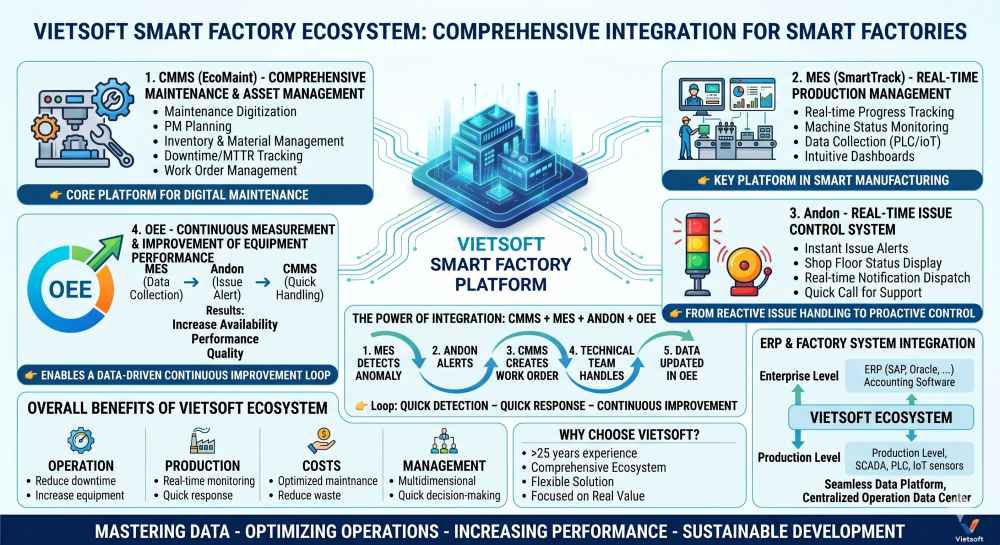
Implementing a Roadmap of a Predictive Maintenance is easier with the right tools. CMMS EcoMaint by Vietsoft is a powerful ally, offering:
- Real-Time Dashboards: See asset health at a glance, from vibration to temperature trends.
- Automated Alerts: Get instant notifications of potential failures, linked to work orders.
- Seamless IIoT Integration: Connects sensors to your existing systems with minimal setup.
- Scalable Design: Grows with you from a small pilot to a full enterprise solution.
With a user-friendly interface tailored for Vietnamese manufacturers, CMMS EcoMaint makes PdM accessible to teams of all sizes. Curious to see it in action? Learn more about CMMS EcoMaint here.
Contact us for consultation via hotline: 0986778578 or email: sales@vietsoft.com.vn.
V. Tips for Maintenance Professionals
1. Choosing the Right Sensors
Sensors are the heart of PdM. To get the best results:
- Pick IIoT-Compatible Sensors: Ensure they support protocols like MQTT for real-time data.
- Match Sensors to Failure Modes: Use vibration sensors for rotating equipment, temperature sensors for motors, etc.
- Ensure Easy Integration: Sensors should work with your PLCs, SCADA, or CMMS without disrupting operations.
2. Leveraging Machine Learning
Machine learning takes PdM to the next level by spotting patterns humans might miss. Here’s how it helps:
- Early Detection: Catches subtle signs of failure, like a 5 mm/s vibration increase in a pump.
- Continuous Improvement: Gets smarter with more data, improving accuracy over time.
- Traceability: Tracks data history for audits and trend analysis.
Simple Example: If a compressor’s temperature rises 10°C above normal for 24 hours, the ML model flags it for inspection, potentially saving $20,000 in repairs.
VI. Overcoming Common Challenges
- Limited Data? Use adaptive ML models like those in CMMS EcoMaint that learn quickly from real-time data.
- Team Resistance? Share early wins, like a caught failure, to build trust and excitement.
- Budget Constraints? Start with a small pilot to prove ROI before asking for more funds.
VII. Wrapping It Up
A well-executed Roadmap of a Predictive Maintenance can transform your maintenance operations, saving you from the chaos of unexpected breakdowns and skyrocketing costs. By following these 12 steps—starting small, proving value, and scaling smartly—you can build a PdM program that delivers real results. With tools like CMMS EcoMaint by Vietsoft, you have a partner to make this journey smooth and effective, tailored to the needs of Vietnam’s industrial sector.