Run-to-Failure Maintenance, often referred to as reactive or breakdown maintenance, is a strategic approach where equipment is intentionally operated until it fails, at which point it is repaired or replaced. While this might seem like a risky strategy at first glance, when applied correctly, Run-to-Failure Maintenance can be a cost-effective and efficient solution for specific types of assets. In this guide, we’ll dive deep into the concept, exploring its role, benefits, applications, and how to implement it effectively, with a focus on industrial maintenance and production management.
I. What Is Run-to-Failure Maintenance?
Run-to-Failure Maintenance (RTF) is a deliberate strategy where equipment is allowed to operate without preventive maintenance until it fails. Unlike proactive strategies like preventive or predictive maintenance, RTF focuses on addressing issues only after a breakdown occurs. This approach is not about neglecting equipment but rather making a calculated decision to prioritize cost efficiency for certain assets.
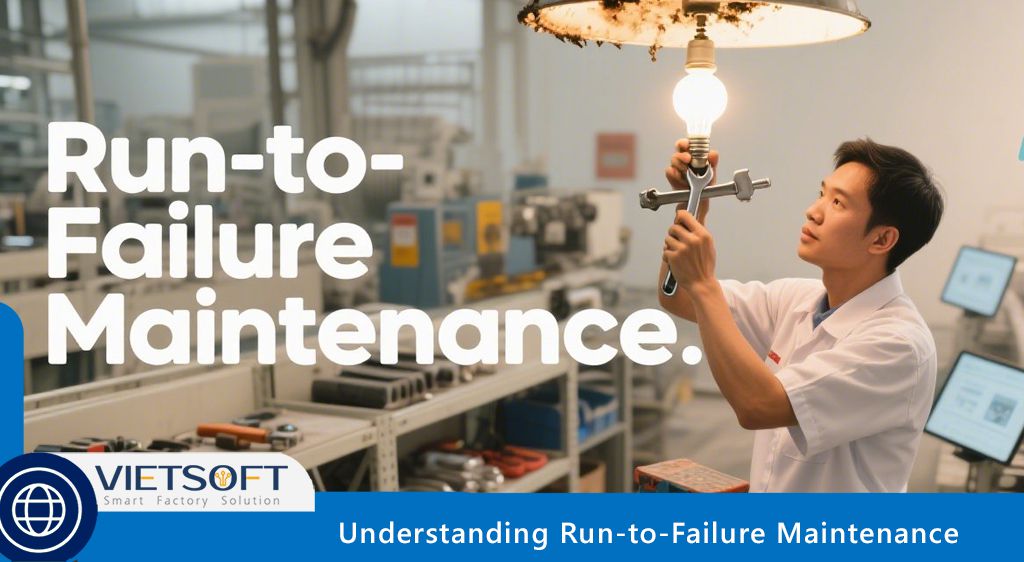
For example, consider a factory using low-cost, non-critical components like light bulbs or disposable filters. Instead of scheduling regular inspections or replacements, the facility allows these items to run until they fail, replacing them as needed. This approach minimizes maintenance overhead while ensuring operations continue smoothly.
RTF is often misunderstood as a lack of planning, but it requires careful preparation, including maintaining spare parts inventory and ensuring rapid response capabilities. The strategy is best suited for assets where failure has minimal impact on production, safety, or costs.
II. Key Features of Run-to-Failure Maintenance
Run-to-Failure Maintenance is characterized by several distinct features that make it unique among maintenance strategies:
- Reactive Approach: Maintenance is only performed after equipment failure, eliminating the need for scheduled interventions.
- Minimal Upfront Costs: Since no preventive maintenance is conducted, initial costs are low, focusing only on repairs or replacements post-failure.
- Simplified Planning: RTF does not require complex maintenance schedules or condition-monitoring systems, making it straightforward to implement.
- Selective Application: The strategy is applied to non-critical, inexpensive, or disposable assets where failure does not disrupt operations significantly.
These features make RTF an attractive option for specific scenarios, but its success depends on proper asset selection and planning.
III. Benefits of Run-to-Failure Maintenance
When implemented correctly, Run-to-Failure Maintenance offers several advantages, particularly for non-critical assets. Here are the key benefits:
1. Cost Savings on Maintenance
By avoiding regular inspections, lubrication, or part replacements, RTF significantly reduces maintenance costs for non-critical assets. For example, maintaining a fleet of light bulbs in a warehouse through regular checks is time-consuming and costly. Instead, replacing bulbs only when they burn out saves both labor and administrative expenses.
2. Time Efficiency for Maintenance Teams
RTF allows technicians to focus on critical equipment that requires proactive maintenance. By eliminating routine tasks for non-essential assets, teams can allocate their time to high-priority machinery, improving overall operational efficiency.
3. Simplified Implementation
Unlike predictive maintenance, which requires sensors and data analytics, or preventive maintenance, which demands detailed schedules, RTF is straightforward. Maintenance teams only need to respond to failures, reducing the need for complex systems or extensive training.
4. Full Utilization of Assets
RTF ensures equipment is used to its maximum lifespan, avoiding premature replacements. For instance, a conveyor belt in a distribution center can be run until it wears out, maximizing its value before replacement.
5. No Over-Maintenance
Over-maintaining equipment can lead to unnecessary costs and downtime. RTF eliminates the risk of performing maintenance more frequently than needed, ensuring resources are used efficiently.
IV. Challenges of Run-to-Failure Maintenance
While RTF offers clear benefits, it also comes with challenges that must be carefully managed to avoid negative outcomes. Here are the primary challenges:
1. Unpredictable Downtime
Since failures are not anticipated, equipment breakdowns can occur at inconvenient times, potentially disrupting operations. For example, if a non-critical pump fails during peak production hours, it could cause minor delays if not addressed quickly.
2. Higher Emergency Repair Costs
Emergency repairs often come with premium costs, such as expedited parts delivery or overtime labor. If a failure causes secondary damage to other components, repair costs can escalate significantly.
3. Potential Safety Risks
For certain equipment, unexpected failures can pose safety hazards. While RTF is typically applied to non-critical assets, poor asset selection could lead to risks, such as a malfunctioning backup generator in a critical facility.
4. Reduced Equipment Lifespan
Running equipment to failure can cause excessive wear, potentially shortening its overall lifespan compared to a preventive approach. This is particularly true for assets with interconnected components, where one failure can strain others.
5. Inventory Management Challenges
RTF relies heavily on having spare parts readily available. Without proper inventory management, a failure could lead to extended downtime while waiting for replacements, negating the cost-saving benefits.
V. When Should You Use Run-to-Failure Maintenance?
Run-to-Failure Maintenance is not a one-size-fits-all solution. It works best under specific conditions where the risks of failure are minimal. Here are the scenarios where RTF is most appropriate:
1. Non-Critical Assets
Equipment that does not significantly impact production or safety is ideal for RTF. For example, office furniture, signage, or low-usage backup systems can be allowed to fail without major consequences.
2. Low-Cost or Disposable Assets
Items like filters, light bulbs, or printer cartridges are inexpensive and easy to replace, making RTF a practical choice. The cost of preventive maintenance for these assets often exceeds the cost of replacement.
3. Assets with Random Failure Patterns
Some equipment fails unpredictably, making preventive maintenance ineffective. For instance, electronic components with no clear wear patterns may be better suited for RTF.
3. Low Safety or Compliance Risks
RTF should only be used for equipment where failure does not pose safety hazards or violate regulatory standards. For example, a failed light bulb in a storage room is unlikely to cause harm, unlike a malfunctioning industrial press.
4. Readily Available Spare Parts
RTF is only viable if replacement parts are stocked and accessible. For example, a manufacturing plant using RTF for conveyor belts must maintain a sufficient inventory to avoid downtime.
Conversely, RTF should never be used for critical equipment where failure could lead to significant financial losses, safety risks, or regulatory violations. A thorough risk assessment is essential before adopting this strategy.
VI. Practical Examples of Run-to-Failure Maintenance
To illustrate how Run-to-Failure Maintenance works in real-world settings, here are a few practical examples:
1. Light Bulbs in a Factory
In a large manufacturing facility, overhead lighting is essential but not critical to production. Instead of inspecting each bulb regularly, the maintenance team replaces them only when they burn out. This approach saves time and resources, as bulbs are inexpensive and replacements are quick.
2. Disposable Conveyor Belts
In a distribution center, low-cost conveyor belts used for non-critical materials are allowed to run until they wear out. The facility keeps spare belts in stock, ensuring replacements can be made quickly without disrupting operations.
3. Backup Generators
A water treatment plant may use backup generators that are rarely activated. Since these generators are not in constant use, the facility opts for RTF, replacing or repairing them only when they fail, provided primary systems remain operational.
These examples highlight how RTF can be applied effectively when the right assets are chosen and proper planning is in place.
VII. How to Implement a Successful Run-to-Failure Maintenance Program
Implementing Run-to-Failure Maintenance requires careful planning to ensure it delivers cost savings without compromising operations. Here’s a step-by-step guide to creating an effective RTF program:
1. Step 1: Select Appropriate Equipment
Identify non-critical, low-cost, or disposable assets suitable for RTF. Conduct a criticality assessment to ensure failures won’t disrupt production or pose safety risks.
2. Step 2: Document Equipment Details
Record key information about each asset, including manufacturer, model, expected lifespan, and failure history. This data helps track performance and plan replacements.
3. Step 3: Establish Safety Protocols
Develop clear procedures for safely shutting down equipment during failures. Train operators to recognize failure symptoms and respond appropriately to minimize risks.
4. Step 4: Maintain Spare Parts Inventory
Stock critical spare parts based on anticipated failure patterns. Use an inventory management system to ensure parts are available when needed, reducing downtime.
5. Step 5: Create a Rapid Response Plan
Develop a plan for quick repairs or replacements, including assigned responsibilities and procedures. Ensure maintenance teams are trained to act swiftly.
6. Step 6: Conduct Root Cause Analysis
After each failure, perform a root cause analysis to understand why it occurred. Use these insights to improve processes or reconsider whether RTF is appropriate for the asset.
7. Step 7: Track Costs
Monitor repair costs, downtime, and lost production associated with RTF. Compare these costs to preventive maintenance to ensure RTF remains cost-effective.
8. Step 8: Review and Adapt
Regularly evaluate the RTF program’s performance. If operational risks or costs increase, consider shifting to a proactive maintenance strategy for certain assets.
VIII. Role of CMMS in Run-to-Failure Maintenance
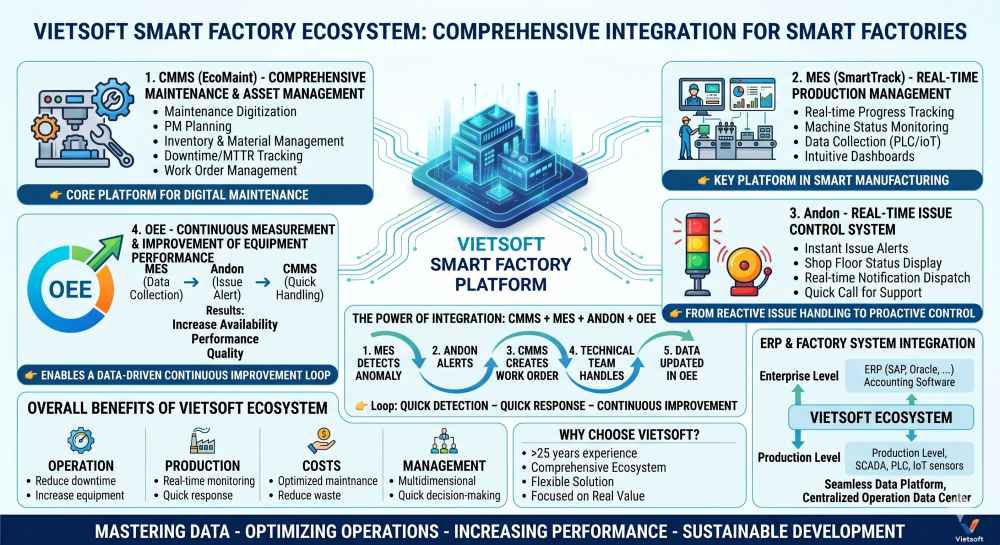
While Run-to-Failure Maintenance is reactive, it benefits significantly from the use of a Computerized Maintenance Management System (CMMS). A CMMS like EcoMaint, developed by Vietsoft, can enhance RTF by providing tools to manage and optimize the strategy. Here’s how:
- Asset Tracking: A CMMS tracks failure history and asset performance, helping managers identify which equipment is suitable for RTF.
- Inventory Management: The system ensures spare parts are stocked and available, minimizing downtime during failures.
- Work Order Management: Predefined work order templates allow quick assignment of repair tasks when failures occur.
- Cost Analysis: A CMMS compares RTF costs with preventive maintenance costs, ensuring the strategy remains economical.
- Data Insights: By analyzing failure patterns, a CMMS helps teams make informed decisions about whether to continue with RTF or adopt a proactive approach.
IX. Integrating Run-to-Failure with Other Maintenance Strategies
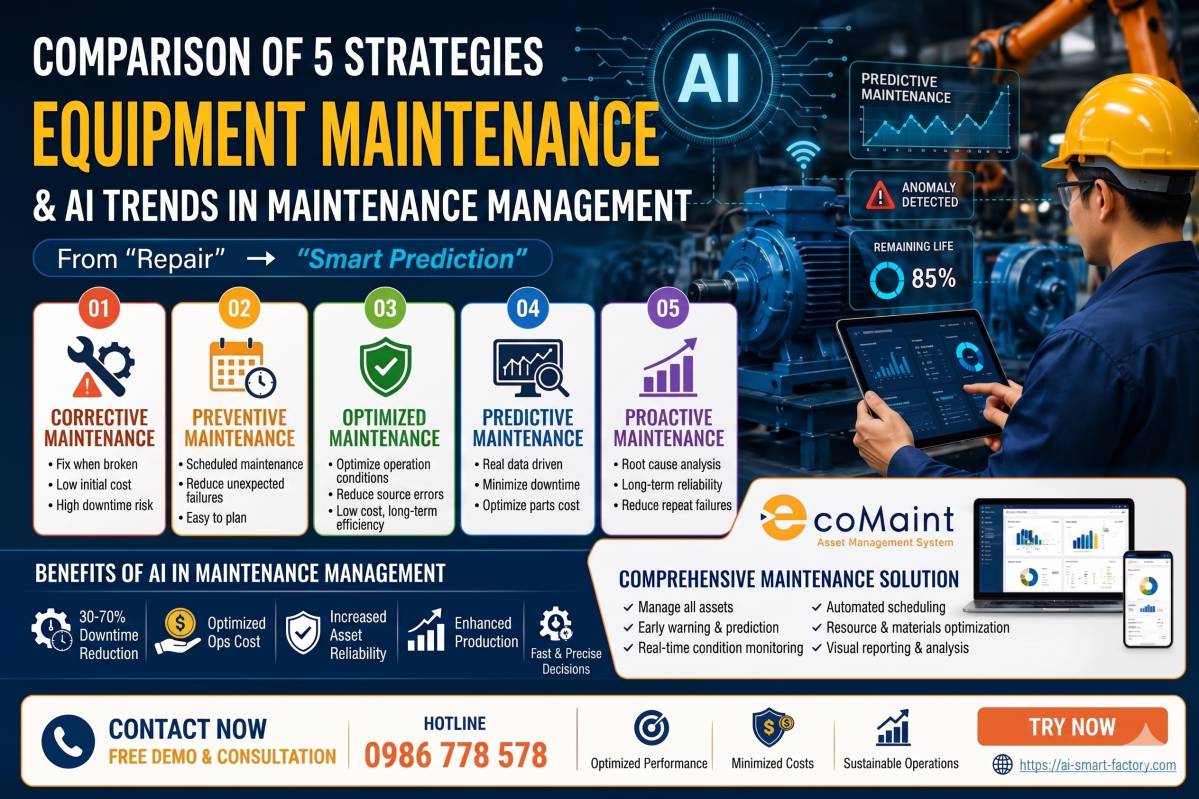
While Run-to-Failure Maintenance is effective for specific assets, most facilities benefit from a hybrid approach that combines RTF with preventive and predictive maintenance. For instance, critical machinery like industrial presses or HVAC systems may require predictive maintenance using sensors to monitor performance, while non-critical assets like signage or filters can follow an RTF approach.
A CMMS like EcoMaint facilitates this integration by allowing teams to manage multiple maintenance strategies simultaneously. By categorizing assets based on criticality, teams can allocate resources efficiently, using RTF for low-priority items and proactive strategies for critical equipment.
X. Conclusion: Is Run-to-Failure Maintenance Right for You?
Run-to-Failure Maintenance is a valuable strategy when applied to the right assets—non-critical, low-cost, or disposable equipment with minimal impact on operations. By reducing maintenance costs, saving time, and simplifying planning, RTF can enhance efficiency in specific scenarios. However, its success depends on careful asset selection, robust inventory management, and rapid response capabilities.
For maintenance professionals in Vietnam, tools like Vietsoft’s EcoMaint CMMS can transform RTF from a reactive approach to a strategic one, providing visibility into asset performance and streamlining failure responses. By integrating RTF with proactive maintenance strategies, facilities can achieve a balanced, cost-effective maintenance program that supports long-term operational success.
To explore how EcoMaint can enhance your Run-to-Failure Maintenance strategy and overall maintenance operations, Explore the CMMS EcoMaint solution here.
Contact us for consultation via hotline: 0986778578 or email: sales@vietsoft.com.vn.