
In today’s fast-paced industrial landscape, keeping equipment running smoothly is critical to minimizing downtime, reducing costs, and ensuring operational excellence. Prescriptive Maintenance (RxM) has emerged as a game-changer, leveraging advanced technologies like artificial intelligence (AI), machine learning (ML), and the Industrial Internet of Things (IIoT) to not only predict equipment failures but also provide actionable recommendations to prevent them. This comprehensive guide explores what prescriptive maintenance is, how it works, its benefits, applications, and why it’s becoming a cornerstone of modern asset management strategies.
I. What is Prescriptive Maintenance?
Prescriptive Maintenance (RxM) is an advanced, data-driven maintenance strategy that goes beyond predicting when equipment might fail. It uses AI, ML, and real-time data from IoT sensors to analyze equipment conditions, identify potential issues, and prescribe specific actions to prevent failures. Unlike traditional maintenance approaches, prescriptive maintenance provides detailed, actionable insights, such as adjusting operating conditions, scheduling targeted repairs, or replacing specific components, to optimize equipment performance and extend asset lifespan.
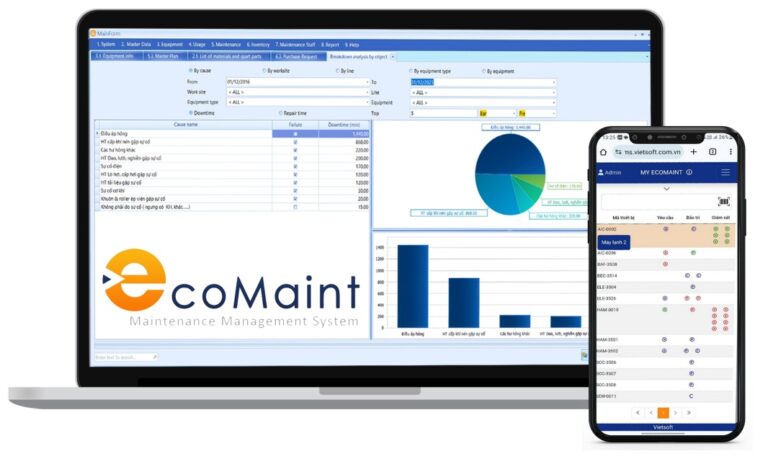
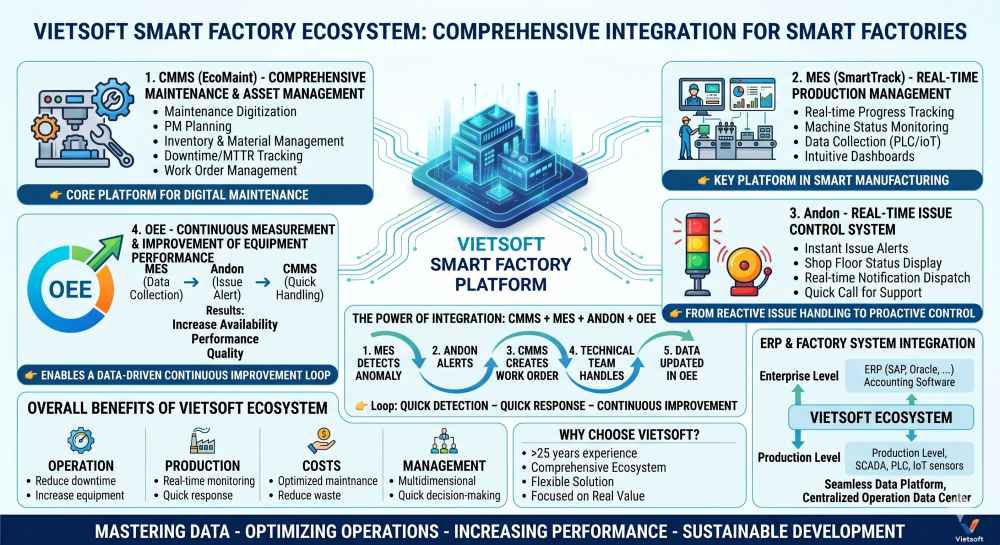
For example, in a manufacturing plant, a prescriptive maintenance system might detect abnormal vibrations in a motor, diagnose the root cause (e.g., bearing wear), and recommend lubricating the bearing or reducing the motor’s speed to delay failure. By integrating with tools like Computerized Maintenance Management Systems (CMMS), such as Vietsoft’s CMMS EcoMaint, prescriptive maintenance ensures these recommendations are seamlessly translated into actionable work orders, minimizing downtime and enhancing efficiency.
II. How Prescriptive Maintenance Differs from Other Strategies
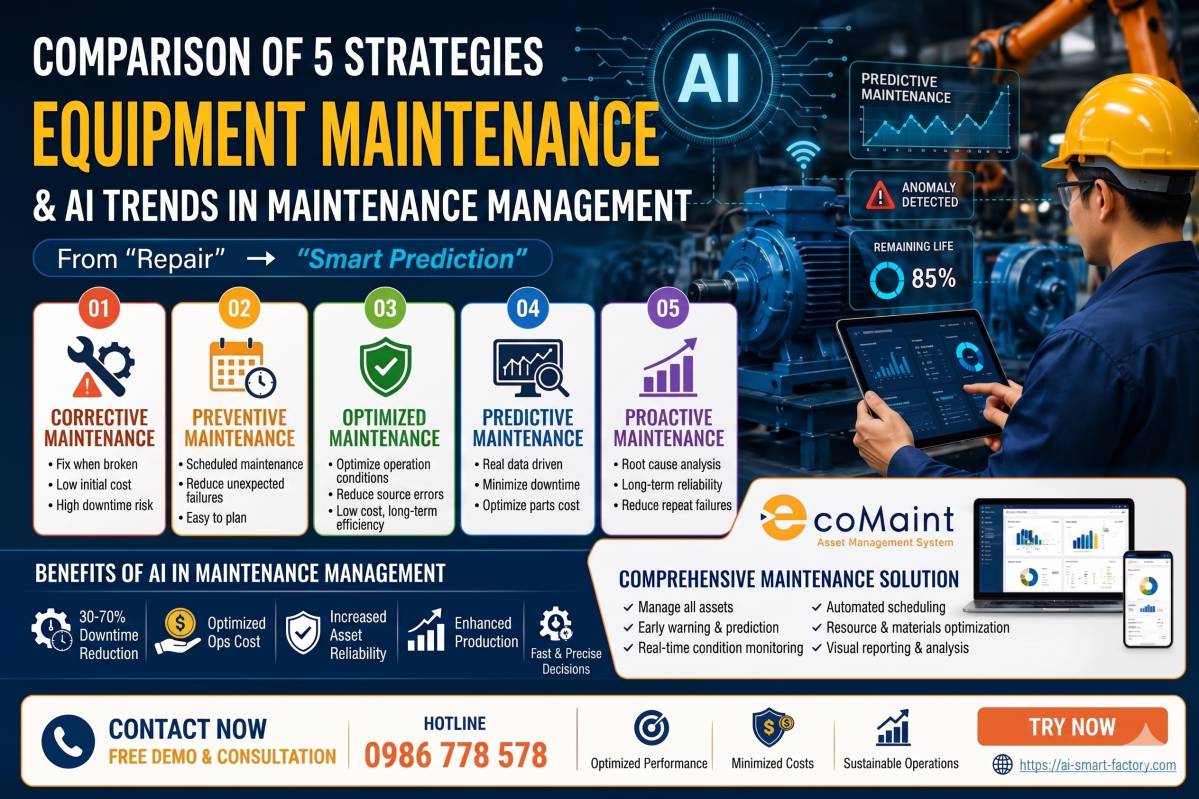
To fully grasp the value of prescriptive maintenance, it’s essential to understand how it compares to other maintenance strategies commonly used in industrial settings.
III. Prescriptive Maintenance vs. Reactive Maintenance
Reactive maintenance, often referred to as “run-to-failure,” involves repairing equipment only after it breaks down. While this approach requires minimal upfront investment, it leads to significant downtime, costly emergency repairs, and potential safety risks. Prescriptive maintenance, by contrast, proactively identifies issues before they escalate, ensuring continuous operations and reducing unexpected costs.
IV. Prescriptive Maintenance vs. Preventive Maintenance
Preventive maintenance relies on fixed schedules for maintenance tasks, such as lubrication or part replacements, based on time or usage intervals. While effective in reducing failures, it can lead to over-maintenance, wasting resources on unnecessary tasks. Prescriptive maintenance optimizes this process by scheduling maintenance only when data indicates it’s needed, improving resource efficiency.
V. Prescriptive Maintenance vs. Predictive Maintenance
Predictive maintenance (PdM) uses real-time data and analytics to forecast when equipment is likely to fail. For instance, it might predict that a pump will fail in 30 days based on vibration patterns. Prescriptive maintenance builds on this by not only predicting the failure but also recommending specific actions, such as adjusting the pump’s operating parameters or scheduling a targeted repair, to prevent the failure altogether.
VI. Prescriptive Maintenance vs. Reliability-Centered Maintenance (RCM)
Reliability-centered maintenance (RCM) is a strategic approach that identifies the most effective maintenance methods for each asset to ensure reliability. Prescriptive maintenance can complement RCM by providing real-time, data-driven recommendations for specific components, enhancing the overall strategy with precise, actionable insights.
VII. How Prescriptive Maintenance Works
Prescriptive maintenance relies on a sophisticated, technology-driven process that integrates data collection, advanced analytics, and actionable recommendations. Here’s a step-by-step breakdown of how it works:
1. Data Collection via IoT Sensors
Critical assets are equipped with IoT sensors that monitor parameters like temperature, vibration, pressure, and energy consumption in real time. These sensors provide a continuous stream of data, capturing even subtle changes in equipment performance.
2. Data Analysis with AI and Machine Learning
The collected data is processed using ML algorithms trained on historical and real-time data. These algorithms identify patterns, detect anomalies, and pinpoint potential failure points. For example, an increase in motor temperature might indicate impending bearing failure.
3. AI-Driven Recommendations
AI analyzes the data to generate specific, actionable recommendations. For instance, it might suggest reducing a machine’s load by 10% to extend its lifespan or scheduling a maintenance task during a planned downtime window.
4. Task Execution and Automation
Recommendations are integrated with CMMS platforms like CMMS EcoMaint, which automatically generate work orders, assign tasks to technicians, and schedule maintenance based on urgency and operational impact. This ensures timely and efficient execution.
5. Continuous Learning and Improvement
After maintenance tasks are completed, sensors continue to monitor equipment performance. The system uses feedback from these interventions to refine its algorithms, improving the accuracy of future predictions and recommendations.
This closed-loop process ensures that prescriptive maintenance evolves with the equipment it monitors, delivering increasingly precise and effective maintenance strategies.
VIII. Key Benefits of Prescriptive Maintenance
Prescriptive maintenance offers a range of benefits that transform how organizations manage their assets. Below are the key advantages:
1. Enhanced Equipment Reliability and Uptime
By predicting failures and providing precise corrective actions, prescriptive maintenance minimizes unexpected breakdowns. For example, in a food processing plant, detecting early signs of conveyor belt misalignment and recommending adjustments can prevent costly production halts, ensuring continuous operations.
2. Extended Asset Lifespan
Proactive interventions reduce wear and tear on equipment, extending its operational life. For instance, a prescriptive maintenance system might recommend adjusting a pump’s operating speed to reduce stress on its components, delaying the need for costly replacements.
3. Improved Safety and Compliance
Malfunctioning equipment can pose significant safety risks. Prescriptive maintenance identifies potential hazards, such as overheating motors or worn-out parts, before they cause accidents. It also ensures compliance with industry regulations by maintaining equipment in optimal condition.
4. Cost Savings
By targeting maintenance only when necessary, prescriptive maintenance reduces unnecessary repairs and labor costs. It also minimizes downtime, which can be particularly costly in industries like manufacturing or energy. For example, avoiding a single unplanned downtime event in a power plant can save millions in lost production.
5. Optimized Maintenance Scheduling
Prescriptive maintenance uses data to schedule tasks during low-impact periods, minimizing disruptions to operations. For instance, a logistics company might schedule vehicle maintenance during off-peak hours, ensuring fleet availability during high-demand periods.
6. Competitive Advantage
Organizations adopting prescriptive maintenance gain a competitive edge through improved efficiency, reduced costs, and enhanced reliability. This is particularly critical in industries like aerospace, where precision and uptime are paramount.
IX. Industry Applications of Prescriptive Maintenance
Prescriptive maintenance is transforming asset management across various industries. Below are some key applications:
1. Manufacturing
In manufacturing, prescriptive maintenance monitors production lines to prevent failures in critical equipment like robotic arms or CNC machines. For example, a system might detect excessive vibration in a robotic arm and recommend recalibration, avoiding costly production delays.
2. Energy and Utilities
Power plants and renewable energy facilities use prescriptive maintenance to optimize equipment like turbines, transformers, and solar panels. For instance, a wind farm might use prescriptive analytics to adjust blade angles based on wind conditions, maximizing energy output and reducing mechanical stress.
3. Healthcare
Hospitals rely on prescriptive maintenance to ensure the reliability of critical equipment like MRI scanners or ventilators. By predicting and addressing issues like filter clogging in ventilators, hospitals can avoid service interruptions and ensure patient safety.
4. Transportation and Logistics
Fleet operators use prescriptive maintenance to monitor vehicle components, such as engines or brakes, reducing downtime and ensuring timely deliveries. For example, a delivery company might receive recommendations to replace worn brake pads based on real-time sensor data, preventing breakdowns during transit.
5. Oil and Gas
In the oil and gas industry, prescriptive maintenance ensures the reliability of pumps, compressors, and drilling equipment. By predicting pipeline corrosion and recommending timely repairs, companies can avoid hazardous leaks and costly shutdowns.
6. Aerospace
Airlines use prescriptive maintenance to monitor aircraft engines and systems, ensuring safety and minimizing delays. For instance, a system might predict fuel pump degradation and recommend replacement during a scheduled maintenance window, avoiding in-flight failures.
X. Tools and Requirements for a Successful Prescriptive Maintenance Program
Implementing prescriptive maintenance requires a robust technological infrastructure and organizational commitment. Key tools and requirements include:
1. IoT Sensors and Connectivity
High-quality sensors are essential for collecting real-time data on equipment conditions. Secure, reliable IoT connectivity ensures seamless data transmission to centralized systems.
2. Advanced Analytics and AI
Machine learning algorithms and AI platforms analyze data to generate predictive and prescriptive insights. These systems must be trained on historical data to ensure accuracy.
3. CMMS Software
A CMMS, like Vietsoft’s CMMS EcoMaint, integrates with IoT sensors to store data, run analytics, and automate maintenance workflows. It enables organizations to translate prescriptive recommendations into actionable tasks.
4. Cybersecurity Measures
With IoT devices and cloud-based systems, robust cybersecurity is critical to protect sensitive data and ensure system integrity.
5. Skilled Workforce
Technicians and managers need training to interpret prescriptive recommendations and use CMMS platforms effectively. A culture of embracing data-driven decisions is also essential.
XI. Challenges of Implementing Prescriptive Maintenance
While prescriptive maintenance offers significant benefits, it comes with challenges that organizations must address:
1. High Initial Costs
Investing in IoT sensors, AI platforms, and CMMS software requires significant upfront capital. Organizations must weigh these costs against long-term savings.
2. Data Quality and Integration
Prescriptive maintenance relies on high-quality, standardized data. Integrating data from diverse sources, such as legacy systems and new sensors, can be complex.
3. Regulatory Constraints
In industries like healthcare or aerospace, regulations may mandate fixed maintenance schedules, limiting the flexibility of prescriptive approaches.
4. Organizational Resistance
Shifting to a data-driven maintenance model may face resistance from teams accustomed to traditional methods. Building trust in AI recommendations is critical.
XII. Best Practices for Implementing Prescriptive Maintenance
To overcome these challenges and maximize the benefits of prescriptive maintenance, organizations should follow these best practices:
1. Start with Critical Assets
Focus on high-value or high-risk equipment to maximize ROI. For example, prioritize prescriptive maintenance for production-critical machines in a manufacturing plant.
2. Invest in Robust Infrastructure
Deploy reliable IoT sensors and ensure seamless connectivity. Integrate these with a powerful CMMS like CMMS EcoMaint to streamline data analysis and task execution.
3. Ensure Data Quality
Clean and standardize data to ensure accurate predictions. Regularly update historical data to improve algorithm performance.
4. Train and Engage Teams
Provide training on interpreting prescriptive recommendations and using CMMS tools. Foster a culture of collaboration between maintenance, operations, and IT teams.
5. Monitor and Refine
Continuously track performance metrics and refine AI models based on feedback. This ensures the system adapts to changing operational conditions.
XIII. The Future of Prescriptive Maintenance
As Industry 4.0 continues to evolve, prescriptive maintenance is poised to become even more transformative. Key trends shaping its future include:
1. Integration with Digital Twins
Digital twins—virtual replicas of physical assets—will enable organizations to simulate maintenance scenarios, optimizing interventions before they are implemented.
2. Augmented Reality (AR) Support
AR tools will provide technicians with real-time guidance, overlaying prescriptive recommendations directly onto equipment for faster, more accurate repairs.
3. Advanced AI and Machine Learning
Improved algorithms will deliver more precise predictions and recommendations, reducing false positives and enhancing reliability.
4. Cloud-Based Solutions
Cloud platforms will enable seamless data integration and scalability, making prescriptive maintenance accessible to smaller organizations.
5. Industry-Wide Adoption
As costs decrease and technology matures, prescriptive maintenance will become a standard practice, setting new benchmarks for efficiency and reliability.
XIV. Why Choose CMMS EcoMaint for Prescriptive Maintenance?
For organizations looking to implement prescriptive maintenance, Vietsoft’s CMMS EcoMaint offers a powerful, cloud-based solution tailored to modern industrial needs. This advanced CMMS integrates seamlessly with IoT sensors, AI analytics, and real-time data to deliver precise maintenance recommendations. Key features include:
- Real-Time Monitoring: Tracks asset health through IoT sensors, detecting anomalies instantly.
- Automated Workflows: Generates and prioritizes work orders based on prescriptive insights, ensuring timely interventions.
- Data-Driven Insights: Leverages AI to provide actionable recommendations, optimizing maintenance schedules and reducing costs.
- Scalable and Secure: Offers cloud-based flexibility with robust cybersecurity measures to protect sensitive data.
By adopting CMMS EcoMaint, organizations can transition to a proactive, data-driven maintenance strategy that minimizes downtime, extends asset life, and boosts operational efficiency. Curious to see how it works? Discover CMMS EcoMaint here. Contact us via hotline: 0986778578 or email: sales@vietsoft.com.vn.
XIV. Conclusion
Prescriptive Maintenance (RxM) represents the pinnacle of modern asset management, combining real-time data, AI, and IoT to deliver precise, actionable insights. By predicting failures and recommending targeted interventions, it minimizes downtime, reduces costs, and enhances equipment reliability across industries like manufacturing, energy, healthcare, and more. While challenges like high initial costs and data integration exist, the long-term benefits—improved uptime, extended asset life, and enhanced safety—make it a worthwhile investment.
With solutions like Vietsoft’s CMMS EcoMaint, organizations can seamlessly integrate prescriptive maintenance into their operations, unlocking new levels of efficiency and competitiveness. As technology continues to evolve, prescriptive maintenance will shape the future of industrial maintenance, ensuring organizations stay ahead in an increasingly digital world.