
In the fast-paced world of industrial operations, equipment downtime can significantly impact productivity, costs, and customer satisfaction. Understanding and optimizing key performance metrics is critical for maintenance teams aiming to keep operations running smoothly. One such metric, Mean Time to Repair (MTTR), stands out as a cornerstone for assessing and improving maintenance efficiency. But what is MTTR, and why does it matter? This article dives deep into the concept of MTTR, its calculation, its importance, and actionable strategies to reduce it.
I. Understanding MTTR: What is Mean Time to Repair?
What is MTTR in the context of industrial maintenance? Mean Time to Repair (MTTR) refers to the average time required to diagnose, repair, and restore a piece of equipment or system to full operational status after a failure. It is a critical maintenance metric that provides insights into how efficiently a maintenance team can respond to and resolve unplanned breakdowns.
MTTR encompasses several stages of the repair process, including:
- Notification: Alerting the maintenance team about the failure.
- Diagnosis: Identifying the root cause of the issue.
- Repair: Performing the necessary fixes, such as replacing parts or adjusting components.
- Verification: Testing and ensuring the equipment is fully functional and ready for production.
Unlike other metrics, MTTR does not include the time spent waiting for spare parts or administrative delays, focusing solely on the active repair process. By measuring MTTR, maintenance teams can gauge their responsiveness and efficiency, making it a vital indicator of operational health.
For example: imagine a production line in a beverage manufacturing plant where a critical bottling machine fails. The maintenance team is notified, diagnoses a faulty motor, replaces it, and tests the machine to ensure it’s operational. If this process takes 3 hours for one failure, 2 hours for another, and 4 hours for a third, the total repair time is 9 hours. Dividing this by the number of failures (3) gives an MTTR of 3 hours.
II. Why is MTTR Important in Industrial Maintenance?
MTTR is more than just a number—it’s a reflection of a maintenance team’s ability to minimize downtime and maintain operational efficiency. Here’s why tracking and optimizing MTTR is crucial:
1. Minimizing Downtime
Every minute of equipment downtime translates to lost production. A low MTTR ensures that machines are back online quickly, reducing disruptions to manufacturing schedules.
2. Reducing Operational Costs
Prolonged repairs increase labor costs, require urgent spare parts, and lead to production losses. By lowering MTTR, companies can save on these expenses and improve their bottom line.
3. Enhancing Equipment Availability
A lower MTTR means equipment is available for production more often, directly impacting throughput and productivity.
4. Supporting Strategic Decision-Making
MTTR data helps identify problematic assets or processes, enabling maintenance managers to allocate resources effectively and prioritize investments in new equipment or training.
5. Improving Customer Satisfaction
Reduced downtime ensures that production deadlines are met, leading to timely deliveries and higher customer satisfaction.
6. Boosting Overall Productivity
Efficient maintenance processes, reflected by a low MTTR, contribute to smoother operations and a more productive plant.
By focusing on MTTR, organizations can align their maintenance strategies with broader business goals, such as cost efficiency, reliability, and competitiveness.
III. How to Calculate MTTR: A Simple Formula
Calculating MTTR is straightforward and provides a clear picture of maintenance efficiency. The formula is:
MTTR = Total Repair Time ÷ Number of Repairs
Here’s how it works in practice:
1. Track Repair Time: Record the time from when a failure is detected to when the equipment is fully operational again. This includes diagnosis, repair, and verification.
2. Sum the Repair Times: Add up the total repair time for all failures over a specific period (e.g., a week, month, or year).
3. Count the Failures: Note the total number of repair incidents during that period.
4. Divide: Divide the total repair time by the number of repairs to get the average.
Example Calculation
Suppose a packaging machine in a factory fails 5 times in a month, with repair times of 2 hours, 3 hours, 1.5 hours, 4 hours, and 2.5 hours. The total repair time is 2 + 3 + 1.5 + 4 + 2.5 = 13 hours. Dividing by the number of failures (5), the MTTR is:
13 hours ÷ 5 repairs = 2.6 hours
This means, on average, it takes 2.6 hours to repair the machine each time it fails. Maintenance teams can use this data to set benchmarks and identify areas for improvement.
IV. What is a Good MTTR?
A “world-class” MTTR varies depending on factors like industry, equipment type, and operational complexity. However, a general benchmark for industrial settings is an MTTR of under 5 hours. Critical assets, such as those in high-speed manufacturing, may require an MTTR closer to 1–2 hours to maintain productivity.
V. Factors That Contribute to High MTTR
High MTTR values often indicate inefficiencies in the maintenance process. Common factors that increase MTTR include:
- Lack of Access to Technical Information: Scattered or outdated documentation slows down diagnosis and repair.
- Poor Spare Parts Management: Stockouts or disorganized inventories lead to delays in obtaining necessary parts.
- Manual Processes: Slow, paper-based reporting and task assignment hinder responsiveness.
- Inadequate Technician Training: Untrained or undertrained staff may take longer to diagnose and fix issues.
- Lack of Historical Data: Without a record of past failures, technicians may struggle to identify recurring problems.
- Complex Equipment: Older or highly specialized machinery may require more time to repair due to its complexity.
Addressing these factors is key to reducing MTTR and improving overall maintenance efficiency.
VI. Strategies to Reduce MTTR in Industrial Maintenance
Lowering MTTR requires a proactive approach to maintenance management. Below are proven strategies to optimize repair times and enhance operational efficiency:
1. Standardize Repair Processes
Creating standardized procedures, such as checklists and step-by-step guides, ensures consistency and reduces trial-and-error during repairs. For example, a checklist for a motor replacement might include steps like “verify power disconnection,” “check motor specifications,” and “test alignment post-repair.”
2. Improve Troubleshooting Efficiency
Effective troubleshooting is critical for reducing diagnosis time, which often accounts for the bulk of MTTR. Providing technicians with digital tools, such as diagnostic software or mobile apps, can help pinpoint issues faster. For instance, a vibration analysis tool can quickly identify bearing issues in a rotating machine.
3. Optimize Spare Parts Inventory
A well-managed inventory ensures that critical spare parts are readily available. Implementing an inventory management system that tracks usage, forecasts demand, and automates reordering can prevent delays caused by stockouts.
4. Leverage Predictive Maintenance
Predictive maintenance uses sensors and data analytics to monitor equipment health in real-time, allowing teams to address potential issues before they lead to failures. For example, IoT sensors on a conveyor belt can detect unusual vibrations, enabling preemptive repairs that reduce MTTR.
5. Invest in Technician Training
Well-trained technicians can diagnose and repair issues more quickly. Regular training programs, including one-point lessons (short, visual guides on specific repair tasks), can enhance skills and reduce errors. For example, a one-point lesson on replacing a hydraulic pump can include diagrams and key safety checks.
6. Implement a CMMS Solution
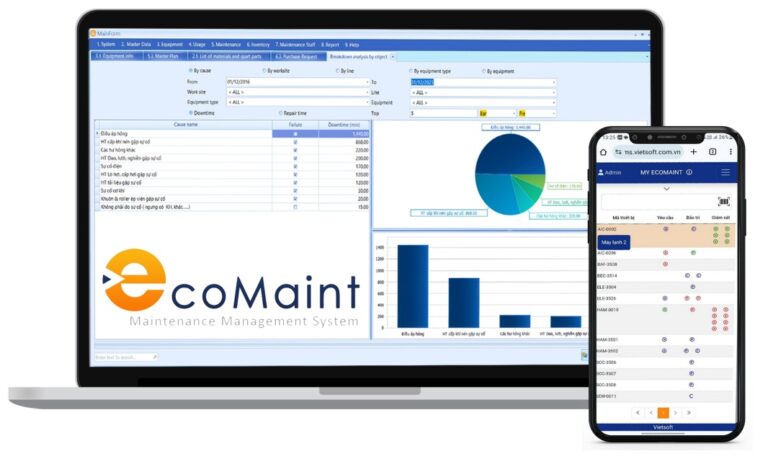
A Computerized Maintenance Management System (CMMS) like Vietsoft’s CMMS EcoMaint can significantly reduce MTTR by streamlining maintenance operations. Key features include:
- Real-Time Failure Reporting: Technicians can report issues instantly via mobile devices, speeding up response times.
- Centralized Technical History: Access to past repairs and failure patterns helps technicians diagnose issues faster.
- Automated Work Orders: Tasks are assigned and tracked digitally, reducing manual errors and delays.
- Spare Parts Management: The system tracks inventory levels and automates restocking, ensuring parts are always available.
- Analytics and Reporting: Detailed MTTR reports help identify trends and areas for improvement.
VII. MTTR vs. Other Maintenance Metrics
MTTR is often used alongside other key performance indicators (KPIs) to provide a comprehensive view of maintenance performance. Here’s how it compares to related metrics:
1. MTTR vs. Mean Time Between Failures (MTBF)
While MTTR measures the average time to repair a failure, Mean Time Between Failures (MTBF) measures the average time an asset operates before failing. Together, they provide a complete picture of equipment reliability and maintainability. The formula for system availability using both metrics tg is:
Availability = MTBF ÷ (MTBF + MTTR)
For example, if a machine has an MTBF of 100 hours and an MTTR of 5 hours, the availability is:
100 ÷ (100 + 5) = 0.952 (95.2%)
This means the machine is operational 95.2% of the time, a critical metric for assessing overall performance.
2. MTTR vs. Mean Time to Recovery
While MTTR focuses on the repair process, Mean Time to Recovery includes additional steps like testing and returning the system to normal operation. In maintenance contracts, it’s essential to clarify whether MTTR refers to repair or recovery to avoid confusion.
3. MTTR vs. Mean Time to Failure (MTTF)
Mean Time to Failure (MTTF) applies to non-repairable assets, measuring the average time until failure. Unlike MTTR, it’s used for assets that are replaced rather than repaired.
4. MTTR vs. Overall Equipment Effectiveness (OEE)
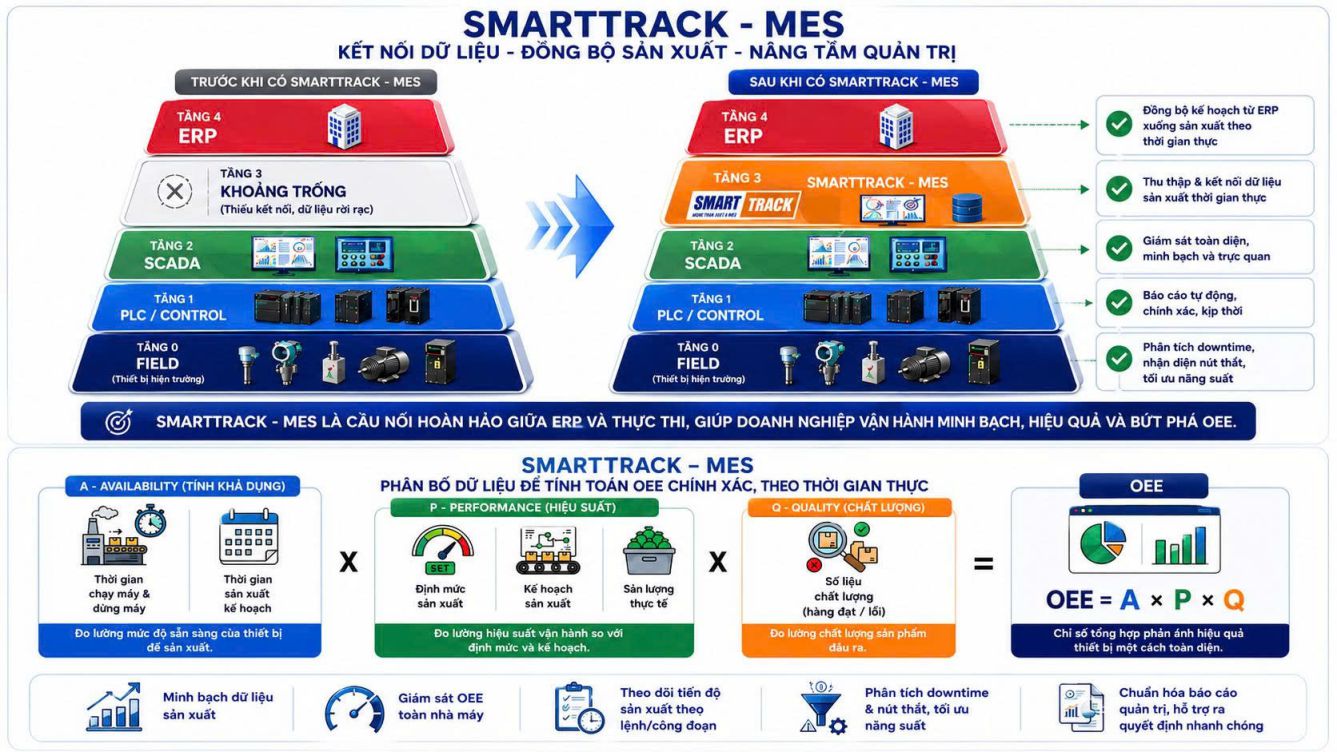
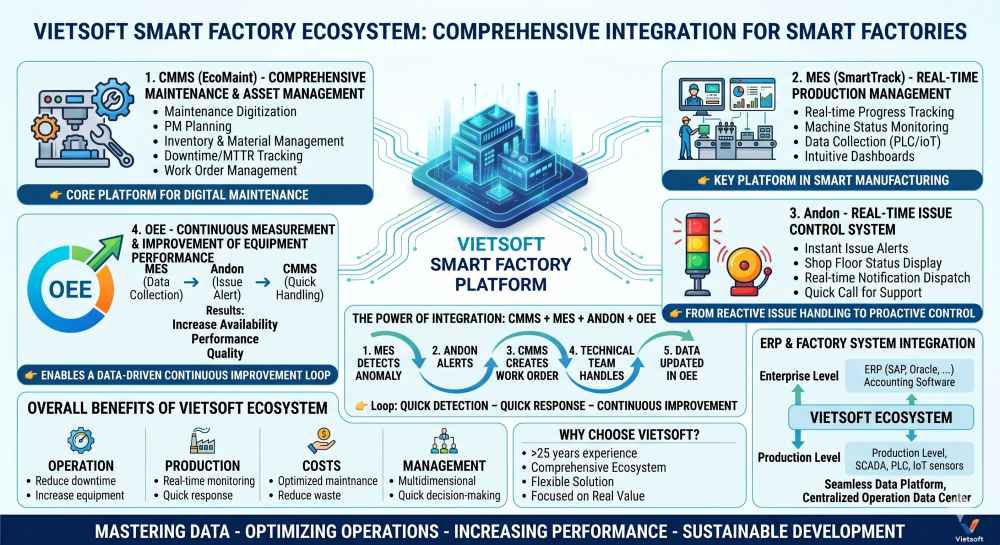
Overall Equipment Effectiveness (OEE) combines availability, performance, and quality to measure overall productivity. MTTR directly impacts the availability component of OEE, making it a critical factor in improving OEE scores.
VIII. Challenges in Measuring MTTR
While MTTR is a valuable metric, measuring it accurately can be challenging due to:
- Inconsistent Definitions: Different organizations may define the start and end points of repair time differently (e.g., from failure detection vs. repair start).
- Data Collection Issues: Inaccurate or incomplete data, such as unlogged repairs, can skew MTTR calculations.
- Multiple Failures: When equipment experiences concurrent failures, isolating repair times for each issue can be complex.
- Varying Equipment Complexity: Complex or older assets may naturally have higher MTTR, making comparisons across assets difficult.
To overcome these challenges, organizations should standardize data collection processes, use digital tools like CMMS for accurate tracking, and segment MTTR data by asset type or location for more meaningful insights.
IX. Modernizing MTTR with Technology
Modern technologies are revolutionizing maintenance practices, helping teams achieve lower MTTR values. Here are some tools and approaches to consider:
1. Computerized Maintenance Management Systems (CMMS)
A CMMS like Vietsoft’s CMMS EcoMaint centralizes maintenance data, streamlines workflows, and provides real-time insights. For example, it can automatically calculate MTTR, track spare parts, and assign tasks, reducing administrative delays.
2. Predictive Maintenance Technologies
IoT sensors and predictive analytics can detect potential failures early, allowing teams to prepare for repairs in advance and minimize downtime.
3. Augmented Reality (AR)
AR tools can guide technicians through complex repairs with real-time visual instructions, reducing diagnosis and repair times.
4. Machine Learning and AI
AI-driven analytics can identify failure patterns and recommend optimal repair strategies, speeding up the troubleshooting process.
5. Mobile Technology
Mobile apps enable technicians to access repair instructions, report issues, and update work orders on the go, improving responsiveness.
By integrating these technologies, maintenance teams can achieve significant MTTR reductions, enhancing overall operational efficiency.
X. How Vietsoft’s CMMS EcoMaint Can Optimize MTTR
Vietsoft’s CMMS EcoMaint is a powerful tool designed to streamline maintenance operations and reduce MTTR. Key features include:
- Automated Workflows: Automatically assign tasks and notify technicians, reducing response times.
- Centralized Data: Store equipment history, manuals, and repair logs in one platform for quick access.
- Inventory Management: Track and reorder spare parts to prevent delays.
- Real-Time Analytics: Monitor MTTR trends and identify bottlenecks for continuous improvement.
- Mobile Accessibility: Enable technicians to access information and report issues from anywhere.
By adopting CMMS EcoMaint, companies can transform their maintenance processes, achieving lower MTTR and higher productivity. Discover CMMS EcoMaint here.
Contact us via hotline: 0986778578 or email: sales@vietsoft.com.vn.
XI. Best Practices for Improving MTTR
To further optimize MTTR, maintenance teams should adopt the following best practices:
· Segment MTTR Data: Analyze MTTR by asset, location, or failure type to identify specific improvement opportunities.
· Conduct Root Cause Analysis (RCA): Identify and address underlying causes of failures to prevent recurrence.
· Implement Condition Monitoring: Use sensors to track equipment health and address issues proactively.
· Standardize Work Orders: Provide clear, detailed instructions to ensure consistent repairs.
· Foster a Culture of Continuous Improvement: Encourage feedback and collaboration among technicians to refine processes.
· Leverage CMMS Analytics: Use data-driven insights to optimize maintenance schedules and resource allocation.
XII. Conclusion: Mastering MTTR for Operational Excellence
What is MTTR? It’s a critical metric that measures the average time to repair equipment failures, serving as a barometer of maintenance efficiency. By understanding and optimizing MTTR, industrial organizations can reduce downtime, lower costs, and improve productivity. Tools like Vietsoft’s CMMS EcoMaint play a pivotal role in this process by streamlining workflows, enhancing data access, and enabling proactive maintenance strategies.