
For modern industrial operations, efficient maintenance is the backbone of productivity and profitability. The evolution of CMMS (Computerized Maintenance Management System) software has profoundly transformed how organizations manage their assets and maintenance tasks. While the shift to mobile CMMS applications has offered unprecedented flexibility, the concept of offline CMMS software often sparks intense debate. Is it a revolutionary solution for connectivity challenges or a complex engineering problem fraught with hidden pitfalls? This article delves into the intricacies of offline CMMS functionality, exploring its theoretical advantages, practical challenges, and how leading solutions like EcoMaint address these critical concerns.
I. The Promise and Perils of Disconnected Operations
The allure of offline CMMS software is undeniable, especially for maintenance teams operating in environments with unreliable internet access. Imagine technicians deep within a plant’s concrete labyrinth, on a remote oil rig, or during a widespread network outage – the ability to continue logging work orders, accessing equipment histories, and recording critical data without an active connection seems like a godsend. However, this seemingly ideal scenario often masks significant operational complexities that can quickly turn a perceived advantage into a costly headache.
The fundamental challenge with offline CMMS software lies in data synchronization. When multiple technicians work offline, each device essentially creates its own version of the database. The moment these devices reconnect, the system faces the daunting task of reconciling potentially conflicting information. This “eventual consistency” model, where data converges over time, contrasts sharply with the “strong consistency” of an online system, where a single central database serves as the undisputed source of truth.
II. When Data Collides: The Real-World Impact of Offline Discrepancies
Consider a scenario where three technicians are working offline during a six-hour Wi-Fi outage. Technician A completes preventive maintenance on a cooling tower. Simultaneously, Technician B, also offline, begins the same task, unaware of Technician A’s progress. When the network returns and their devices sync, the system now has two completed records for the same maintenance task. This duplication can lead to wasted effort, inaccurate historical data, and unnecessary resource allocation.
One factory, for example, reported a critical equipment status being wrongly updated due to offline work. An offline technician, unaware that an online colleague had already resolved an issue, proceeded to shut down a production line for maintenance that was, in fact, already completed. This single incident resulted in an estimated $17,000 loss in downtime before the error was discovered. Such scenarios underscore the significant financial and operational risks associated with unmanaged offline data conflicts.
III. The Unseen Risks: Data Security and Device Reliability in Offline Modes
Beyond data integrity, the use of offline CMMS software introduces less obvious but equally critical concerns, particularly regarding data security and device performance. When operating offline, all collected data – work orders, equipment statuses, maintenance histories, and even sensitive operational details – resides directly on the mobile device. This presents a tangible security risk. If a device is lost or stolen, that valuable data becomes vulnerable, potentially exposing proprietary information or critical operational insights. A real-world incident involved a technician losing a tablet packed with offline maintenance data. While the device was eventually recovered, the interim period was marked by significant operational chaos and a formal police report.
Furthermore, running offline CMMS software can place a considerable strain on device battery life and overall performance. Mobile devices, when constantly trying to manage and store substantial amounts of data locally, tend to drain batteries at an accelerated rate. This can lead to devices dying mid-shift, resulting in lost work and frustrated technicians. Imagine a critical inspection being cut short because a phone unexpectedly crashes, erasing hours of recorded data. These practical limitations can severely hinder efficiency and increase the likelihood of errors.
IV. Navigating the Necessity: When Offline CMMS Makes Sense
Despite the challenges, there are specific situations where offline CMMS software becomes a necessity rather than a mere convenience. These typically involve environments where connectivity is inherently absent or highly unreliable:
- Remote or Isolated Locations: Facilities located far from conventional network infrastructure, such as offshore platforms, remote mining sites, or even ships at sea, inherently require offline capabilities.
- Infrastructure Limitations: Old industrial buildings with thick concrete walls or underground facilities often act as signal black holes, making consistent online connectivity impossible.
- Unforeseen Network Outages: Events like fiber line cuts or localized power outages can unexpectedly sever network access, making offline functionality essential for maintaining operational continuity during emergencies.
In these specific contexts, the ability to perform basic tasks and record data offline is crucial for uninterrupted maintenance operations. However, for day-to-day operations in standard industrial settings, relying heavily on offline mode without robust safeguards can be counterproductive.
V. Strategic Alternatives to Constant Offline Reliance
Instead of solely depending on offline CMMS software, organizations can adopt proactive strategies to enhance connectivity and minimize the risks associated with disconnected work:
- Investing in Robust Network Infrastructure: Prioritizing and investing in high-quality Wi-Fi networks and cellular boosters across all plant areas can significantly reduce the need for offline operations. The cost of improved connectivity often pales in comparison to the losses incurred from downtime and data inconsistencies.
- Utilizing Mobile Hotspots: For areas with intermittent connectivity, portable mobile hotspots can provide a reliable temporary internet bridge, ensuring technicians remain connected to the central CMMS.
- Planned Offline Workflows: When network outages are anticipated, maintenance teams can plan tasks that require minimal real-time data access or can be fully completed and then synced once connectivity is restored.
- Implementing Advanced Conflict Resolution: While complex, CMMS providers are continually developing more sophisticated algorithms for conflict resolution. Organizations should ensure their chosen system has robust rules for managing data discrepancies that arise from offline syncing.
VI. How EcoMaint Elevates Maintenance Management Beyond Offline Limitations
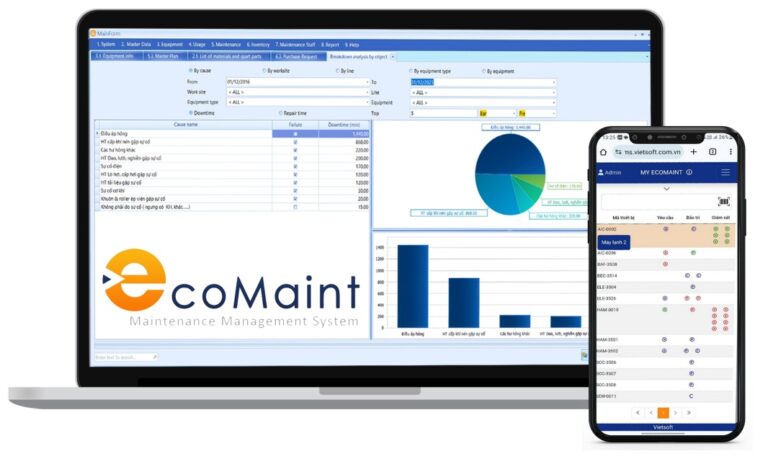
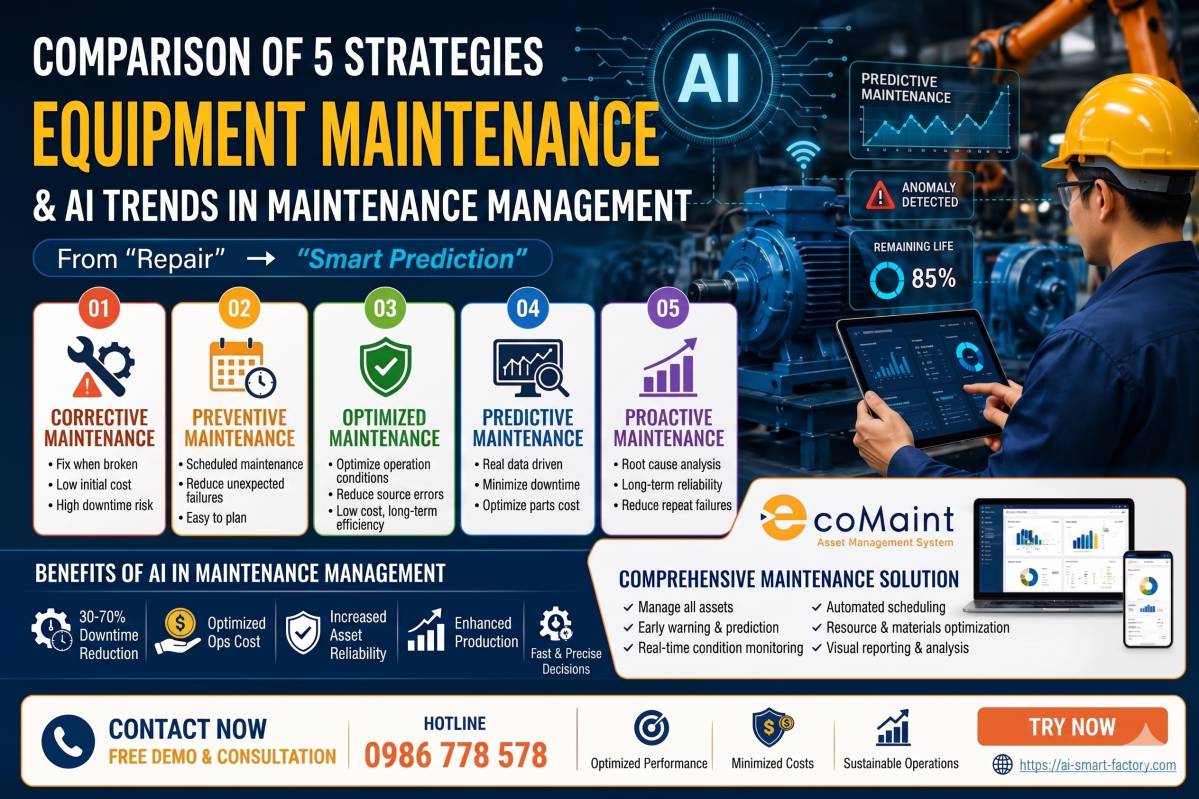
Understanding the critical balance between accessibility and data integrity, Vietsoft’s EcoMaint CMMS software is engineered to empower maintenance teams with seamless functionality, whether online or in challenging connectivity environments. EcoMaint acknowledges the inherent complexities of true offline functionality while prioritizing data consistency, security, and user experience.
EcoMaint’s design focuses on enabling efficient maintenance workflows by ensuring that critical information is always accessible and actionable. While some offline CMMS software struggles with complex data synchronization and conflict resolution, EcoMaint integrates intelligent data handling mechanisms. This ensures that when technicians operate in areas with limited connectivity, their captured data is securely stored and then intelligently synchronized with the central database the moment a stable connection is re-established. This proactive approach minimizes the risks of data loss, duplication, and inconsistencies that plague less sophisticated offline solutions.
Discover how EcoMaint optimizes maintenance tasks, improves data accuracy, and enhances operational efficiency, even in challenging environments. Discover the CMMS EcoMaint solution here.
Contact us for consultation via hotline: 0986778578 or email: sales@vietsoft.com.vn.
VII. The Engineering Frontier: Why True Offline CMMS is a “Hard Problem”
For those seeking a deeper technical understanding, the reason offline CMMS software presents such a profound engineering challenge lies in the fundamental principles of database management, specifically “eventual consistency” versus “strong consistency.” In an online CMMS, there is a single, authoritative central database—a “strong consistency” model. Every user sees the exact same, up-to-the-minute information.
When an application switches to offline mode, it essentially creates a local copy of a portion of the central database on the device. Now, multiple devices each believe they possess the “truth.” This scenario creates a “distributed systems nightmare” when these independent data sets need to merge back into the central system.
A primary hurdle is conflict resolution. If two technicians modify the same work order while offline, whose changes take precedence upon syncing? While many systems default to a simple timestamp, this often fails to capture the full context. What if both changes are valid and complementary? Or if the “later” change was made in ignorance of other critical updates? Developing a flawless algorithm for this is incredibly difficult. Even tech giants like Google, with their offline document editors, continue to grapple with these issues despite advanced techniques like Operational Transformation.
Another significant challenge is transaction ordering. If tasks A, B, and C are completed offline in sequence, but during synchronization, the system processes them as C, A, B, critical dependencies can be broken. In maintenance, the precise sequence of operations is paramount; a missed or duplicated step due to incorrect ordering can have severe consequences, ranging from costly production halts to safety hazards.
Ultimately, achieving truly robust offline CMMS software functionality requires either near-perfect conflict resolution (which is virtually impossible), extremely strict controls over what can be done offline (which limits usefulness), or a significant amount of manual reconciliation once back online (which defeats the purpose of automation). Honest CMMS vendors acknowledge these inherent limitations and design their solutions to mitigate risks rather than overpromising capabilities that are still at the bleeding edge of software engineering.
VIII. Conclusion: Balancing Innovation with Practicality in Maintenance Software
The discussion around offline CMMS software highlights a crucial tension in industrial technology: the desire for ubiquitous access versus the complexities of data integrity and system reliability. While the concept of uninterrupted access, even without a network, is appealing, the real-world implications of data synchronization, security, and device performance cannot be overlooked.
For most industrial operations, a robust online CMMS, supported by excellent network infrastructure, remains the most reliable and efficient solution. Where true offline functionality is unavoidable, a carefully engineered solution that prioritizes data integrity and smart synchronization, like EcoMaint, becomes indispensable. By understanding these nuances, maintenance managers can make informed decisions, ensuring their chosen CMMS truly empowers their teams and optimizes their operations, rather than introducing new layers of complexity. The ultimate goal is a maintenance system where everyone sees the same information, ensuring seamless operations and accurate decision-making.