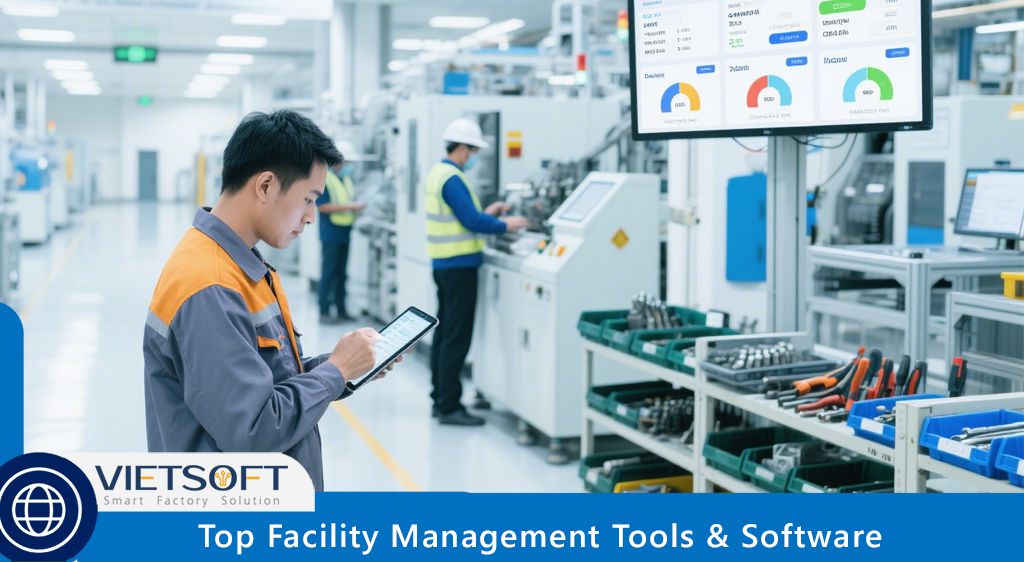
Facility management is a critical component of modern business operations, ensuring that physical assets, spaces, and resources are optimized for efficiency, safety, and sustainability. With the rapid evolution of technology, Facility Management Tools & Software have become indispensable for organizations aiming to streamline operations, reduce costs, and enhance workplace productivity. This article provides an in-depth exploration of what facility management software entails, the types of tools available, their key features, benefits, and how they can transform maintenance and operational strategies.
I. What Are Facility Management Tools & Software?
Facility Management Tools & Software, often referred to as Computer-Aided Facility Management (CAFM), Computerized Maintenance Management Systems (CMMS), or Integrated Workplace Management Systems (IWMS), are digital solutions designed to manage and optimize an organization’s physical assets, spaces, and operations. These tools centralize data and processes related to maintenance, asset tracking, space utilization, energy management, and compliance, enabling facility managers to make data-driven decisions.
At their core, Facility Management Tools & Software streamline tasks such as:
- Scheduling and tracking preventive maintenance.
- Managing work orders and service requests.
- Monitoring asset performance and lifecycles.
- Optimizing space allocation and utilization.
- Ensuring compliance with safety and environmental regulations.
- Tracking energy consumption for sustainability goals.
By consolidating these functions into a single platform, these tools reduce manual workloads, improve operational efficiency, and enhance occupant satisfaction. For example, a facility manager overseeing a manufacturing plant can use these tools to track machinery maintenance schedules, reducing downtime by up to 30%, according to industry studies.
II. Why Facility Management Tools & Software Are Essential in 2025
The complexity of managing modern facilities—whether a single office building or a multi-site industrial complex—demands advanced tools. With hybrid work models, sustainability mandates, and rising operational costs shaping the business landscape in 2025, Facility Management Tools & Software offer a competitive edge by:
- Reducing Costs: Automating maintenance schedules and optimizing resource allocation can save organizations up to 20% on operational expenses.
- Enhancing Productivity: Centralized platforms improve communication between teams, reducing response times for maintenance requests.
- Promoting Sustainability: Tools with energy tracking features help organizations meet ESG (Environmental, Social, Governance) goals, a priority for 85% of businesses in 2025.
- Ensuring Compliance: Automated reporting ensures adherence to safety and regulatory standards, minimizing risks of penalties.
These tools are widely adopted across industries, including manufacturing, healthcare, education, commercial real estate, and retail, with over 80% of facility managers overseeing multiple sites relying on such software.
III. Types of Facility Management Tools & Software
There are several types of Facility Management Tools & Software, each tailored to specific operational needs. Below, we explore the most popular categories, their functionalities, and their applications.
1. Computer-Aided Facility Management (CAFM) Software
What It Is: CAFM software focuses on space management and facility operations, integrating digital floor plans and CAD (Computer-Aided Design) tools to optimize layouts and resource allocation.
Key Features:
- Space planning and visualization.
- Room reservation and booking systems.
- Asset management and tracking.
- Maintenance scheduling and reporting.
- Energy performance analysis.
Value Proposition: CAFM is ideal for organizations with complex space management needs, such as universities, hospitals, or corporate offices. For instance, a university facility manager can use CAFM to optimize lecture hall usage, reducing underutilized space by 15%.
Industry Applications: Education, healthcare, office management.
2. Computerized Maintenance Management System (CMMS)
What It Is: CMMS software is designed to streamline maintenance operations, focusing on equipment and asset management. It centralizes work order management, preventive maintenance, and inventory tracking.
Key Features:
- Work order creation and tracking.
- Preventive maintenance scheduling.
- Asset lifecycle management.
- Inventory control for spare parts.
- Mobile access for real-time updates.
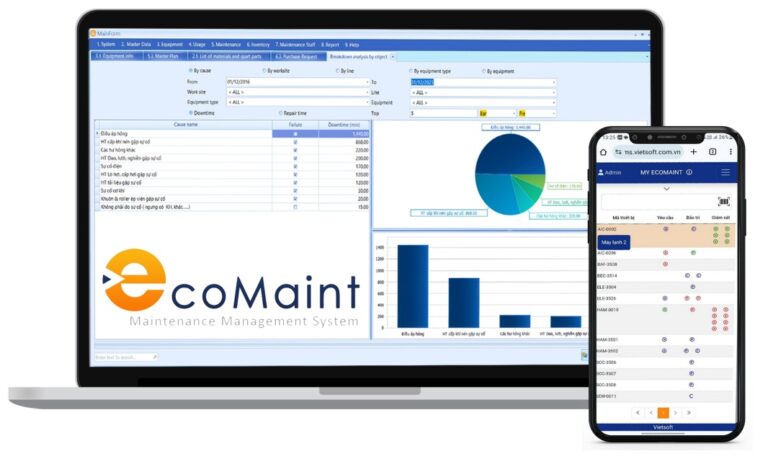
Value Proposition: CMMS tools, like Vietsoft’s CMMS EcoMaint, are critical for maintenance-heavy industries like manufacturing. They reduce equipment downtime by automating maintenance schedules, potentially increasing asset lifespan by 25%.
Industry Applications: Manufacturing, warehouses, healthcare facilities.
3. Integrated Workplace Management System (IWMS)
What It Is: IWMS combines multiple facility management functions, including real estate management, asset tracking, and space optimization, into a single platform.
Key Features:
- Real estate and lease management.
- Capital project planning.
- Asset and maintenance management.
- Sustainability and energy tracking.
- Data-driven analytics for decision-making.
Value Proposition: IWMS is suited for organizations with extensive real estate portfolios, such as corporate enterprises or property management firms. It provides a holistic view, enabling savings of up to 10% on real estate costs through optimized space usage.
Industry Applications: Corporate real estate, large enterprises, government facilities.
4. Building Management System (BMS)
What It Is: BMS, also known as Building Automation Systems (BAS), focuses on controlling and monitoring building systems like HVAC, lighting, and security.
Key Features:
- Real-time monitoring of building systems.
- Energy consumption tracking.
- Automated HVAC and lighting controls.
- Security and access management.
- Alerts for system malfunctions.
Value Proposition: BMS enhances energy efficiency and occupant comfort, reducing energy costs by up to 15%. For example, a hospital using BMS can maintain optimal temperature control, improving patient comfort while cutting utility expenses.
Industry Applications: Commercial buildings, hospitals, industrial facilities.
5. Office Space Management Software
What It Is: This software is tailored for managing office spaces, focusing on space allocation, desk booking, and workplace analytics.
Key Features:
- Desk and room reservation systems.
- Space utilization analytics.
- Move management and scenario planning.
- Integration with workplace sensors.
Value Proposition: Ideal for hybrid workplaces, this software helps organizations adapt to flexible work models. For instance, a tech company can use office space management software to track desk usage, ensuring efficient space allocation for hybrid employees.
Industry Applications: Corporate offices, co-working spaces.
IV. Key Features of Facility Management Tools & Software
To maximize their value, Facility Management Tools & Software come equipped with a range of features that address various aspects of facility operations. Below are the most critical features and their benefits.
1. Work Order Management
Function: Centralizes the creation, assignment, and tracking of maintenance tasks and service requests.
Benefits:
- Reduces response times by automating task assignments.
- Provides real-time status updates via mobile apps.
- Stores historical data for future reference, improving accountability.
2. Asset Management and Tracking
Function: Tracks the location, condition, and lifecycle of physical assets, from machinery to office equipment.
Benefits:
- Extends asset lifespan through preventive maintenance.
- Reduces downtime by identifying potential failures early.
- Centralizes asset data for easy access.
3. Preventive Maintenance Scheduling
Function: Automates maintenance schedules based on equipment usage or time intervals.
Benefits:
- Prevents unexpected equipment failures, reducing downtime costs.
- Improves compliance with safety regulations.
- Optimizes technician schedules, increasing efficiency.
Example: A hospital schedules monthly HVAC maintenance using CMMS, preventing system failures and ensuring consistent air quality.
4. Inventory Management
Function: Tracks spare parts, tools, and supplies, preventing stockouts or overstocking.
Benefits:
- Reduces waste by optimizing inventory levels.
- Ensures parts availability for maintenance tasks.
- Provides insights into spending patterns.
5. Space Management and Utilization
Function: Monitors and optimizes the use of physical spaces, including offices, meeting rooms, and storage areas.
Benefits:
- Identifies underutilized spaces for cost savings.
- Supports hybrid work models with desk booking systems.
- Enhances employee satisfaction through better space allocation.
6. Analytics and Reporting
Function: Generates reports on KPIs like maintenance costs, energy consumption, and space utilization.
Benefits:
- Enables data-driven decision-making.
- Identifies trends for proactive management.
- Supports compliance with automated reports.
V. Benefits of Using Facility Management Tools & Software
The adoption of Facility Management Tools & Software delivers measurable benefits that enhance operational efficiency and business outcomes. Here are the key advantages:
1. Enhanced Operational Efficiency
By automating tasks like work order management and maintenance scheduling, these tools reduce manual workloads, allowing teams to focus on high-value tasks.
2. Cost Savings
Optimized resource allocation, reduced downtime, and lower energy consumption contribute to significant cost savings. Studies show that organizations using CMMS can save up to 20% on maintenance costs.
3. Improved Asset Longevity
Regular maintenance and real-time monitoring extend the lifespan of assets, reducing replacement costs. For instance, a manufacturing plant using CMMS for predictive maintenance can extend machinery life by 15-20%.
4. Better Compliance and Safety
Automated compliance reports and safety tracking ensure adherence to regulations, reducing the risk of fines. Centralized documentation also simplifies audits.
5. Enhanced Occupant Experience
Optimized space utilization and timely maintenance create a comfortable and productive environment for employees and tenants. For example, a well-managed office with desk booking systems can improve employee satisfaction by 10%.
6. Sustainability and ESG Compliance
Energy tracking and waste management features help organizations meet sustainability goals, aligning with 2025’s focus on ESG initiatives.
VI. Introducing CMMS EcoMaint: A Game-Changer for Facility Management
For organizations seeking a robust and user-friendly solution, CMMS EcoMaint by Vietsoft offers a comprehensive platform tailored to the needs of modern facility managers. Designed with Vietnam’s industrial and commercial sectors in mind, CMMS EcoMaint integrates seamlessly with existing workflows, providing tools for work order management, asset tracking, preventive maintenance, and inventory control.
Why Choose CMMS EcoMaint?
- Localized Expertise: Built by Vietsoft, a leader in Vietnam’s facility management software market, CMMS EcoMaint addresses region-specific challenges, such as compliance with local regulations.
- Scalability: Suitable for small businesses and large enterprises, it grows with your organization.
- User-Friendly Interface: Simplifies adoption for maintenance teams, reducing training time.
- Cost-Effective: Offers high ROI by minimizing downtime and optimizing resources.
To explore how CMMS EcoMaint can transform your facility management strategy, Learn more about CMMS EcoMaint here.
Contact us for consultation via hotline: 0986778578 or email: sales@vietsoft.com.vn.
VII. Best Practices for Implementing Facility Management Tools & Software
To maximize the benefits of Facility Management Tools & Software, follow these best practices:
1. Assess Needs and Goals: Identify your organization’s specific requirements, such as maintenance focus or space optimization, to choose the right tool.
2. Involve Stakeholders: Engage facility managers, technicians, and IT teams to ensure the software meets all needs.
3. Prioritize Integration: Select tools that integrate with existing systems like ERP or HR software for seamless data flow.
4. Leverage Data Analytics: Use reporting features to track KPIs and make informed decisions.
5. Train Staff: Provide comprehensive training to ensure smooth adoption and effective use.
6. Monitor and Optimize: Regularly evaluate the software’s performance and adjust strategies to align with evolving needs.
VIII. Future Trends in Facility Management Tools & Software
As we move further into 2025, Facility Management Tools & Software are evolving to meet new challenges. Key trends include:
- AI and Predictive Analytics: AI-driven tools predict equipment failures, reducing downtime by up to 40%.
- IoT Integration: Sensors and IoT devices provide real-time data on asset performance and space usage.
- Sustainability Focus: Tools with advanced energy tracking support organizations in achieving net-zero goals.
- Hybrid Work Support: Enhanced space management features cater to flexible work models, with 60% of companies adopting hybrid setups.
IX. Conclusion
Facility Management Tools & Software are transforming how organizations manage their physical assets, spaces, and operations. From CAFM to CMMS and IWMS, these tools offer tailored solutions for diverse industries, driving efficiency, cost savings, and sustainability. By adopting solutions like Vietsoft’s CMMS EcoMaint, businesses can streamline maintenance processes, enhance asset performance, and create productive work environments. As technology continues to advance, staying ahead with the right facility management software will be key to success in 2025 and beyond.