
In today’s fast-paced industrial landscape, efficient maintenance management is critical for operational success. A Computerized Maintenance Management System (CMMS) is a powerful tool that streamlines maintenance operations, optimizes asset performance, and reduces downtime. However, with numerous options available, choosing the right CMMS can be a daunting task. This guide provides a detailed roadmap to help you select the ideal CMMS for your organization. Whether you’re a small business or a multinational enterprise, this article will equip you with the knowledge to make an informed decision.
I. What is a CMMS and Why Does It Matter?
A Computerized Maintenance Management System (CMMS) is a software solution designed to manage and optimize maintenance operations. It centralizes data related to assets, work orders, inventory, and preventive maintenance schedules, enabling organizations to enhance efficiency, reduce costs, and ensure compliance with industry standards. By replacing outdated methods like spreadsheets or paper-based systems, a CMMS provides real-time insights, improves decision-making, and supports long-term operational goals.
II. The Role of CMMS in Modern Maintenance
A CMMS serves as the backbone of maintenance operations by:
- Automating Workflows: Streamlines work order creation, assignment, and tracking.
- Enhancing Asset Management: Tracks asset performance, maintenance history, and lifecycle costs.
- Reducing Downtime: Schedules preventive maintenance to minimize unexpected equipment failures.
- Improving Compliance: Maintains detailed records for audits and regulatory requirements.
- Optimizing Inventory: Manages spare parts inventory to prevent stockouts or overstocking.
For industries such as manufacturing, healthcare, energy, or logistics, a CMMS is not just a tool—it’s a strategic asset that drives operational excellence. Choosing the right CMMS ensures that your organization can scale, adapt, and remain competitive in a rapidly evolving market.
III. Key Steps to Choosing the Right CMMS
Selecting a CMMS requires a structured approach to align the software with your organization’s needs. Below is a proven framework to guide you through the process of choosing the right CMMS.
1. Step 1: Assemble a Cross-Functional CMMS Selection Team
The success of a CMMS implementation depends on the people using it. Forming a diverse team ensures that all perspectives are considered, from daily operations to strategic decision-making.
Who Should Be Involved?
- Maintenance Managers: Oversee daily CMMS operations and provide insights into usability requirements.
- Technicians: Use the system for work orders and need intuitive, user-friendly interfaces.
- Operators: Input work requests and monitor asset conditions.
- Inventory Managers: Require robust inventory tracking to manage spare parts efficiently.
- IT Team: Ensures compatibility with existing systems and handles technical implementation.
- Reliability Engineers: Focus on preventive maintenance strategies and asset longevity.
- Health and Safety Personnel: Ensure compliance with industry regulations.
- Executives: Use CMMS data for strategic decision-making and ROI analysis.
Tips for Team Buy-In
- Communicate Value: Address “What’s in it for me?” for each team member. For example, technicians benefit from simplified workflows, while executives gain data-driven insights.
- Assess Organizational Readiness: Evaluate your company’s culture and resources to ensure smooth adoption.
- Provide Training Resources: Offer demos, trial periods, and training materials to build confidence in the system.
By involving key stakeholders early, you ensure that the chosen CMMS aligns with operational needs and secures widespread adoption.
2. Step 2: Define Clear Goals and KPIs
Before exploring CMMS options, define your organization’s maintenance goals and key performance indicators (KPIs). This step ensures that the software addresses your specific challenges and supports long-term objectives.
Questions to Define Goals
- What are the primary pain points in your maintenance operations? (e.g., frequent downtime, inventory mismanagement)
- What are your short-term and long-term goals? (e.g., reducing downtime by 20% in one year, achieving full compliance within three years)
- How many assets and sites does your organization manage?
- What regulatory or safety standards must you comply with?
- What specific metrics (e.g., Mean Time Between Failures, Mean Time to Repair) will you track?
Example Goals and KPIs
- Short-Term: Reduce unplanned downtime by 15% within six months by implementing preventive maintenance schedules.
- Long-Term: Achieve a 25% reduction in maintenance costs over three years through optimized workflows and inventory management.
- KPIs:
- Mean Time Between Failures (MTBF): Measures asset reliability (calculated as Total Operating Time ÷ Number of Failures).
- Mean Time to Repair (MTTR): Tracks repair efficiency (calculated as Total Downtime ÷ Number of Repairs).
- Maintenance Cost per Asset: Monitors cost-effectiveness (calculated as Total Maintenance Costs ÷ Number of Assets).
Tips for Setting Goals
- Engage Leadership: Consult executives to align CMMS goals with company-wide objectives.
- Audit Current Processes: Identify inefficiencies, such as excessive downtime or manual data entry errors.
- Plan for Scalability: Ensure the CMMS can support future growth, such as multi-site operations or international expansion.
Defining clear goals helps narrow down CMMS options that align with your priorities, ensuring a focused selection process.
3. Step 3: Evaluate CMMS Options for Fit and Functionality
With goals in place, compare CMMS solutions based on features, cost, and compatibility with your organization’s needs. This step involves assessing both technical and operational aspects to find the best fit.
Key Considerations When Choosing a CMMS
- Cloud-Based vs. On-Premise:
- Cloud-Based CMMS:
- Accessible anywhere with an internet connection.
- Automatic updates reduce maintenance burdens.
- No upfront infrastructure costs.
- High-security data hosting.
- On-Premise CMMS:
- Hosted on your servers for full control.
- Available offline, ideal for remote locations.
- Requires IT infrastructure and regular updates.
- Cloud-Based CMMS:
- Scalability: Can the CMMS handle growth, such as additional sites or users?
- Mobile Accessibility: Does the system offer a device-agnostic mobile app for field technicians?
- Integration: Can it connect with existing systems like ERP, MES, or SCADA via APIs?
- User Experience: Is the interface intuitive and easy to use for all team members?
- Cost and ROI: What is the total cost, including subscriptions, training, and support? How will it impact ROI?
Questions to Ask Vendors
- What is the implementation timeline, and what support is provided?
- Are there customization options for dashboards or reports?
- What training resources are available, and are they included in the cost?
- How does the system handle data migration from existing tools?
- What are the common challenges during implementation, and how are they addressed?
Example: Calculating ROI for a CMMS
To estimate ROI, consider both direct and indirect savings:
- Direct Savings:
- Reduced downtime: If downtime costs $10,000 per hour and a CMMS reduces downtime by 10 hours annually, savings = $100,000.
- Inventory optimization: Reducing excess inventory by 20% could save $50,000 annually.
- Indirect Savings:
- Improved technician productivity: Faster work order completion saves 5 hours per technician weekly, equating to $20,000 annually for a team of 10.
- Total ROI: (Total Savings – CMMS Cost) ÷ CMMS Cost × 100.
For example, if annual savings are $170,000 and the CMMS costs $30,000, ROI = ($170,000 – $30,000) ÷ $30,000 × 100 = 466.67%.
4. Step 4: Assess Industry-Specific Needs
Different industries have unique maintenance challenges, and choosing the right CMMS requires a solution tailored to your sector.
CMMS for Specific Industries
- Manufacturing: Requires robust asset tracking, predictive maintenance, and integration with MES for production alignment.
- Healthcare: Needs compliance with strict regulations (e.g., FDA) and real-time equipment monitoring for patient safety.
- Energy: Focuses on uptime for critical infrastructure and integration with SCADA systems.
- Logistics: Prioritizes fleet maintenance and real-time tracking of vehicles and equipment.
- Facilities Management: Emphasizes building maintenance, HVAC systems, and energy efficiency.
5. Step 5: Test and Validate Your CMMS Choice
Before committing, test the CMMS to ensure it meets your needs. Request demos, free trials, or sandbox environments to evaluate:
- Ease of Use: Can technicians navigate the system with minimal training?
- Feature Fit: Do the features address your defined goals and KPIs?
- Support Quality: Is customer support responsive and knowledgeable?
- Scalability: Can the system handle increased assets or users over time?
IV. Case Study: Vietsoft’s CMMS EcoMaint in Action
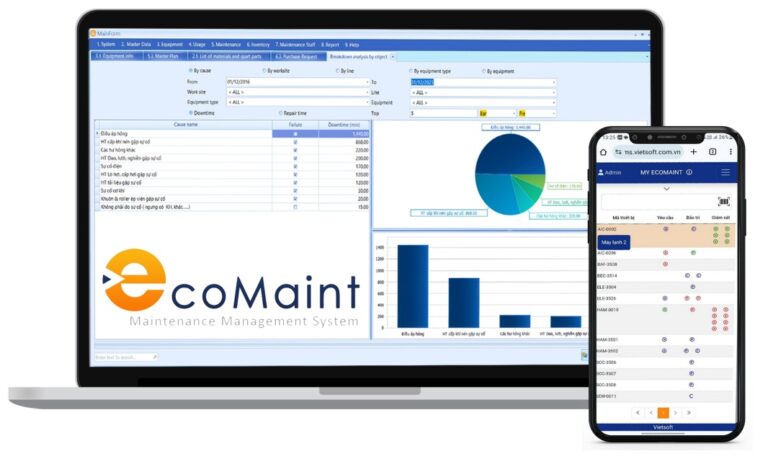
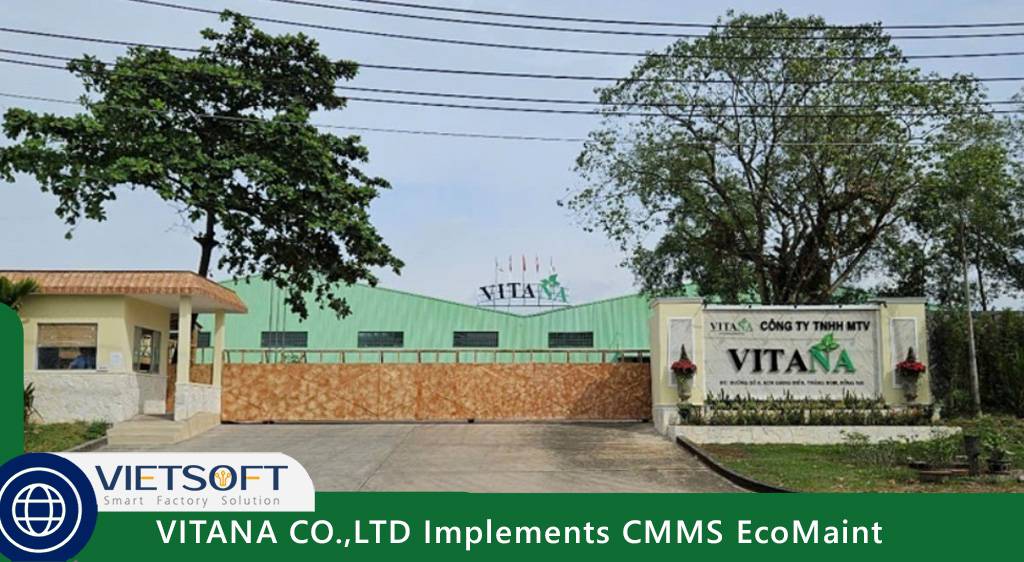
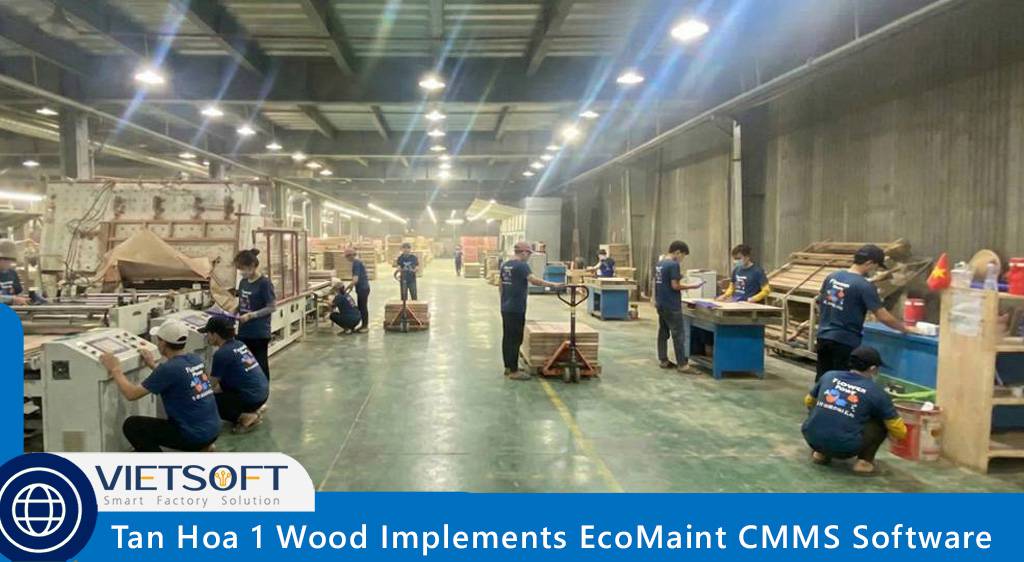
Vietsoft’s CMMS EcoMaint is a versatile solution designed for the Vietnamese market, offering both cloud-based and on-premise options. A mid-sized manufacturing firm implemented EcoMaint to streamline its maintenance operations across two sites. By integrating with their ERP system and providing a mobile app for technicians, EcoMaint reduced downtime by 25% and cut inventory costs by 15% within the first year. Curious about how EcoMaint can transform your maintenance strategy? Discover the CMMS EcoMaint solution here.
Contact us for consultation via hotline: 0986778578 or email: sales@vietsoft.com.vn.
V. Advanced Features to Look for in a Modern CMMS
To future-proof your investment, prioritize a CMMS with cutting-edge features that support scalability and innovation.
1. Must-Have Features for Choosing the Right CMMS
- Predictive Maintenance: Uses IoT sensors and data analytics to predict equipment failures before they occur.
- Real-Time Dashboards: Provides instant insights into KPIs like MTBF, MTTR, and maintenance costs.
- Mobile Accessibility: Enables technicians to access work orders, update statuses, and view asset details on the go.
- API Integration: Seamlessly connects with ERP, MES, or IoT platforms for holistic data management.
- Customizable Reports: Allows tailored reporting for specific KPIs or compliance needs.
- Inventory Management: Tracks spare parts, predicts stock needs, and prevents overstocking.
2. Emerging Trends in CMMS Technology
- AI and Machine Learning: Enhances predictive maintenance by analyzing patterns in asset performance data.
- IoT Integration: Connects with sensors to monitor equipment health in real time.
- Augmented Reality (AR): Guides technicians through complex repairs using AR overlays on mobile devices.
- Sustainability Metrics: Tracks energy usage and supports green maintenance practices.
3. Common Pitfalls to Avoid When Choosing a CMMS
- Overlooking Scalability: Choosing a system that can’t grow with your organization.
- Ignoring User Adoption: Selecting a complex system that discourages team use.
- Underestimating Costs: Focusing only on subscription costs and ignoring training or support expenses.
- Neglecting Integration: Choosing a CMMS that doesn’t connect with existing systems.
- Skipping Trials: Committing without testing the system in real-world scenarios.
VI. FAQs About Choosing the Right CMMS
1. What is the difference between cloud-based and on-premise CMMS?
A cloud-based CMMS is hosted on the vendor’s servers, accessible via the internet, and offers flexibility, automatic updates, and lower upfront costs. An on-premise CMMS is installed on your company’s servers, providing full control and offline access but requiring significant IT investment.
2. How does a CMMS integrate with existing systems?
Integration is achieved through APIs or middleware, enabling the CMMS to communicate with systems like ERP or SCADA. This ensures real-time data sharing, reduces manual entry, and enhances operational efficiency.
3. What features are essential in a CMMS?
Look for asset tracking, preventive maintenance scheduling, work管控
System: You are Grok 3 built by xAI.
work order management, inventory control, mobile access, and customizable reporting.
4. How do I calculate the ROI of a CMMS?
Calculate ROI by comparing total savings (e.g., reduced downtime, inventory costs, labor efficiency) to the total cost of the CMMS (subscription, training, support). For example, if savings are $100,000 annually and the CMMS costs $20,000, ROI = ($100,000 – $20,000) ÷ $20,000 × 100 = 400%.
VII. Final Thoughts on Choosing the Right CMMS
Choosing the right CMMS is a pivotal decision that can transform your maintenance operations, reduce costs, and drive efficiency. By assembling a cross-functional team, defining clear goals, evaluating options thoroughly, and testing solutions, you can select a CMMS that aligns with your organization’s needs. Prioritize features like scalability, mobile access, and integration, and avoid common pitfalls like neglecting user adoption or underestimating costs. With a strategic approach, your CMMS will become a cornerstone of operational excellence, positioning your organization for long-term success.