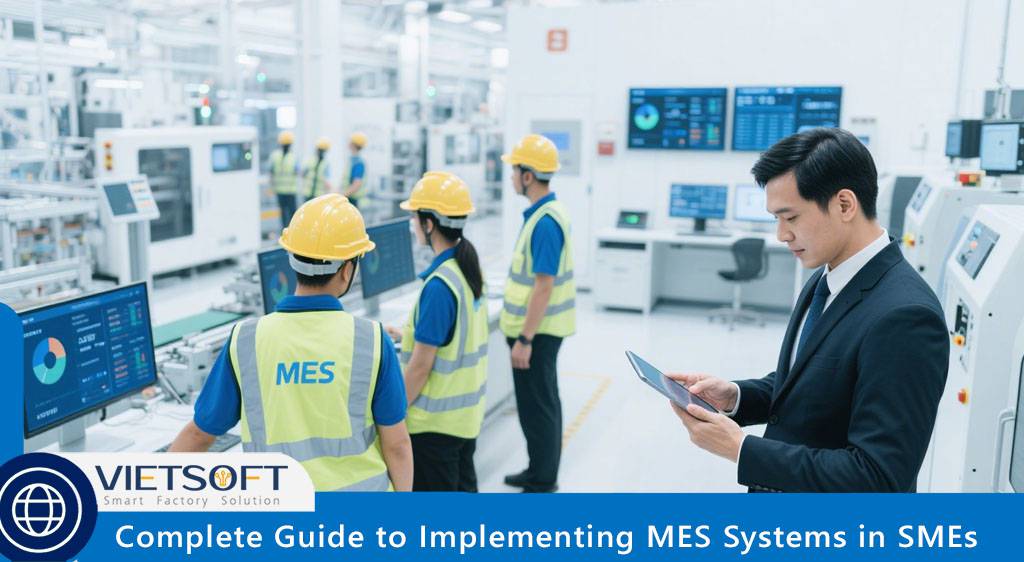
In today’s fast-paced manufacturing landscape, small and medium enterprises (SMEs) face increasing pressure to optimize operations, reduce costs, and stay competitive. A Manufacturing Execution System (MES) is a powerful tool that bridges the gap between the shop floor and enterprise-level planning, enabling SMEs to achieve operational excellence. This comprehensive guide to implementing MES systems in SMEs provides a step-by-step roadmap, expert insights, and practical strategies to ensure a successful digital transformation. This guide is tailored to help SMEs in Vietnam and beyond unlock the full potential of MES implementation.
I. What is a Manufacturing Execution System (MES)?
A Manufacturing Execution System (MES) is a software-driven solution that manages, monitors, and synchronizes manufacturing processes in real time. It acts as a central hub, collecting data from shop floor equipment, operators, and other systems to provide actionable insights. MES systems enhance visibility, improve efficiency, ensure quality control, and support compliance with industry standards.
For SMEs, MES is the backbone of smart manufacturing, enabling:
- Real-time data collection: Track production metrics instantly.
- Process optimization: Identify bottlenecks and streamline workflows.
- Quality assurance: Ensure consistent product quality and traceability.
- Regulatory compliance: Meet industry standards with automated reporting.
This guide to implementing MES systems will explore how SMEs can leverage these benefits through careful planning and execution.
II. Why MES Implementation is Critical for SMEs
SMEs often operate with limited resources, making efficiency and cost management critical. Unlike larger enterprises, SMEs may hesitate to adopt MES due to perceived complexity or costs. However, a well-executed MES implementation can deliver significant returns on investment (ROI) by:
- Reducing downtime by up to 20% through predictive maintenance.
- Improving production efficiency by 15-30% with real-time insights.
- Cutting waste and rework costs by ensuring quality control.
- Enabling data-driven decisions to stay competitive in markets like Vietnam.
With the right approach, MES implementation becomes a manageable, transformative process for SMEs. Let’s dive into the step-by-step guide to implementing MES systems effectively.
III. Step-by-Step Guide to Implementing MES Systems in SMEs
1. Step 1: Define Clear Objectives for MES Implementation
The foundation of a successful MES implementation lies in setting clear, measurable objectives aligned with your SME’s business goals. Ask yourself:
- What pain points are affecting productivity (e.g., downtime, manual processes)?
- Which processes need improvement (e.g., quality control, inventory management)?
- What outcomes do you expect (e.g., 10% increase in throughput, reduced scrap rates)?
Example: A Vietnamese SME producing automotive parts might aim to reduce machine downtime by 15% and improve traceability for ISO 9001 compliance.
Action: Collaborate with production, IT, and management teams to define key performance indicators (KPIs) such as Overall Equipment Effectiveness (OEE), cycle time, or defect rates. Document these goals to guide the project.
2. Step 2: Assess Current Operations and Infrastructure
Before implementing an MES, conduct a thorough audit of your existing manufacturing processes. This step identifies inefficiencies and ensures the MES addresses specific needs. Key areas to evaluate include:
- Existing systems: Document ERP, SCADA, or PLC systems in use.
- Workflows: Map out production processes to identify bottlenecks.
- Automation levels: Assess the readiness of equipment for MES integration.
- Data sources: Identify manual data entry points that can be automated.
Action: Create a process map highlighting critical areas for improvement, such as reducing manual data entry or improving machine uptime.
3. Step 3: Build a Cross-Functional Implementation Team
A successful MES implementation requires collaboration across departments. Assemble a team that includes:
- Production staff: Understand shop floor challenges.
- IT professionals: Ensure system integration and cybersecurity.
- Management: Align the project with business goals.
- MES champion: A dedicated leader to coordinate with vendors and drive adoption.
Action: Assign roles and responsibilities, ensuring the team represents all key areas of the business.
4. Step 4: Select the Right MES Vendor
Choosing the right MES vendor is critical for SMEs, as it impacts scalability, cost, and support. Consider:
- Industry experience: Does the vendor understand your sector (e.g., food processing, electronics)?
- Scalability: Can the system grow with your SME?
- Customization: Does the MES offer flexibility to meet unique needs?
- Support: Is ongoing training and technical support available?
Case Study: Vietsoft’s MES SmartTrack, designed for SMEs, offers modular features tailored to industries like manufacturing and food processing in Vietnam. Its cloud-based option reduces upfront hardware costs, making it ideal for resource-constrained SMEs.
Action: Request demos, review case studies, and compare vendors based on your objectives.
5. Step 5: Design and Customize the MES System
Work closely with your vendor to design an MES that aligns with your workflows. This involves:
- Defining data sources (e.g., sensors, PLCs, manual inputs).
- Configuring dashboards for real-time KPI tracking (e.g., OEE, downtime).
- Customizing workflows to match production processes.
Action: Collaborate with the vendor to create a system architecture that integrates with existing ERP or SCADA systems, ensuring smooth data flow.
6. Step 6: Plan Seamless Integration with Existing Systems
MES must integrate with systems like ERP, inventory management, or quality control software to maximize value. Key considerations include:
- Data compatibility: Ensure consistent data formats across systems.
- APIs and protocols: Use standard protocols (e.g., OPC UA) for machine connectivity.
- Cybersecurity: Implement encryption and access controls to protect data.
Action: Develop an integration roadmap with your IT team and vendor, testing connections in a sandbox environment.
7. Step 7: Train Your Workforce for MES Adoption
Employee adoption is critical to MES success. Provide role-based training for:
- Operators: Learn to log data and monitor dashboards.
- Engineers: Analyze real-time data for process optimization.
- Managers: Use reports for strategic decision-making.
Action: Conduct hands-on workshops and provide user manuals. Schedule refresher courses to ensure long-term proficiency.
8. Step 8: Pilot the MES in a Controlled Environment
Before full deployment, test the MES on a single production line or machine. This pilot phase allows you to:
- Identify bugs or configuration issues.
- Gather employee feedback on usability.
- Validate KPIs like reduced cycle times or improved quality.
Action: Run the pilot for 4-8 weeks, refining the system based on feedback before full rollout.
9. Step 9: Deploy MES Across the Organization
After a successful pilot, roll out the MES across all production lines. Key steps include:
- Scheduling deployment to minimize downtime.
- Ensuring IT infrastructure (e.g., servers, networks) is ready.
- Monitoring initial performance to address issues promptly.
Action: Use a phased approach, starting with critical processes, to ensure a smooth transition.
10. Step 10: Monitor and Optimize MES Performance
Post-deployment, continuously monitor MES performance using KPIs like:
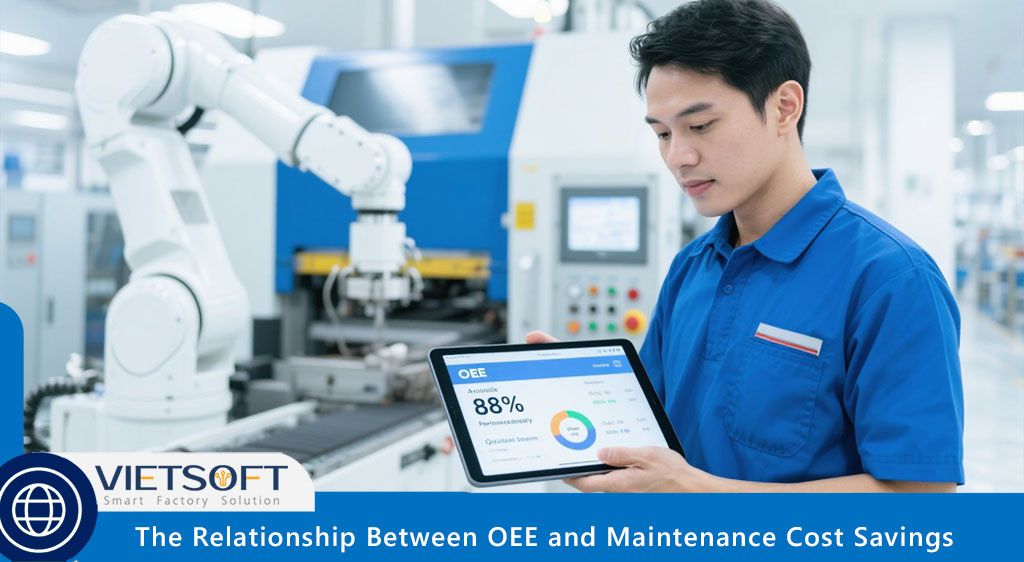
- OEE: Measures equipment availability, performance, and quality.
- Downtime reduction: Tracks unplanned stoppages.
- Defect rates: Monitors quality improvements.
Example Calculation: OEE = (Availability %) x (Performance %) x (Quality %). For instance, if a machine is available 90% of the time, performs at 85% efficiency, and produces 95% defect-free products, OEE = 0.90 x 0.85 x 0.95 = 72.7%.
Action: Set up automated reports and review them weekly to identify optimization opportunities.
11. Step 11: Ensure Data Security and Compliance
MES systems handle sensitive production data, making security paramount. Implement:
- Access controls: Restrict data access to authorized users.
- Encryption: Protect data during transmission.
- Compliance: Ensure adherence to standards like ISO 9001 or FDA regulations.
Action: Conduct regular security audits and train staff on data protection protocols.
12. Step 12: Scale and Evolve the MES
As your SME grows, scale the MES to support new production lines or facilities. Consider:
- Adding modules for advanced analytics or predictive maintenance.
- Integrating emerging technologies like IoT or AI.
- Expanding to multiple sites for centralized control.
Action: Work with your vendor to plan scalability, ensuring the MES adapts to future needs.
13. Step 13: Measure ROI and Continuous Improvement
Evaluate the MES’s impact by calculating ROI based on:
- Cost savings: Reduced downtime, waste, or labor costs.
- Revenue gains: Increased production capacity or quality.
- Time savings: Faster reporting and decision-making.
Action: Review ROI quarterly and adjust processes to maximize benefits.
IV. Challenges and Best Practices for MES Implementation
1. Common Challenges in MES Implementation
· Resistance to Change: Employees may resist new technology. Address this through clear communication and demonstrating benefits.
· Integration Complexity: Compatibility issues with ERP or PLCs can arise. Plan integration early with IT support.
· Data Quality Issues: Inaccurate data undermines MES effectiveness. Standardize data entry and validate sources.
· Cost Overruns: Unexpected expenses can derail projects. Budget for hardware, training, and support.
· Over-Customization: Excessive customization complicates updates. Balance customization with scalability.
2. Best Practices for Success
· Secure Leadership Support: Engage executives early to align MES with strategic goals.
· Adopt a Phased Approach: Implement gradually to minimize disruptions.
· Prioritize User Experience: Design intuitive interfaces to boost adoption.
· Invest in Training: Continuous education ensures long-term success.
· Partner with Experts: Work with vendors like Vietsoft, whose MES SmartTrack offers tailored solutions for SMEs.
V. Why Choose MES SmartTrack for Your SME?
For SMEs in Vietnam seeking a robust MES solution, Vietsoft’s MES SmartTrack stands out as a flexible, scalable platform designed to meet local market needs. With features like real-time production tracking, quality management, and predictive maintenance, MES SmartTrack empowers SMEs to achieve Industry 4.0 readiness. Its cloud-based deployment option reduces upfront costs, while its modular design allows customization without compromising scalability.
Case Study: A Vietnamese electronics SME implemented MES SmartTrack to automate quality checks, reducing defect rates by 18% and improving delivery times by 12%. Curious about how MES SmartTrack can transform your operations? Please refer to the MES SmartTrack solution here.
Or contact us for consultation via hotline: +84986778578 or email: sales@vietsoft.com.vn.
VI. Conclusion: Unlocking SME Potential with MES
Implementing an MES system is a game-changer for SMEs aiming to thrive in a competitive manufacturing landscape. By following this guide to implementing MES systems, SMEs can streamline operations, enhance quality, and achieve significant cost savings. From defining objectives to scaling the solution, each step is critical to ensuring a smooth transition and long-term success. With solutions like Vietsoft’s MES SmartTrack, SMEs in Vietnam can embark on their digital transformation journey with confidence, backed by a trusted partner.
Ready to revolutionize your manufacturing processes? Contact Vietsoft today to discover how MES SmartTrack can drive efficiency and competitiveness in your SME.