
In the heart of every thriving manufacturing operation lies a robust manufacturing maintenance strategy. Vietsoft has witnessed firsthand how setting clear goals and objectives in manufacturing maintenance can transform production efficiency, minimize downtime, and boost profitability. This comprehensive guide delves into the core concepts, best practices, and actionable insights tailored for maintenance professionals and industry leaders.
I. What Are Goals and Objectives in Manufacturing Maintenance?
Manufacturing maintenance is the lifeline that keeps production assets operational, ensuring they meet designed functions and contribute to corporate success.
1. Goals vs. Objectives: The Basics
Goals are the broad, long-term visions that guide maintenance efforts, such as improving overall equipment reliability to enhance production output by the end of 2025. They set the direction but lack specific steps. Objectives, however, are the actionable, measurable targets that support those goals, like reducing equipment downtime by 10% within the next six months. This clarity ensures teams focus on both the big picture and the immediate actions needed.
2. Key Differences
- Scope and Scale: Goals encompass wide aspirations, such as achieving a 20% increase in asset lifespan over three years, while objectives zoom into specific tasks, like scheduling monthly preventive maintenance checks starting July 2025.
- Measurability: Goals are harder to quantify directly (e.g., enhancing safety across all facilities), whereas objectives provide clear metrics (e.g., conducting 40 safety audits by December 2025).
- Timeframe: Goals span longer horizons, aligning with strategic plans (e.g., full compliance by 2026), while objectives have shorter, defined deadlines (e.g., training completion by September 2025).
- Focus: Goals emphasize outcomes (e.g., minimizing maintenance costs), while objectives focus on processes (e.g., reducing mean time to repair by 15% by Q3 2025).
3. Why It Matters in Maintenance
In maintenance, aligning goals with objectives ensures resources are used efficiently. A goal to boost production efficiency can be broken into objectives like optimizing inventory or training staff, creating a roadmap for success. Tools like CMMS EcoMaint can track these objectives, ensuring progress toward broader goals. This synergy, critical as of today’s date, helps maintenance teams adapt to challenges and meet industry demands.
This distinction is critical, as unclear definitions can derail projects. Studies show that a significant number of initiatives fail due to poorly defined targets, underscoring the need for precision in manufacturing maintenance. A broad goal like maximizing production throughput can be supported by objectives such as conducting regular preventive inspections or optimizing labor resources, providing a structured path to success.
II. Key Components of Goals and Objectives in Manufacturing Maintenance
The effectiveness of goals and objectives in manufacturing maintenance relies on understanding their foundational elements, which include:
- Reliability: This measures how consistently equipment operates over time, influenced by factors like fault frequency and maintenance intensity. Improving this aspect leads to stable production and reduced costs.
- Maintainability: This assesses how quickly equipment can be repaired, depending on error detectability, part availability, and repair ease. Enhancing this reduces downtime and boosts efficiency.
- Maintenance Supportability: This tracks the time taken to access necessary resources, driven by staff availability, inventory management, and technical support. Optimizing this ensures timely interventions.
These components collectively define the ability of assets to perform when needed. A balanced focus on these areas helps maintenance teams achieve operational dependability, encompassing safety, durability, and economic benefits. For instance, aiming for a high proportion of proactive maintenance can leverage these metrics to track progress effectively.
III. Best Practices for Setting Goals and Objectives in Manufacturing Maintenance
Setting effective goals and objectives in manufacturing maintenance requires a strategic, data-informed approach. Here are proven best practices to guide your efforts:
1. Adopt the SMART Framework: Ensure goals are Specific, Measurable, Achievable, Relevant, and Time-bound. For example, reducing downtime by a set percentage within a defined period is a practical target achievable through routine checks.
2. Align with Business Goals: Connect maintenance objectives to corporate priorities like cost reduction or safety compliance. This alignment fosters organizational support and resource allocation.
3. Leverage Data-Driven Insights: Use key performance indicators to set baselines and monitor progress. Selecting metrics that reflect financial, technical, and organizational performance can guide proactive planning.
4. Involve Cross-Functional Teams: Collaborate with production and safety departments to ensure comprehensive planning. This enhances communication and optimizes resource use across the organization.
5. Prioritize Preventive Maintenance: Shift to proactive strategies to extend asset life and minimize unplanned outages. Scheduling regular inspections and using predictive tools can anticipate failures before they occur.
IV. Practical Tips for Implementing Goals and Objectives
Implementation turns strategy into action. Here are detailed tips to bring manufacturing maintenance goals to life:
- Conduct Regular Assessments: Perform monthly audits to evaluate equipment health, staff performance, and key metric trends. This helps identify areas for improvement early.
- Train Personnel: Invest in skills development, such as training on advanced diagnostic techniques, to enhance repair efficiency and reduce downtime.
- Utilize Technology: Deploy a CMMS to automate work orders and track maintenance histories, ensuring resources are readily available when needed.
- Set Milestones: Break objectives into quarterly targets, such as achieving a specific percentage reduction in downtime, to maintain momentum and allow for adjustments.
- Review and Adapt: Hold quarterly reviews to assess progress against key indicators and refine strategies, ensuring they remain relevant to evolving needs.
V. Examples of Goals and Objectives in Action
Real-world applications illustrate these concepts. Here are expanded examples:
- Goal: Improve production efficiency by 15% by mid-2026.
- Objective 1: Increase equipment reliability by 20% through bi-monthly condition-based checks using sensors to predict failures.
- Objective 2: Reduce repair time by 10% by training technicians on rapid diagnostics by Q3 2025.
- Objective 3: Lower resource wait times by 15% by optimizing inventory management with a CMMS by year-end 2025.
- Goal: Ensure full compliance with safety regulations by December 2025.
- Objective 1: Conduct weekly machinery inspections, documented in a digital system starting July 2025.
- Objective 2: Reduce safety incidents by 25% through targeted staff training by September 2025.
- Objective 3: Maintain updated technical support data for all equipment by Q4 2025.
These examples demonstrate how specific objectives support broader goals, providing a clear roadmap for maintenance teams.
VI. Measuring Success in Manufacturing Maintenance
Success measurement is essential for refining manufacturing maintenance strategies. Use these methods:
- Reliability Calculation: Track equipment consistency with a formula based on operating time and failure frequency. Aim for a steady increase over a set period.
- Maintainability Tracking: Measure repair efficiency with a formula based on total downtime and repair count. Target a downward trend to enhance productivity.
- Supportability Monitoring: Assess resource access time with a formula based on waiting periods and task count. Seek to minimize delays for timely interventions.
- KPI Reviews: Analyze indicators reflecting financial performance, technical outcomes, and organizational efficiency monthly to gauge overall success.
- Outcome Metrics: Track lagging indicators like downtime reduction to evaluate the impact of implemented strategies.
- Driver Metrics: Monitor leading indicators like repair time reductions to predict future performance.
Regular reviews ensure goals remain achievable and objectives stay aligned with operational needs.
VII. Overcoming Challenges in Goal Setting
Setting goals and objectives in manufacturing maintenance faces several hurdles. Here’s how to address them:
- Resource Constraints: Limited budgets or staff can impede preventive efforts. Balancing planned and emergency funds, with outsourcing options, can mitigate this.
- Resistance to Change: Teams may hesitate to adopt new strategies. Training and data-driven evidence can encourage a shift to proactive maintenance, targeting a high proactive-to-reactive ratio.
- Data Gaps: Insufficient historical data complicates metric setting. Digital tools can fill these gaps by tracking performance metrics efficiently.
- Regulatory Pressure: Compliance demands can overwhelm teams. Regular audits and documentation help meet industry standards effectively.
Addressing these with technology and training ensures smoother implementation and sustained progress.
VIII. Leveraging Technology for Enhanced Maintenance Goals
Technology transforms manufacturing maintenance. Key tools include:
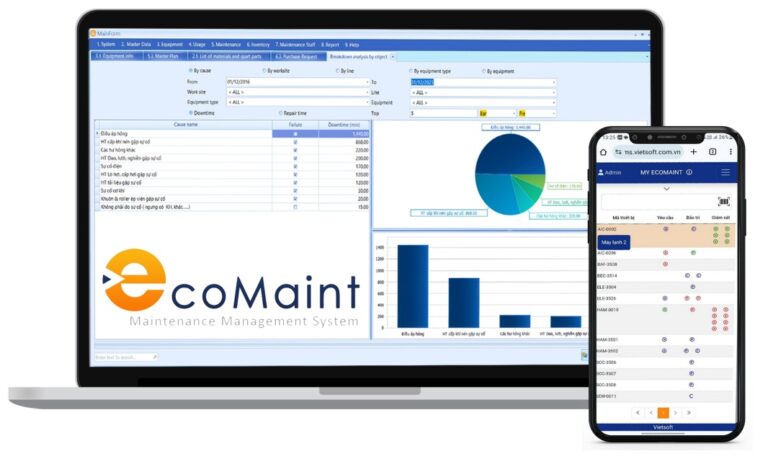
- CMMS Software: A system like EcoMaint automates schedules and work orders, significantly reducing downtime and improving efficiency.
- Predictive Maintenance Tools: Sensors and IoT predict failures, cutting costs by proactively addressing issues before they escalate.
- Data Analytics: Real-time reports identify performance patterns, enabling smarter decisions and proactive planning.
Integrating these tools optimizes asset reliability, compliance, and operational performance.
IX. The Role of CMMS EcoMaint in Enhancing Maintenance Goals
Managing manufacturing maintenance effectively requires advanced solutions. Vietsoft’s CMMS EcoMaint, designed for Vietnamese industries, offers robust support. It automates maintenance planning, tracks asset performance in real-time, and provides insightful reports—key to achieving your goals and objectives in manufacturing maintenance. Imagine cutting downtime by 15% or extending equipment life with predictive insights. Ready to revolutionize your strategy? Learn more about CMMS EcoMaint here.
Contact us for consultation via hotline: 0986778578 or email: sales@vietsoft.com.vn.
X. Conclusion
Mastering goals and objectives in manufacturing maintenance is a dynamic process of strategic planning, execution, and continuous improvement. By focusing on reliability, maintainability, and supportability, leveraging best practices, and overcoming challenges with tools like CMMS EcoMaint, maintenance teams can drive operational excellence. Whether your aim is cost reduction, safety enhancement, or production efficiency, these strategies provide a solid foundation. Start refining your plan today and unlock the full potential of your manufacturing assets.