
Facility maintenance is a critical component of business operations, ensuring that physical infrastructure supports organizational goals while maintaining safety, comfort, and efficiency. However, rising costs, regulatory pressures, and evolving tenant expectations make cost management a top priority for facility managers.
This comprehensive guide explores the concept of facility maintenance, its role in operational success, and actionable strategies to reduce costs while maintaining high standards.
I. What is Facility Maintenance?
Facility maintenance encompasses all activities required to keep a building’s physical infrastructure, systems, and equipment in optimal condition. This includes routine upkeep, repairs, and inspections of critical systems like HVAC, plumbing, electrical, and structural components. The goal is to ensure a safe, functional, and comfortable environment for occupants while extending the lifespan of assets and minimizing operational disruptions.
II. The Role of Facility Maintenance in Business Operations
Effective facility maintenance goes beyond fixing broken equipment; it directly impacts a company’s bottom line and operational efficiency. Here’s why it matters:
- Ensures Operational Continuity: Well-maintained systems prevent unexpected downtime, keeping business operations running smoothly.
- Enhances Employee and Tenant Satisfaction: A comfortable and safe environment boosts productivity and reduces complaints.
- Reduces Long-Term Costs: Proactive maintenance minimizes emergency repairs and extends equipment lifespan, saving significant expenses.
- Supports Compliance: Regular upkeep ensures adherence to safety and environmental regulations, avoiding costly fines.
- Drives Sustainability: Energy-efficient maintenance practices reduce utility costs and align with environmental goals.
By approaching facility maintenance strategically, businesses can transform it from a cost center into a value-adding function that supports financial and operational objectives.
III. Key Factors Impacting Facility Maintenance Costs
To reduce costs effectively, facility managers must first understand the primary cost drivers. These include:
1. Reactive Repairs: Emergency fixes due to unexpected breakdowns are often more expensive than planned maintenance.
2. Energy Inefficiency: Outdated or poorly maintained systems, such as HVAC or lighting, consume excessive energy, inflating utility bills.
3. Labor Costs: Inefficient scheduling or over-reliance on external contractors can increase labor expenses.
4. Inventory Mismanagement: Overstocking or understocking spare parts leads to unnecessary costs or delays.
5. Regulatory Compliance: Failing to meet safety or environmental standards can result in fines and costly retrofits.
6. Aging Infrastructure: Older systems require frequent repairs, driving up maintenance budgets.
By addressing these factors, facility managers can identify opportunities for cost savings without compromising quality or safety.
IV. Strategies to Reduce Costs in Facility Maintenance
Below are nine proven strategies to optimize facility maintenance costs, combining proactive planning, technology adoption, and operational efficiency.
1. Implement a Preventive Maintenance Program
Preventive maintenance involves scheduled inspections and servicing to address issues before they escalate into costly repairs. For example, regularly cleaning HVAC filters can improve efficiency and prevent system failures, saving up to 15% on energy costs, according to the U.S. Department of Energy.
Steps to Implement Preventive Maintenance:
- Identify critical systems (e.g., HVAC, elevators, plumbing).
- Create a maintenance schedule based on manufacturer recommendations.
- Assign tasks to trained staff or contractors.
- Use software like CMMS EcoMaint to track tasks and send automated reminders.
2. Leverage CMMS for Streamlined Operations
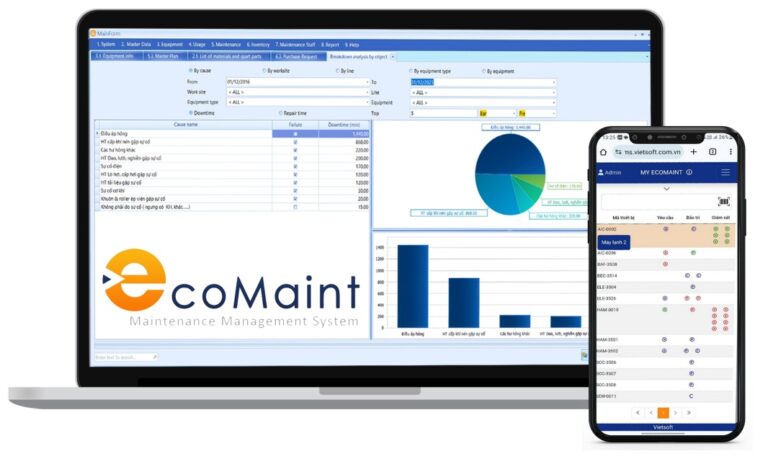
A Computerized Maintenance Management System (CMMS) like Vietsoft’s CMMS EcoMaint centralizes maintenance operations, enabling data-driven decisions. It streamlines work order management, tracks asset performance, and optimizes inventory, reducing administrative overhead by up to 30%, as reported by industry studies.
Benefits of CMMS:
- Automates work order creation and prioritization.
- Provides real-time insights into equipment health.
- Reduces downtime by predicting maintenance needs.
- Optimizes spare parts inventory to avoid overstocking.
3. Enhance Energy Efficiency
Energy costs can account for 30-40% of a facility’s maintenance budget. Upgrading to energy-efficient systems and implementing smart technologies can yield significant savings.
Energy-Saving Initiatives:
- Replace fluorescent bulbs with LED lighting to reduce energy use by up to 50%.
- Install smart thermostats to adjust HVAC settings based on occupancy.
- Insulate walls and windows to minimize heat loss.
Example: A commercial building switches to LED lighting, saving $5,000 annually on electricity bills while reducing maintenance due to LED’s longer lifespan.
4. Train Staff for Efficiency and Accountability
Well-trained staff can identify issues early, operate equipment correctly, and reduce reliance on external contractors. Training programs should cover equipment handling, safety protocols, and energy conservation practices.
Training Tips:
- Conduct regular workshops on system maintenance (e.g., HVAC servicing).
- Encourage staff to report minor issues promptly.
- Use CMMS dashboards to monitor team performance and identify training needs.
Example: A facility team trained on proper HVAC operation reduces energy waste by 10% by adjusting settings during low-occupancy periods.
5. Optimize Inventory Management
Poor inventory management leads to overstocking or stockouts, both of which increase costs. A digital asset register, integrated with CMMS, ensures the right parts are available without tying up capital.
Inventory Optimization Steps:
- Track frequently used parts (e.g., HVAC filters, plumbing fittings).
- Negotiate bulk discounts with suppliers.
- Use CMMS to forecast inventory needs based on maintenance schedules.
Example: A facility manager analyzes CMMS data to identify high-use parts, negotiates a 15% discount on bulk orders, and reduces stockouts by 20%.
6. Negotiate Cost-Effective Vendor Contracts
Regularly reviewing and negotiating vendor contracts can lower service costs. Bundling services or opting for performance-based contracts encourages efficiency and accountability.
Negotiation Strategies:
- Compare quotes from multiple vendors.
- Bundle services (e.g., HVAC and plumbing maintenance) for discounts.
- Include performance metrics in contracts to ensure quality.
Example: A facility manager consolidates cleaning and repair services with one vendor, securing a 10% discount on annual costs.
7. Prioritize Critical Repairs
Not all maintenance tasks are equally urgent. Prioritizing critical repairs, such as those affecting safety or operations, prevents costly secondary damage.
Prioritization Approach:
- Categorize work orders by urgency (e.g., emergency, high, low).
- Address safety-related issues (e.g., faulty wiring) immediately.
- Schedule non-urgent tasks (e.g., cosmetic repairs) during low-demand periods.
Example: A burst pipe is repaired immediately to prevent water damage, saving $10,000 in potential restoration costs.
8. Outsource Specialized Tasks
Outsourcing tasks requiring specialized skills, such as complex electrical upgrades, ensures quality and reduces the risk of costly mistakes.
Outsourcing Benefits:
- Access to expert technicians without full-time salaries.
- Faster completion of specialized tasks.
- Reduced liability from improper repairs.
Example: Outsourcing a fire alarm system upgrade to a certified contractor ensures compliance and avoids $5,000 in potential fines.
9. Use Predictive Maintenance for Proactive Savings
Predictive maintenance uses data analytics to predict equipment failures before they occur. By integrating IoT sensors and CMMS, facility managers can reduce downtime by 25%, according to McKinsey & Company.
How Predictive Maintenance Works:
- IoT sensors monitor equipment performance (e.g., vibration, temperature).
- CMMS analyzes data to predict maintenance needs.
- Proactive interventions prevent costly breakdowns.
Example: A predictive maintenance system detects early signs of pump failure, allowing a $500 repair instead of a $5,000 replacement.
V. The Role of CMMS EcoMaint in Cost Reduction
Vietsoft’s CMMS EcoMaint is a powerful tool for facility managers seeking to reduce maintenance costs while improving efficiency. This software offers a mobile-first platform that streamlines work orders, tracks assets, and optimizes maintenance schedules. Key features include:
- Customizable Workflows: Tailor maintenance tasks to specific needs with automated notifications.
- Real-Time Reporting: Monitor KPIs and flag issues instantly via mobile devices.
- Asset Management: Create a digital asset register to track equipment health and compliance.
- Inventory Optimization: Forecast spare parts needs to avoid overstocking or shortages.
By implementing CMMS EcoMaint, businesses can achieve up to 20% cost savings through reduced downtime, optimized labor, and better resource allocation. Curious about how CMMS EcoMaint can transform your facility maintenance? Visit Vietsoft’s CMMS EcoMaint page to explore tailored solutions for your business.
VI. Challenges in Reducing Facility Maintenance Costs
While cost-saving strategies offer significant benefits, facility managers may face challenges:
- Upfront Investment: Energy-efficient upgrades or CMMS implementation require initial capital, which may strain budgets.
- Staff Resistance: Employees may resist new technologies or processes, requiring effective change management.
- Balancing Quality and Cost: Cutting costs too aggressively can compromise safety or system reliability.
To overcome these challenges, managers should prioritize high-ROI initiatives, provide comprehensive training, and maintain open communication with stakeholders.
VII. Measuring the Impact of Cost-Saving Strategies
To ensure cost-saving efforts are effective, track key performance indicators (KPIs) such as:
- Maintenance Costs per Square Foot: Compare against industry benchmarks (e.g., $1.00 vs. $1.50).
- Downtime Reduction: Measure hours saved through preventive maintenance.
- Energy Savings: Track reductions in utility bills after efficiency upgrades.
- Repair Frequency: Monitor reductions in emergency repairs.
Using CMMS EcoMaint’s reporting tools, managers can analyze these metrics and adjust strategies for maximum impact.
VIII. Conclusion: A Proactive Approach to Facility Maintenance
Reducing facility maintenance costs is not about cutting corners but adopting a strategic, proactive approach. By implementing preventive maintenance, leveraging advanced technologies like CMMS EcoMaint, and optimizing resources, businesses can achieve significant savings while enhancing operational efficiency. These strategies ensure compliance, improve tenant satisfaction, and extend the lifespan of critical assets, making facility maintenance a driver of business success.
For facility managers looking to stay ahead in 2025, partnering with Vietsoft and implementing CMMS EcoMaint offers a proven path to cost savings and operational excellence. Explore how CMMS EcoMaint can revolutionize your maintenance operations at Vietsoft’s website.
Discover the CMMS EcoMaint solution here.
Contact us for consultation via hotline: 0986778578 or email: sales@vietsoft.com.vn.