
In the fast-evolving world of industrial maintenance, keeping equipment operational is a top priority for ensuring productivity, safety, and profitability. Two cornerstone strategies—Predictive Maintenance and Preventive Maintenance—stand out as effective ways to manage asset health and minimize downtime. This comprehensive guide explores the nuances of Predictive Maintenance vs Preventive Maintenance, offering detailed insights for maintenance professionals, facility managers, and business owners. This article provides actionable knowledge, practical examples, and advanced strategies to optimize your maintenance programs.
I. What is Preventive Maintenance?
1. Introduction of Preventive Maintenance
Preventive Maintenance (PM) is a proactive strategy aimed at preserving equipment functionality by addressing potential issues before they lead to failures. Often likened to a routine medical check-up, PM involves scheduled interventions to maintain optimal performance and extend asset lifespan.
2. Core Components of Preventive Maintenance
Preventive Maintenance follows a structured timetable, typically based on calendar dates, runtime hours, or operational cycles. For example, a manufacturing plant might schedule bi-weekly lubrication for conveyor belts or annual overhauls for heavy machinery. Key elements include:
- Regular Inspections: Technicians examine critical components like gears, seals, and electrical systems.
- Planned Downtime: Equipment is halted to perform tasks such as cleaning, recalibration, or part replacement.
- Detailed Checklists: Standardized procedures ensure thoroughness, covering tasks from minor adjustments to comprehensive repairs.
A well-designed PM plan might include daily visual checks, monthly oil changes, and quarterly deep maintenance, even if no immediate problems are detected. This consistency helps maintain reliability across diverse assets.
3. The Science Behind Preventive Maintenance
PM relies on historical data, such as Mean Time Between Failures (MTBF), and manufacturer recommendations to set maintenance intervals. By proactively addressing wear and tear, it reduces the likelihood of catastrophic breakdowns. Since its widespread adoption in the 1950s, PM has proven effective for assets with predictable degradation patterns, making it a foundational strategy for many industries.
4. Practical Example
Consider a packaging machine that operates 24/7. A PM schedule might call for weekly belt tension checks and monthly filter replacements. Even if the machine runs smoothly, these tasks prevent dust buildup or belt slippage, ensuring continuous operation.
II. What is Predictive Maintenance?
1. Introduction of Predictive Maintenance
Predictive Maintenance (PdM) elevates maintenance to a data-driven science, using real-time monitoring to anticipate equipment failures before they occur. This approach is akin to a doctor using advanced diagnostics to predict health risks, allowing for timely interventions.
2. How Predictive Maintenance Works
Unlike PM’s fixed schedule, PdM employs sensors and advanced analytics to monitor asset conditions continuously. Key aspects include:
- Real-Time Monitoring: Sensors track metrics like vibration, temperature, pressure, and acoustic signals during operation.
- Condition-Based Actions: Maintenance is triggered only when data indicates a threshold breach, such as excessive vibration signaling bearing wear.
- Flexible Scheduling: Repairs can be planned during low-demand periods, minimizing production impact.
For instance, a pump showing elevated vibration levels might prompt a work order, enabling technicians to replace a failing component before it causes a shutdown. Technologies like infrared thermography, oil analysis, and machine learning enhance PdM’s accuracy.
3. The Growth of Predictive Maintenance
The rise of the Industrial Internet of Things (IIoT) has fueled PdM’s popularity. According to the McKinsey Global Institute, implementing PdM across manufacturing could yield $240-$627 billion in annual savings. Sectors like oil and gas use PdM to prevent environmental incidents, while shipping companies rely on it to avoid costly repairs at sea, highlighting its transformative potential.
4. Practical Example
A wind turbine equipped with vibration sensors might detect misalignment after 6 months of operation. Instead of waiting for a scheduled PM check, technicians address the issue immediately, extending the turbine’s life and avoiding emergency repairs.
III. Exploring the Differences: Predictive Maintenance vs Preventive Maintenance
Both Predictive Maintenance and Preventive Maintenance are designed to enhance equipment reliability and minimize operational downtime, yet they differ significantly in their methodologies, execution, and overall impact. This section provides an expanded and detailed comparison across multiple dimensions to help maintenance professionals make informed decisions tailored to their specific needs.
1. Scheduling and Triggers
- Preventive Maintenance: Operates on a predetermined, fixed schedule, typically established based on calendar time (e.g., every 6 months), runtime hours (e.g., every 2,000 hours), or usage cycles (e.g., after 10,000 units produced). This schedule is set using historical data, manufacturer guidelines, or industry standards, regardless of the asset’s current condition. The rigidity of this approach ensures consistency but may not reflect real-time asset health, potentially leading to maintenance at suboptimal times.
- Predictive Maintenance: Relies on dynamic, condition-based triggers driven by real-time data collected from sensors and monitoring systems. Maintenance is initiated only when specific indicators—such as abnormal vibration levels, temperature spikes, or oil degradation—suggest an impending issue. This flexibility allows for maintenance to be timed precisely when needed, aligning with the asset’s actual performance and operational demands.
2. Impact on Operations
- Preventive Maintenance: Necessitates planned downtime, where equipment is intentionally stopped to conduct maintenance activities. While this downtime can be scheduled during off-peak hours to lessen disruption, it still interrupts production workflows, potentially affecting delivery schedules or output targets. The predictability of downtime allows for better resource planning but may not always align with operational peaks or urgent production needs.
- Predictive Maintenance: Facilitates maintenance with minimal or no unplanned downtime by enabling interventions during normal operation or just prior to a predicted failure. Advanced monitoring allows technicians to address issues without halting production, except in critical cases, thus preserving workflow continuity. This approach is particularly beneficial in continuous-process industries where stopping equipment can lead to significant losses.
3. Financial and Resource Considerations
- Preventive Maintenance: Involves lower initial costs since it requires minimal investment in advanced technology—primarily relying on labor, basic tools, and possibly a simple maintenance management system. However, over time, it may lead to higher long-term expenses due to over-maintenance, where functional parts are replaced prematurely, increasing labor hours, spare parts inventory costs, and waste. Budgeting is straightforward but may not optimize resource use.
- Predictive Maintenance: Demands a higher upfront investment, including the purchase of sensors, IoT devices, condition-monitoring software, and training for personnel to analyze data. Despite this, it offers long-term savings through targeted interventions that reduce unnecessary repairs, optimize spare parts usage, and lower overall maintenance costs. The return on investment (ROI) becomes evident as downtime and emergency repairs decrease, though initial capital outlay can be a barrier for smaller organizations.
4. Risk and Accuracy
- Preventive Maintenance: Provides a stable, low-risk approach due to its regular, systematic checks, which help mitigate unexpected failures. However, it carries the risk of over-servicing assets that are still in good condition, potentially causing wear from excessive handling or using up the useful life of components prematurely. This trade-off ensures safety but may reduce cost-efficiency.
- Predictive Maintenance: Introduces a higher risk if data collection or analysis is flawed—such as misinterpreting sensor readings or failing to account for all variables—which could lead to missed maintenance opportunities or unnecessary interventions. Conversely, when executed correctly, it delivers superior accuracy by addressing specific conditions, preventing over-maintenance, and extending asset life through precise, data-informed actions.
5. Technological Requirements
- Preventive Maintenance: Relies on minimal technology, often limited to manual checklists, basic diagnostic tools, and, at most, a Computerized Maintenance Management System (CMMS) for scheduling. This low-tech requirement makes it accessible to organizations with limited infrastructure but restricts its ability to adapt to real-time changes.
- Predictive Maintenance: Depends heavily on advanced technologies, including IoT sensors, data analytics platforms, and sometimes artificial intelligence or machine learning algorithms. This sophisticated setup enhances adaptability and foresight but requires ongoing updates, maintenance of the technology itself, and a skilled workforce to manage it.
6. Skill and Training Needs
- Preventive Maintenance: Requires a workforce with general maintenance skills and familiarity with standard procedures. Training is relatively straightforward, focusing on checklist adherence and basic troubleshooting, making it suitable for teams with moderate experience levels.
- Predictive Maintenance: Necessitates a higher level of expertise, including training in data interpretation, sensor management, and predictive analytics. This demand for specialized skills can increase training costs and time, though it empowers teams to make data-driven decisions, improving long-term competency.
7. Scalability and Flexibility
- Preventive Maintenance: Offers limited scalability as it relies on fixed schedules that may not adjust easily to changes in production volume or asset diversity. Its inflexibility can become a drawback in dynamic environments where operational demands fluctuate.
- Predictive Maintenance: Provides greater scalability and flexibility, adapting to varying operational conditions and asset types through real-time data. This adaptability makes it ideal for large-scale operations or facilities with diverse equipment, though it requires initial setup adjustments for each new asset.
8. Environmental and Sustainability Impact
- Preventive Maintenance: May contribute to higher waste due to the replacement of still-usable parts and increased energy use from frequent stoppages. While it prevents failures, its routine nature can lead to less sustainable practices unless carefully optimized.
- Predictive Maintenance: Promotes sustainability by reducing waste (e.g., replacing parts only when needed) and minimizing energy consumption from unnecessary downtime. Its precision supports greener operations, aligning with modern sustainability goals, though the production and disposal of sensors pose minor environmental challenges.
This multifaceted comparison underscores that the choice between Predictive Maintenance vs Preventive Maintenance hinges on operational goals, available resources, and asset criticality. By evaluating these factors, organizations can craft a maintenance strategy that balances cost, efficiency, and reliability effectively.
IV. Benefits and Challenges of Predictive Maintenance vs Preventive Maintenance
1. Advantages of Preventive Maintenance
- Proactive Defense: Regular interventions prevent major failures, safeguarding operations.
- Longer Asset Life: Consistent upkeep reduces wear, extending equipment durability.
- Budget Stability: Fixed schedules simplify financial planning and resource allocation.
2. Drawbacks of Preventive Maintenance
- Potential Over-Maintenance: Assets may be serviced unnecessarily, wasting time and materials.
- Scheduled Disruptions: Planned downtime can conflict with production demands.
- Inventory Overhead: Requires maintaining a surplus of spare parts.
3. Advantages of Predictive Maintenance
- Optimized Resource Use: Maintenance occurs only when needed, reducing waste.
- Minimized Downtime: Early detection prevents unexpected outages.
- Enhanced Decision-Making: Real-time data supports strategic planning.
4. Drawbacks of Predictive Maintenance
- Upfront Costs: Requires significant investment in technology and training.
- Complexity: Demands skilled personnel to manage and interpret data.
- Data Reliance: Effectiveness hinges on consistent, high-quality monitoring.
V. Real-World Applications: Choosing the Right Strategy
Selecting between Predictive Maintenance vs Preventive Maintenance depends on your operational context. Here’s how to decide:
1. When to Use Preventive Maintenance
- Budget-Constrained Operations: For small businesses or facilities with limited funds, PM’s simplicity is ideal.
- Assets Without Sensors: Equipment lacking monitoring capabilities benefits from routine checks.
- Stable Failure Patterns: Machines with well-understood wear cycles thrive under PM.
2. When to Use Predictive Maintenance
- High-Stakes Assets: Critical equipment like generators or production lines justifies PdM’s investment.
- Tech-Enabled Facilities: Organizations with IoT infrastructure can maximize PdM’s potential.
- Significant Failure Costs: Industries like pharmaceuticals or aviation gain from early failure prevention.
VI. Combining Strategies
A hybrid model often yields the best results. For example, a factory might use PM for routine oil changes while applying PdM to monitor turbine vibrations, creating a balanced approach to asset management.
VII. Building Effective Maintenance Programs
1. Implementing Preventive Maintenance
· Asset Evaluation: Identify key equipment for regular maintenance.
· Interval Planning: Establish schedules based on usage or timeframes.
· Team Assignment: Allocate technicians and tools efficiently.
· Performance Tracking: Use software to monitor and adjust plans.
2. Implementing Predictive Maintenance
· Sensor Deployment: Install monitoring devices on critical assets.
· System Integration: Connect data to a CMMS or EAM for analysis.
· Skill Development: Train staff in data interpretation.
· Gradual Rollout: Test PdM on select assets before full adoption.
3. Leveraging Technology
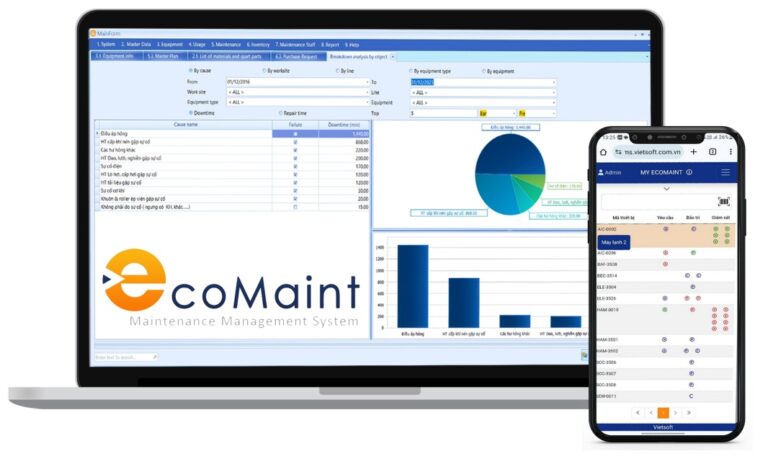
A modern Computerized Maintenance Management System (CMMS) is essential. It streamlines PM scheduling and integrates PdM data, providing a centralized hub for maintenance management.
VIII. Advanced Insights for Maintenance Professionals
1. Calculating Maintenance Effectiveness
To measure PM success, use the formula:
- Overall Equipment Effectiveness (OEE) = Availability × Performance × Quality
- Availability tracks uptime, Performance measures speed, and Quality assesses defect rates.
For PdM, assess cost savings with:
- Cost Savings (%) = [(Reactive Costs – PdM Costs) / Reactive Costs] × 100
- Compare historical reactive costs to PdM expenses to quantify benefits.
2. Condition Monitoring Techniques
- Vibration Analysis: Detects misalignment or bearing issues.
- Thermal Imaging: Identifies overheating components.
- Oil Analysis: Reveals lubricant degradation or contamination.
IX. Elevate Your Strategy with CMMS EcoMaint
Managing maintenance efficiently requires cutting-edge tools. What if you could predict failures while streamlining routine tasks, all tailored to Vietnam’s industrial needs? CMMS EcoMaint by Vietsoft delivers real-time insights, automated workflows, and robust reporting to transform your maintenance operations. Ready to see the difference? Explore the CMMS EcoMaint solution here.
Contact us for consultation via hotline: 0986778578 or email: sales@vietsoft.com.vn.
X. Conclusion
Predictive Maintenance vs Preventive Maintenance offers distinct paths to operational excellence. Preventive Maintenance provides a reliable, accessible foundation with its structured approach, while Predictive Maintenance delivers precision and savings for critical assets through advanced technology. By aligning these strategies with your goals—potentially enhanced by CMMS EcoMaint—you can achieve maximum uptime, safety, and profitability. Whether you’re a technician honing your skills or a manager optimizing resources, this guide equips you to lead with confidence.