I. Understanding MES: What is a Manufacturing Execution System?
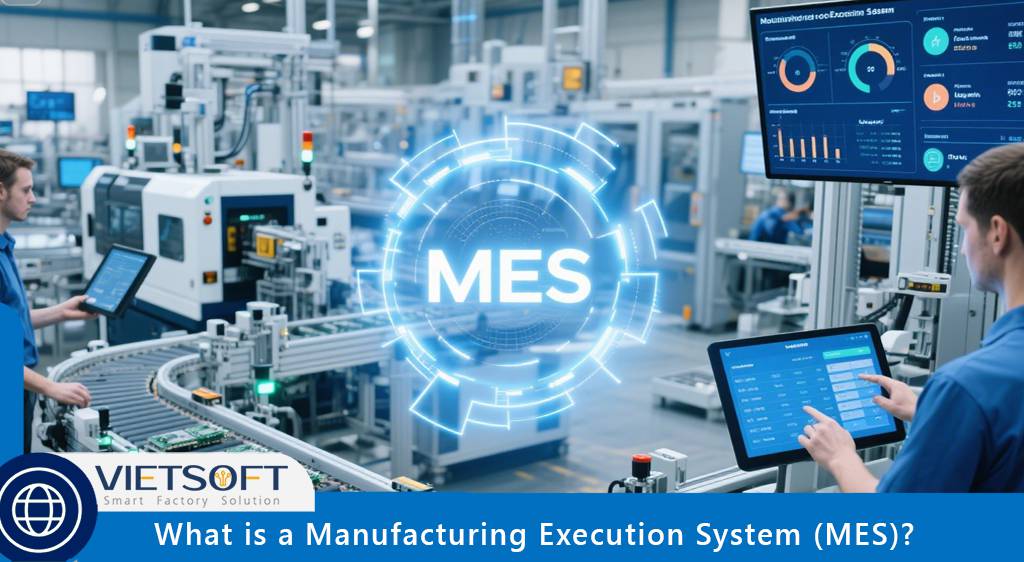
A Manufacturing Execution System (MES) is a software-based solution designed to monitor, track, document, and control the entire production process, from raw materials to finished goods. Acting as a bridge between enterprise resource planning (ERP) systems and shop floor operations, an MES provides real-time data to help manufacturers optimize production, improve efficiency, and ensure compliance with industry standards.
MES systems collect and analyze data from machines, sensors, and operators, offering decision-makers actionable insights into production activities. By enabling real-time visibility and control, MES helps manufacturers identify bottlenecks, reduce downtime, and enhance overall equipment effectiveness (OEE). For industries like pharmaceuticals, food and beverage, or automotive, where traceability and compliance are critical, MES ensures that processes are well-documented and meet regulatory requirements.
For example, consider a factory producing electronic components. An MES can track the movement of materials, monitor machine performance, and ensure that quality standards are met at every stage. If a defect is detected, the system can halt production instantly, minimizing waste and ensuring high-quality output.
II. Why MES Matters in Modern Manufacturing
The question “What is MES?” goes beyond its definition—it’s about understanding its transformative impact on manufacturing. In a competitive market like Vietnam, where industries are rapidly adopting digital solutions, MES systems are pivotal in driving efficiency, reducing costs, and improving product quality. Here’s why MES is indispensable:
- Real-Time Data Insights: MES provides live updates on production metrics, enabling quick decision-making.
- Improved Traceability: For regulated industries, MES ensures complete documentation of processes, crucial for audits and compliance.
- Enhanced Efficiency: By streamlining workflows and automating tasks, MES boosts productivity and reduces manual errors.
- Cost Savings: MES minimizes waste, optimizes resource use, and reduces inventory costs, leading to higher profitability.
As manufacturing evolves with technologies like the Industrial Internet of Things (IIoT) and artificial intelligence (AI), MES systems are becoming smarter, more connected, and more adaptable to complex production needs.
III. Core Functions of MES: How It Works
To fully grasp “What is MES?”, it’s essential to understand its core functions. In 1997, the Manufacturing Enterprise Solutions Association (MESA) defined 11 key functions that form the backbone of MES systems. These functions remain relevant today, though modern MES solutions are more flexible and customizable. Below are the primary functions, explained in simple terms:
1. Resource Allocation and Status
MES tracks the availability and status of resources like machines, materials, and labor. For instance, if a machine is down for maintenance, MES adjusts production schedules to avoid delays.
2. Operations and Detailed Scheduling
MES optimizes production schedules based on priorities, resource availability, and order deadlines. It ensures efficient sequencing of tasks to maximize output.
3. Dispatching Production Units
MES assigns tasks to workstations or operators, providing real-time instructions and adjusting for unexpected issues, such as equipment failures.
4. Document Control
MES manages digital documents like work instructions, standard operating procedures (SOPs), and batch records, ensuring they’re accessible and up-to-date.
5. Data Collection and Acquisition
MES gathers real-time data from machines, sensors, and operators, such as production rates, quality metrics, and inventory levels, to provide a comprehensive view of operations.
6. Labor Management
MES tracks worker schedules, skills, and performance, ensuring the right personnel are assigned to tasks.
7. Quality Management
MES monitors quality metrics, flags deviations, and enforces quality control procedures, reducing defects and ensuring compliance.
8. Process Management
MES oversees the entire production process, identifying bottlenecks and ensuring traceability from raw materials to finished products.
9. Maintenance Management
MES uses data to predict equipment issues and schedule maintenance, minimizing downtime and extending machine life.
10. Product Tracking and Genealogy
MES records the history of each product or batch, crucial for industries requiring traceability, such as pharmaceuticals or food and beverage.
11. Performance Analysis
MES analyzes production data to generate reports and dashboards, helping managers identify areas for improvement and track key performance indicators (KPIs) like OEE.
For example, in a food processing plant, an MES can track the source of ingredients, monitor production conditions (e.g., temperature), and ensure compliance with safety regulations, all while optimizing production schedules.
IV. Benefits of MES: Driving Operational Excellence
Implementing an MES offers numerous advantages that directly impact a manufacturer’s bottom line. Here are the top benefits, explained in a way that resonates with production managers and business owners:
1. Reduced Waste and Scrap
MES identifies quality issues in real time, allowing manufacturers to stop production before defective products pile up. For instance, if a batch of products fails a quality check, MES can trigger an immediate halt, saving materials and labor costs.
2. Increased Uptime
By balancing resources and integrating maintenance schedules, MES ensures machines are used efficiently, reducing downtime. A factory using MES might increase its OEE by 15-20%, translating to higher output without additional investment.
3. Lower Inventory Costs
MES provides accurate inventory tracking, eliminating the need for “just-in-case” stock. For example, a factory can reduce raw material inventory by 10% by using MES to align material orders with production needs.
4. Paperless Operations
MES digitizes workflows, reducing reliance on paper records. This minimizes errors and makes data instantly available to decision-makers across departments.
5. Enhanced Traceability
For industries like pharmaceuticals, MES ensures every step of the production process is documented, making it easier to comply with regulations and handle recalls if needed.
These benefits make MES a game-changer for manufacturers aiming to stay competitive in a digital-first world.
V. MES and System Integration: Connecting the Manufacturing Ecosystem
A key aspect of understanding “What is MES?” is recognizing its role in integrating with other systems. MES acts as a middle layer between ERP systems (Level 4 in the ISA-95 model) and process control systems like SCADA or PLCs (Levels 0-2). This integration creates a seamless flow of information across the manufacturing ecosystem.
1. MES and ERP Integration
ERP systems focus on business planning, such as procurement, finance, and supply chain management. MES complements ERP by translating these plans into actionable production tasks. For example:
- ERP to MES: Sends production orders and schedules.
- MES to ERP: Provides real-time production data, such as completed orders and material usage.
This integration ensures that business goals align with shop floor activities, improving forecasting and resource allocation.
2. MES and Process Control Systems
MES connects with systems like SCADA or PLCs to collect real-time data from machines. For instance, if a machine reports an error, MES can adjust schedules or notify maintenance teams, ensuring minimal disruption.
3. MES and Other Systems
MES also integrates with systems like:
- Laboratory Information Management Systems (LIMS): For quality test data.
- Warehouse Management Systems (WMS): For inventory tracking.
- Computerized Maintenance Management Systems (CMMS): For equipment maintenance.
This interconnected ecosystem enables manufacturers to make data-driven decisions, optimize workflows, and improve overall efficiency.
VI. Trends Shaping MES in 2025
The evolution of MES is driven by advancements in technology and changing industry demands. Here are key trends shaping MES in 2025:
1. Cloud-Based MES
Cloud-based MES solutions offer scalability, flexibility, and remote access. They enable real-time collaboration across multiple locations, making them ideal for global manufacturers.
2. IIoT Integration
MES systems leverage IIoT devices to collect real-time data from sensors and machines, enabling predictive maintenance and process optimization.
3. AI and Machine Learning
AI-powered MES systems analyze historical data to predict outcomes, optimize schedules, and reduce waste. For example, AI can identify patterns in production data to prevent quality issues.
4. Mobile Access
MES mobile apps allow operators and managers to monitor production, view dashboards, and receive alerts on the go, improving agility.
5. Enhanced Compliance Features
With stricter regulations, MES systems are incorporating robust features for electronic record-keeping, audit trails, and compliance reporting.
These trends position MES as a cornerstone of smart manufacturing, enabling factories to become more connected, efficient, and responsive.
VII. Challenges of Implementing MES
While MES offers significant benefits, implementation can pose challenges:
- Complexity: Integrating MES with existing systems requires careful planning to avoid delays or disruptions.
- Data Security: MES handles sensitive production data, necessitating robust cybersecurity measures.
- Change Management: Employees may resist transitioning to digital workflows, requiring effective training and communication.
Despite these challenges, the long-term benefits of MES outweigh the initial hurdles, especially with proper planning and support from experts.
VIII. MES SmartTrack: A Solution for Modern Manufacturing
For manufacturers in Vietnam looking to harness the power of MES, MES SmartTrack by Vietsoft offers a cutting-edge solution. Designed to streamline production, enhance traceability, and boost efficiency, MES SmartTrack integrates seamlessly with ERP and shop floor systems. Curious to learn how MES SmartTrack can transform your operations? Explore the solution here and discover how it empowers manufacturers to achieve operational excellence.
IX. Conclusion: Why MES is the Future of Manufacturing
In answering “What is MES?”, we’ve explored how Manufacturing Execution Systems serve as the backbone of modern production, bridging the gap between planning and execution. By providing real-time insights, optimizing resources, and ensuring compliance, MES empowers manufacturers to thrive in a competitive landscape. With solutions like MES SmartTrack, businesses in Vietnam can leverage advanced technology to drive efficiency, reduce costs, and stay ahead of industry trends.
Whether you’re in automotive, pharmaceuticals, or food and beverage, adopting an MES is a strategic move toward smart manufacturing. Start your journey today and unlock the full potential of your production processes.